
Fence Privacy Screen Guide: Mesh Screens & How to Choose
Posted by CanopiesAndTarps on Nov 25th 2026
A fence privacy screen is a mesh or woven panel that attaches to chain-link, wire, or temporary fencing to reduce sightlines while allowing airflow. The right option depends on the privacy level needed, the amount of wind exposure at the site, and whether the screen will be used for a short-term project or ongoing outdoor screening.
This guide explains the differences between high-density privacy screens, more open shade mesh, and solid tarps. It also covers shade ratings, how to measure a fence, and installation practices that help protect both the screen and the fence.
What Is a Fence Privacy Screen?
A fence privacy screen is a breathable mesh fabric with finished edges and perimeter grommets. It attaches directly to compatible existing fencing with appropriate fasteners, making it a practical way to add shade and visual screening without installing a new fence.
Unlike a solid tarp, mesh allows air to move through the material. That can reduce wind resistance compared with a fully solid cover, but it does not eliminate wind load. Fence stability, attachment method, and local conditions should always be considered before installation.
Common uses include:
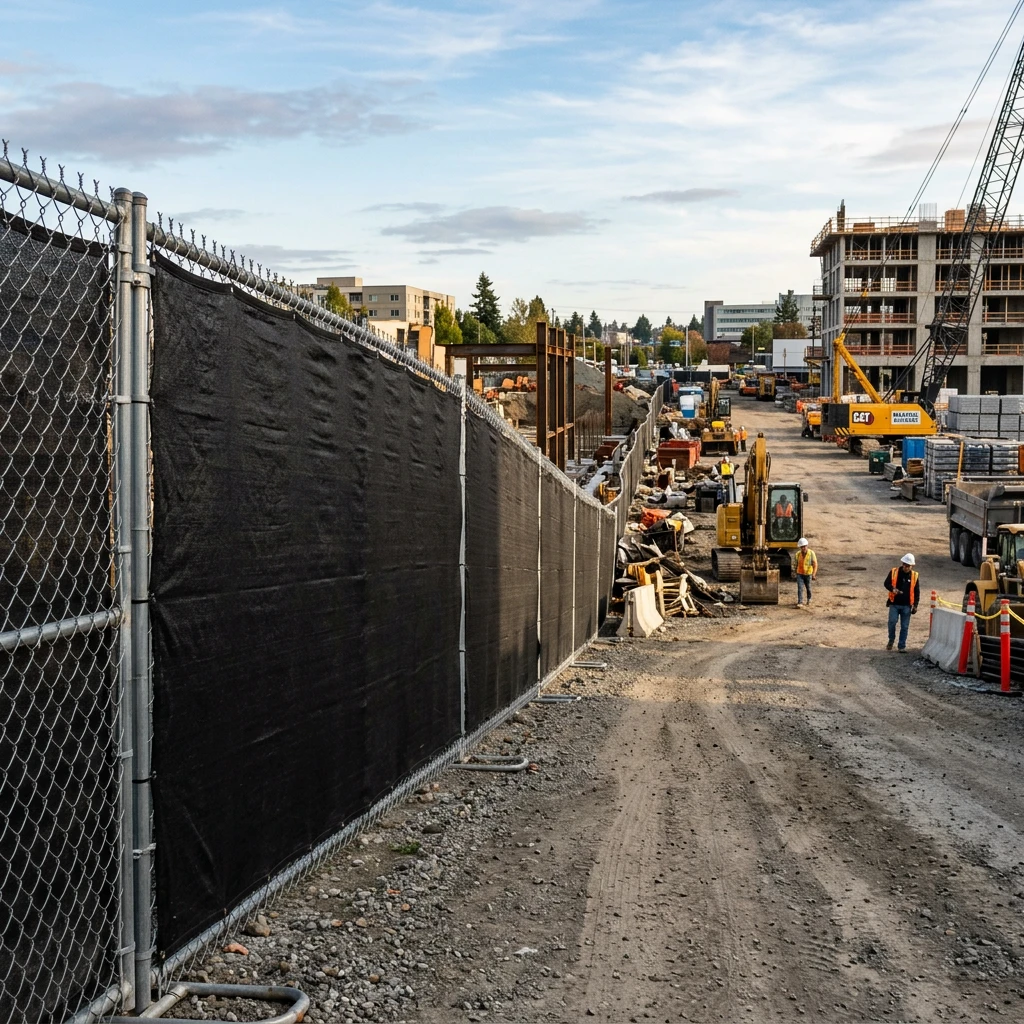
- Construction perimeters that need to reduce views into an active work area
- Residential chain-link fences around backyards, patios, and pool areas
- Commercial or equipment yards where materials and vehicles need more visual screening
- Farms and outdoor work areas that need breathable shade or partial wind reduction
- Events and sports facilities where a fence line needs more definition or privacy
Mesh Privacy Screens vs. Shade Mesh vs. Solid Tarps
Privacy screens, shade mesh, vinyl mesh, and solid tarps can all be attached along a fence line, but each does a different job. Denser mesh blocks more of the view and more sunlight, more open mesh lets more air through, and a solid tarp blocks both views and airflow.
| Option | Main Job | Visibility Blocked | Airflow | Best For |
|---|---|---|---|---|
| High-density mesh privacy screen | Visual screening and shade | High, but not complete | Moderate | Chain-link fences, yards, job sites, equipment areas |
| 75% shade mesh tarp | Shade and greater ventilation | Partial | High | Exposed outdoor areas, patios, gardens, and fencing |
| 10 oz. vinyl mesh tarp | Durable ventilation and partial screening | Partial to moderate | High | Demanding outdoor applications where a heavier mesh is appropriate |
| Solid poly or vinyl tarp | Weather coverage and complete visual block | Complete | None | Equipment coverage and short, sheltered privacy applications |
Mesh Privacy Screens
High-density mesh is the practical choice when visual screening is the priority. Canopies and Tarps offers 87% shade privacy fence screens in a nominal 6' x 50' size. The available models help reduce views into a fenced area while still allowing air to pass through.
They are well suited for a compatible backyard chain-link fence, construction perimeter, schoolyard boundary, or equipment yard. An 87% shade rating offers substantial shade and visual screening, but it does not guarantee complete privacy. Lighting, viewing distance, and the angle of view all affect what can be seen through the mesh.
Shade Mesh Tarps
The 75% shade mesh tarps from Canopies and Tarps block up to 75% of sunlight and allow more air through than an 87% privacy screen. They are a good option for patios, pergolas, gardens, and fence lines where heat buildup and wind exposure are considerations.
Vinyl Mesh Tarps
10 oz. vinyl mesh tarps offer a heavier-duty mesh option for applications that call for airflow, shade, and abrasion resistance. Their 55% shade rating makes them better suited to partial screening than near-privacy applications. Since these tarps are made to order, allow for the posted fabrication timeframe when project timing matters.
When a Solid Tarp Makes Sense
Solid tarps block both visibility and airflow. That makes them useful for rain protection, material coverage, and certain short, sheltered privacy applications. It also means wind can place much greater force on the tarp, grommets, and fence structure.
Avoid using a solid tarp across a long or exposed fence run unless the fence and fastening plan are designed for that load. For privacy that also needs ventilation, breathable mesh is usually the better match. Heavy-duty poly tarps can be considered when full coverage is required for a suitable sheltered application.
What Makes Canopies and Tarps Privacy Screens Different
The currently available privacy screen lineup focuses on a nominal 6' x 50' size that is ready to ship. The four available color options are tan, black, blue, and green.
| Specification | 6' x 50' 87% Privacy Fence Screen |
|---|---|
| Nominal Size | 6' x 50' |
| Finished Size | 5'8" x 49'3" |
| Shade rating | 87% |
| Construction | Tightly woven, breathable mesh |
| Grommet spacing | Approximately every 12 inches around the perimeter |
| Available colors | Tan, black, blue, and green |
| Typical processing | Ready to ship within 2 to 3 business days |
The difference between nominal and finished size is important. The listed 6' x 50' size describes the product category, while the finished 5'8" x 49'3" measurement accounts for the reinforced hems. Measure the actual area to be covered and plan around the finished dimensions. The cut size vs. finished size guide explains why those measurements can differ.
How to Choose the Right Fence Privacy Screen
Decide How Much Privacy You Need
Shade percentage is a useful starting point, but it is not an exact privacy guarantee. A higher shade percentage generally provides more visual screening and more shade, while a more open mesh provides greater ventilation.
- 87% shade privacy screens: A strong choice when substantial shade and visual screening are needed along a compatible fence.
- 75% shade mesh tarps: A good fit when airflow is a higher priority and partial screening is acceptable.
- 55% vinyl mesh tarps: Useful for durable shade, ventilation, and partial screening where a heavier vinyl mesh is appropriate.
Match the Screen to Your Fence Height and Length
Measure each straight fence section before ordering, including any gates that will be covered. For the available 6' x 50' privacy screens, plan with the actual finished size of 5'8" x 49'3", not the nominal dimensions.
If the fence is taller than the screen, leave the uncovered area visible rather than stretching the mesh beyond its intended shape. Where more than one screen is needed, allow a small overlap at the seam and secure both layers evenly.
Consider Wind Exposure
A privacy screen is built to block views, not to stop wind. Mesh lets air pass through, but every screen adds some wind load to the fence. A screen on an exposed ridge, open field, or temporary panel system may place considerably more force on supports than one installed in a sheltered yard. If reducing wind is the main goal, a more open mesh puts less load on the fence than an 87% privacy screen.
Inspect posts, rails, gates, bases, and braces before installation. Temporary fence panels may need appropriate ballast or bracing. After installation, inspect the entire run after windy conditions and replace damaged fasteners promptly.
Pick a Color That Fits the Setting
The available 6' x 50' privacy screens come in four colors:
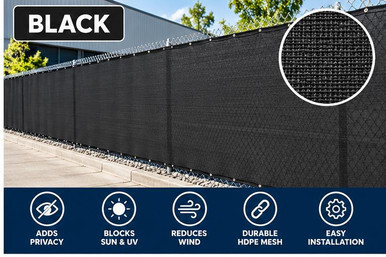
- Black: A clean, neutral look for commercial areas, equipment yards, and many residential fences
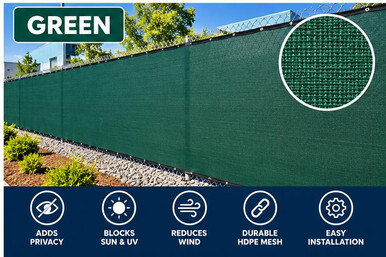
- Green: A natural fit alongside landscaping, gardens, and lawns
- Tan: A softer neutral choice for earth-tone, stucco, or desert surroundings
- Blue: A noticeable color option for facilities, event spaces, or a coordinated site appearance
Check Construction Details
Before choosing any fence screen, review the finished dimensions, shade rating, perimeter reinforcement, and grommet spacing. The current 6' x 50' Canopies and Tarps privacy screen models have grommets approximately every 12 inches, which gives installers frequent attachment points around a compatible fence.
Use a fastening method that has some flexibility. Ball bungee ties can help distribute tension while allowing some movement in changing conditions. Rigid wire, rope, and zip ties can concentrate force at the grommets, especially in wind.
How to Install a Privacy Screen on a Chain-Link Fence
A neat, evenly tensioned installation improves appearance and helps limit unnecessary stress at the hem and grommets.
- Measure and plan. Confirm the fence run and identify corners, gates, and places where screen sections will meet.
- Inspect the fence. Check that posts, rails, and mesh are in sound condition for the added screen and local wind exposure.
- Gather flexible fasteners. Use appropriately sized elastic ball bungees or comparable flexible ties. Avoid rigid fasteners that can pull harshly on a grommet.
- Start at a corner. Attach the top corner, then the bottom corner, keeping the screen aligned with the fence.
- Secure the perimeter evenly. Attach through the grommets along the top, sides, and bottom. Apply even tension without overtightening any individual point.
- Finish seams carefully. When joining screens, overlap them slightly and fasten both layers evenly.
- Inspect after installation. Check the screen, fasteners, and fence after the first windy day and periodically thereafter.
Leave a small clearance above the ground where practical. This keeps the bottom edge away from standing water and debris. Do not assume breathable mesh eliminates wind pressure. It reduces airflow resistance compared with a solid tarp, but site conditions and fence stability remain important.
Real-World Applications
Construction and demolition sites: A mesh privacy fence screen can help reduce views into an active work area while allowing airflow through a suitable perimeter fence. It is useful where a cleaner, more visually defined work zone is desired. It is not a dustproof or debris-containment barrier.
Residential backyards: A 6' x 50' green, black, tan, or blue screen can add shade and visual screening to a compatible chain-link fence around a backyard or patio. Consider the finished size when deciding how much coverage one roll will provide.
Commercial and Equipment Yards: Storage yards, maintenance areas, and outdoor equipment lots often use mesh fencing screens to reduce direct views from adjacent streets or properties. Confirm that the existing fence is sturdy enough for the installation, particularly in open or windy locations.
Farms and outdoor work areas: Mesh tarps and fence screens can provide breathable shade and some wind reduction around suitable work areas, pens, or storage zones. A more open shade mesh tarp may be a better fit when you need greater airflow.
Maintenance and Lifespan Tips
Regular checks help keep a fence screen looking better and performing as intended.
- Inspect fasteners, hems, grommets, and fence supports periodically.
- Remove leaves, mud, and other buildup that can add weight or hold moisture against the material.
- Check tension after windy weather, and replace stretched or damaged bungees.
- Replace a pulled or damaged grommet with a grommet repair kit. Standard adhesive patches may not bond well to open-weave mesh, so check material compatibility before patching a tear.
- Consider removing temporary screening ahead of severe weather when it can be done safely.
Find the Right Fence Privacy Screen
The best fence privacy screen balances visual screening, shade, airflow, and the capacity of the existing fence. Canopies and Tarps 87% privacy fence screens are available in a ready-to-ship nominal 6' x 50' size with an actual finished size of 5'8" x 49'3". Choose from black, green, tan, and blue to fit the setting.
Measure the full run, account for finished dimensions, and assess fence stability before installation. For compatible applications, shop all 87% privacy fence screens and pair the screen with flexible fastening accessories for a cleaner installation.
Frequently Asked Questions
Does an 87% shade privacy screen provide complete privacy?
No. An 87% shade rating provides substantial shade and visual screening, but it does not guarantee complete privacy. Lighting, distance, and viewing angle can affect visibility through the mesh.
What is the actual size of the 6' x 50' privacy screen?
The nominal size is 6' x 50'. The finished dimensions of the current 6' x 50' models are 5'8" x 49'3".
How far apart are the grommets?
The current 6' x 50' 87% privacy fence screen models have perimeter grommets approximately every 12 inches.
How do you attach a privacy screen to a chain-link fence?
Thread elastic ball bungee ties through the grommets and around the chain-link mesh, starting at a top corner and working along the top, sides, and bottom with even tension. The current 6' x 50' screens have grommets about every 12 inches, so there is an attachment point roughly every foot. Avoid wire and zip ties, which can tear grommets in windy conditions.
Are mesh privacy screens suitable for construction sites?
Yes. They can provide visual screening and shade around compatible construction fencing while allowing airflow. They should not be used as dustproof or debris-containment barriers.