

Burning Man Shade Structures: How to Build a Better Playa Camp
Posted by CanopiesAndTarps on Jul 27th 2026
Planning for Black Rock City starts long before your tires touch the playa. Learn how canopy fittings, frame components, shade covers, and thoughtful camp design can help you create a functional gathering space for Burning Man 2026.
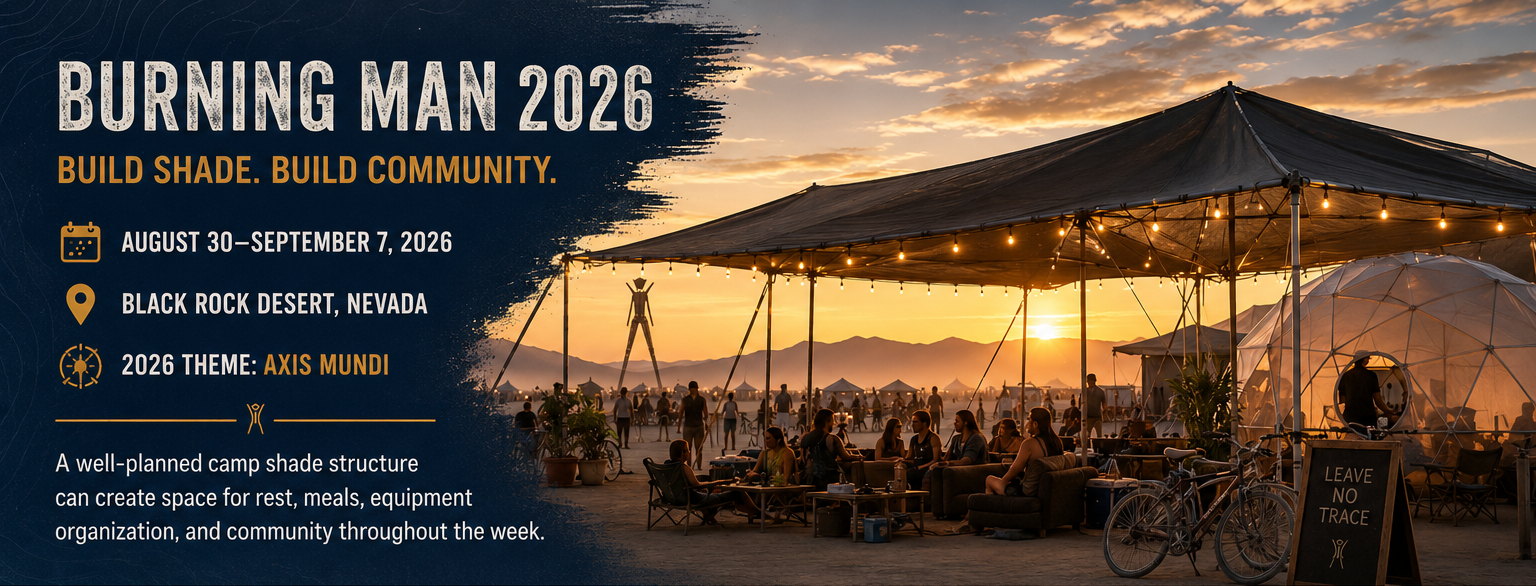
Burning Man is not a conventional campground or spectator event. Black Rock City is a temporary community built through preparation, participation, creativity, and shared effort.
Your camp becomes your home base. It may serve as a kitchen, lounge, workshop, dining room, charging area, costume station, equipment shelter, or gathering space. Without adequate shade and thoughtful organization, even simple camp activities can become more difficult.
Canopies & Tarps supplies galvanized canopy fittings, box kits, replacement covers, tarps, bungees, and related components that customers use to create customized outdoor structures. This guide explains how those components can fit into a larger playa camp plan.
Shop Canopy FittingsWhy Shade Matters on the Playa
Daytime Relief
A shaded area gives camp members a place to rest, eat, hydrate, organize supplies, and take a break from direct sun exposure.
Dust Management
A carefully arranged shelter can help define cleaner storage and activity zones, although playa dust will still find its way into nearly everything.
Camp Organization
Covered zones help separate cooking, dining, lounging, tools, bicycles, costumes, water, and communal equipment.
Community Space
A comfortable central shade area often becomes the place where camp members connect, plan, repair gear, share meals, and welcome neighbors.
Start with the Purpose of the Structure
Before selecting a tarp, frame size, or fitting configuration, define exactly what the structure needs to accomplish. A small personal shade shelter and a communal camp lounge have very different requirements.
Personal Shade
Designed for sleeping quarters, a tent, personal equipment, or a compact sitting area.
Compact footprintCommunal Lounge
Provides room for seating, tables, meals, socializing, meetings, and daytime recovery.
Open gathering areaKitchen or Service Area
Creates a defined zone for food preparation, water, camp supplies, cleanup stations, or volunteer operations.
Functional workspaceEquipment Storage
Helps organize bicycles, coolers, tools, spare parts, generators, containers, and camp infrastructure.
Organized protectionArt or Workshop Area
Provides a covered location for repairs, fabrication, costumes, interactive projects, or camp activities.
Creative build zoneMulti-Zone Camp
Uses connected canopy bays or modular frame sections to separate several camp functions.
Expandable layoutWhich Canopy Roof Style Works for Your Camp?
| Roof Style | Potential Advantages | Planning Considerations | Good Fit For |
|---|---|---|---|
| Flat Roof | Simple geometry, easy modular expansion, and efficient use of overhead space. | Requires careful attention to cover tension and drainage planning if unexpected moisture occurs. | Lounges, kitchens, connected camp grids, and equipment zones. |
| Low Peak | Provides a shallow roof pitch while maintaining a relatively low overall profile. | Confirm the 102-degree fittings, rafter lengths, frame width, and matching cover design. | Compact camps, covered dining areas, and general shade structures. |
| Medium Peak | Offers more roof rise than low peak without the full height of a high-peak system. | All 110-degree roof fittings and compatible cover geometry must match. | Camps wanting moderate interior height and a defined roof profile. |
| High Peak | Creates a taller center area, pronounced roofline, and increased interior volume. | Higher profiles may require additional planning, bracing, and careful wind-risk evaluation. | Larger gathering spaces, themed camps, and tall interior layouts. |
| Slope Roof | Creates one-direction roof pitch and may work well alongside another camp structure. | The high and low sides must be planned correctly, and the cover must match the slope geometry. | Edge shade, vehicle-adjacent shelters, work zones, and customized camp layouts. |
Popular Components for Custom Playa Shade Builds
Corner Fittings
Corner fittings connect the outer rails, legs, and roof rafters that define the perimeter of a canopy frame.
Browse FittingsSide and Center Fittings
Multi-way fittings can connect additional bays, intermediate supports, ridge sections, and expanded camp layouts.
View ConnectorsPeak and Roof Fittings
Low-, medium-, and high-peak fittings determine the pitch, center height, and geometry of the roof structure.
Compare Roof StylesCanopy Box Kits
Box kits include a tarp cover, galvanized fittings, and ball bungees while allowing you to purchase the pipe locally.
Shop Box KitsShade and Tarp Covers
The right cover depends on the desired shade level, airflow, privacy, water resistance, weight, and frame compatibility.
Shop TarpsBall Bungees and Accessories
Properly selected attachment hardware helps connect the cover to the frame while allowing practical installation and removal.
Shop AccessoriesChoosing a Cover Material
Cover material affects shade, airflow, weight, privacy, heat buildup, dust behavior, and how the structure responds to environmental loads. No single tarp material is ideal for every camp.
Mesh Shade Tarps
Mesh tarps provide partial shade while allowing more air to pass through the material than a solid tarp.
- Useful where airflow is a priority
- Available in different shade percentages
- May reduce the solid surface area exposed to wind
- Does not provide full rain or dust protection
Poly Tarps
Polyethylene tarps offer solid coverage in a broad range of sizes, thicknesses, weights, colors, and durability levels.
- Lightweight compared with many vinyl options
- Waterproof material construction
- Available in utility and heavy-duty grades
- Requires proper tensioning and attachment
Vinyl Tarps
Vinyl tarps are commonly selected for demanding applications where abrasion resistance and heavy-duty construction are priorities.
- Substantially heavier than many poly tarps
- Strong material for repeated use
- May require more handling and structural planning
- Verify compatibility with the complete frame
Canvas Tarps
Canvas is breathable and can be useful for applications where airflow and reduced condensation are more important than full waterproofing.
- Breathable woven material
- Heavier than many basic poly tarps
- Water-resistant options may be available
- May collect and retain playa dust
Planning the Camp Layout
Determine the Total Footprint
Identify the space available for sleeping areas, vehicles, communal shade, kitchen operations, water storage, bicycles, and emergency access.
Choose the Structure’s Main Purpose
Decide whether the canopy is primarily a lounge, kitchen, dining space, equipment shelter, workshop, tent cover, or multi-use area.
Select the Roof Style and Size
Compare flat, low-peak, medium-peak, high-peak, and slope-roof layouts. Consider usable interior space, overall height, modular expansion, and cover availability.
Confirm Every Fitting and Pipe Size
Match fitting socket size to the actual pipe outside diameter. Confirm the number, direction, and angle of every connection.
Plan Cover Attachment
Determine how the cover will connect to the frame and whether the grommet spacing, bungees, straps, pockets, or other fastening components match the design.
Plan Anchoring and Bracing Separately
Anchoring and structural stability require their own careful plan. Follow current event rules, experienced camp guidance, product instructions, and applicable safety requirements.
Test the Full Build Before Departure
Assemble the structure at home, label every pipe, verify all fittings, test the cover, create an inventory, and photograph the completed frame.
Create a Teardown and MOOP Plan
Assign responsibility for hardware, fasteners, tape, packaging, damaged components, and a final Matter Out of Place inspection.
Build and Test Before You Reach the Desert
The Playa Is Not the Place to Discover Missing Parts
Perform a complete test assembly before departure. Confirm that every fitting accepts the intended pipe, every roof section aligns, the tarp fits, the attachment points are reachable, and the structure can be assembled by your team.
Label the pipes and fittings by location. Keep a printed frame diagram, spare hardware, tools, gloves, eye protection, and replacement bungees with the camp equipment.
Label Every Pipe
Use a clear system such as roof, leg, side rail, front, rear, bay number, and center ridge.
Photograph the Assembly
Take wide views and closeups showing the fitting orientation, roof layout, cover attachment, and completed structure.
Pack by Build Order
Group components so the first pieces needed during setup are accessible without unloading the entire camp.
Carry Spare Hardware
Bring compatible replacement bolts, bungees, fasteners, fittings, and repair supplies for your specific system.
Assign a Build Lead
One person should understand the full layout, identify the parts, and coordinate safe assembly and teardown.
Inspect Before Each Use
Do not use bent pipes, cracked fittings, damaged welds, badly worn covers, or compromised attachment hardware.
Wind, Dust, and Weather Planning
Black Rock City is built in a remote desert environment. Conditions can change, and a shade structure should never be treated as a guaranteed refuge from severe weather.
Limit Loose Material
Secure packaging, cord ends, tape backing, fabric scraps, labels, and small hardware before they become Matter Out of Place.
Monitor the Structure
Inspect joints, cover tension, fasteners, pipes, and attachment points regularly and after changing conditions.
Know When to Remove the Cover
Your camp should have a predetermined response plan when conditions exceed what the structure or installation can safely handle.
No Canopy Is Windproof
Canopy products should not be represented as windproof or guaranteed for all playa conditions. Stability depends on the complete design, pipe, fittings, cover, anchors, bracing, installation, soil conditions, inspection, maintenance, and weather.
Follow the official Burning Man Survival Guide and current event requirements. When in doubt, consult experienced builders or a qualified professional.
Leave No Trace Starts During the Build
Leaving No Trace is easier when the camp is designed for containment, inventory, inspection, and complete removal from the beginning.
Before Arrival
- Remove unnecessary packaging at home
- Pre-cut materials whenever possible
- Count and label all small hardware
- Pack containers for damaged components
- Create setup and teardown inventories
During Teardown
- Collect hardware immediately as it is removed
- Inspect each fitting and pipe before packing
- Contain tape, zip ties, rope fibers, and fabric scraps
- Perform multiple MOOP sweeps
- Remove every camp component from the playa
Should You Buy a Complete Canopy or a Box Kit?
Complete Canopy System
A complete system may be the better choice when you want a coordinated frame and cover package without sourcing the pipe separately.
- Frame components supplied together
- Cover intended for the selected system
- Less local pipe sourcing
- Larger and heavier shipping requirements
Canopy Box Kit
A box kit can reduce shipping volume by including the tarp cover, galvanized fittings, and ball bungees while you purchase the specified pipe locally.
- Fittings, cover, and bungees included
- Pipe purchased near your location
- Useful for customized transport planning
- Pipe dimensions must follow kit requirements
Playa Camp Shade Checklist
| Category | Items to Confirm |
|---|---|
| Structure | Frame size, roof style, pipe diameter, fitting angle, socket layout, center height, and intended footprint. |
| Cover | Material, finished size, shade level, weight, grommet spacing, attachment method, and roof compatibility. |
| Hardware | Bungees, bolts, eyebolts, fasteners, tools, gloves, replacement parts, and labeled storage containers. |
| Stability Plan | Current event rules, anchoring method, bracing, inspection schedule, weather response, and designated build lead. |
| Camp Function | Seating, kitchen, water, bicycles, equipment, walkways, lighting, accessibility, and emergency access. |
| Leave No Trace | Inventory, containment, packaging removal, small-part control, teardown plan, MOOP sweeps, and transportation off-playa. |
Helpful Canopy and Camp-Building Resources
Use these product categories and guides to select a frame style, understand fitting angles, compare materials, and plan your custom shade system.
- Shop Canopy Fittings Browse flat-roof, low-peak, medium-peak, high-peak, slope, corner, side, center, and specialty fittings.
- Shop Canopy Box Kits Choose a tarp cover, fitting, and bungee package while sourcing the required frame pipe locally.
- Complete Canopy Fitting Guide Learn how canopy fittings determine frame shape, roof pitch, pipe layout, and connection type.
- How to Measure a Canopy Fitting Angle Identify 90-degree flat, 102-degree low, 110-degree medium, and 120-degree high-peak fittings.
- Shop Tarps by Material and Application Compare poly, vinyl, canvas, mesh, fire-retardant, and specialty covers.
- Tarp Weight and Material Comparison Guide Understand weight, thickness, durability, airflow, and material differences before selecting a cover.
- Use the Tarp and Canopy Product Selector Get guided help identifying an appropriate tarp, canopy, fitting, or shelter category.
Frequently Asked Questions
What type of canopy is best for Burning Man?
There is no single best canopy for every camp. The appropriate design depends on the number of people, available footprint, intended use, roof style, cover material, transportation capacity, anchoring plan, and experience of the build team.
Is a shade tarp or solid tarp better for the playa?
Mesh shade tarps allow more airflow and provide partial shade, while solid poly or vinyl tarps provide more complete coverage. Each material creates different wind, weight, heat, privacy, and installation considerations.
What is included in a canopy box kit?
Canopies & Tarps box kits generally include the canopy tarp cover, galvanized steel fittings, and ball bungee ties. The customer purchases the specified pipe locally to complete the frame.
Is the pipe included with a canopy box kit?
No. Pipe is purchased locally according to the dimensions and tubing requirements listed for the selected kit.
Can I build a canopy with EMT conduit?
Some canopy fittings and kits are designed for specific EMT conduit sizes, while other systems use larger chain-link fence top rail or structural tubing. Match the fitting socket size to the exact outside diameter of the specified pipe.
Can I mix low-peak and high-peak fittings?
Not within a standard matching roof system. Low-, medium-, and high-peak fittings create different roof angles and geometry. Mixing them can prevent proper pipe alignment and cover fit.
Should I assemble the canopy before leaving for Burning Man?
Yes. A complete test build allows you to identify missing components, confirm fitting and pipe compatibility, test the cover, label the frame, train the build team, and document the assembly.
Are Canopies & Tarps products windproof?
No canopy should be treated as windproof. Stability depends on the complete frame, cover, anchors, bracing, installation, inspection, maintenance, ground conditions, and weather. Follow applicable event requirements and safety guidance.
How do I reduce MOOP from my canopy build?
Remove unnecessary packaging before arrival, label and count hardware, contain small parts during setup and teardown, avoid loose scraps, inspect the camp regularly, and perform multiple final MOOP sweeps.
How early should I order canopy components?
Order early enough to receive the products, inspect everything, source the correct pipe, complete a full test build, replace missing or incompatible parts, and repack the system for transport.
Build Your Playa Shade Plan Before You Hit the Road
Choose your footprint, roof style, fittings, pipe size, cover material, and attachment components early enough to complete a full test build. A better-prepared structure means fewer surprises when your camp reaches Black Rock City.
Canopies & Tarps is not affiliated with, endorsed by, or sponsored by Burning Man Project. “Burning Man” and “Black Rock City” are used only to describe the event and the intended educational subject of this article. Product suitability depends on the complete design, installation, maintenance, environmental conditions, and applicable event requirements. Always consult the current official Burning Man Survival Guide before attending.