

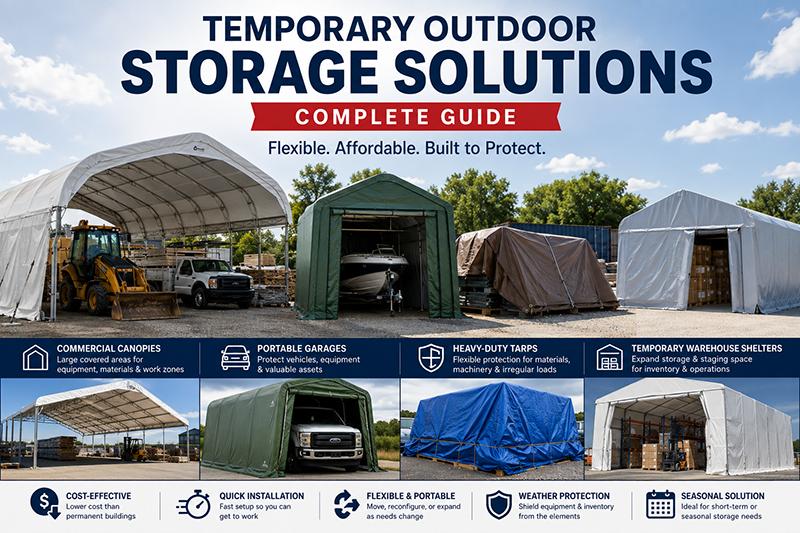
Temporary Outdoor Storage Solutions: Complete Guide
Posted by CanopiesAndTarps on Jul 24th 2026
Learn how commercial canopies, portable garages, tarp enclosures, and heavy-duty covers can create flexible storage space for equipment, vehicles, inventory, building materials, and seasonal supplies.
Temporary outdoor storage solutions provide a practical way to protect equipment, vehicles, inventory, materials, and jobsite supplies without the expense or long-term commitment of permanent construction. These systems can be installed more quickly than traditional buildings and adapted as storage requirements change.
Businesses, farms, contractors, institutions, and homeowners commonly use canopy shelters, portable garages, heavy-duty tarps, and enclosure systems to create covered storage, protected staging areas, temporary work zones, and seasonal overflow space.
The right solution depends on what you are storing, how long protection is needed, the amount of weather exposure, available clearance, access requirements, and whether the structure must remain portable.
Why Businesses Use Temporary Storage Solutions
Lower Upfront Cost
Temporary shelters can provide useful covered space without the cost and complexity associated with constructing a permanent building.
Faster Installation
Many canopy and portable shelter systems can be assembled much more quickly than permanent storage facilities.
Flexible Placement
Portable structures can often be relocated, reconfigured, expanded, or removed as operational needs change.
Weather Protection
Covers and enclosure systems help shield stored assets from rain, direct sunlight, dust, debris, and other outdoor exposure.
Overflow Capacity
Temporary shelters can create added space during seasonal peaks, renovations, facility moves, or periods of increased inventory.
Seasonal Use
Storage areas can be installed for a specific season or project and removed when the additional space is no longer needed.
Common Temporary Storage Applications
Construction and Jobsites
- Lumber and building materials
- Roofing and concrete supplies
- Tools and machinery
- Temporary fabrication areas
- Protected loading zones
Commercial and Industrial
- Overflow inventory
- Equipment and machinery
- Loading dock staging
- Seasonal merchandise
- Temporary warehouse expansion
Agricultural Storage
- Tractors and implements
- Feed and farm supplies
- Seasonal equipment
- Livestock-related materials
- Harvest staging areas
Residential Storage
- Vehicles and motorcycles
- Boats and recreational equipment
- Lawn and garden tools
- Firewood and outdoor supplies
- Home improvement materials
Popular Temporary Storage Shelter Options
Commercial Canopy Shelters
Heavy-duty commercial canopies provide broad overhead protection for vehicles, machinery, building materials, work areas, and outdoor inventory. Open-sided canopy systems allow convenient access from multiple directions and can be paired with side panels or enclosure components when additional coverage is needed.
These structures are well suited for loading areas, equipment yards, staging zones, temporary production areas, and commercial outdoor storage.
Explore Heavy-Duty CanopiesPortable Garages and Storage Shelters
Portable garages offer roof and sidewall coverage for cars, trucks, boats, trailers, tractors, maintenance equipment, and stored supplies. Their enclosed or partially enclosed designs provide more complete protection than an open canopy.
Portable shelters are commonly selected when the stored items need privacy, reduced exposure, or protection from multiple directions.
Shop Portable GaragesHeavy-Duty Tarps
Heavy-duty tarps can cover stacked materials, machinery, inventory, firewood, trailers, and irregularly shaped loads. They can also be attached to frames to create temporary walls, curtains, dividers, wind barriers, and enclosure panels.
Tarps are especially useful when storage needs change frequently or when a fixed shelter is not practical.
Browse Heavy-Duty TarpsCanopy Enclosure Systems
Canopy enclosure panels convert an open canopy into a more protected storage area. Sidewalls, end panels, door panels, and full enclosure kits can help reduce exposure to blowing rain, sunlight, dust, and debris.
Enclosures are useful for equipment storage, temporary workshops, material staging, vendor operations, and seasonal inventory protection.
View Canopy EnclosuresComparing Temporary Outdoor Storage Options
| Storage Solution | Best For | Access | Protection Level | Key Advantage |
|---|---|---|---|---|
| Open Canopy | Equipment, work areas, materials, and loading zones | Open access from several sides | Primarily overhead coverage | Convenient access and large covered area |
| Enclosed Canopy | Inventory, supplies, machinery, and protected work areas | Controlled through doors or openings | Roof and sidewall protection | Flexible enclosure configurations |
| Portable Garage | Vehicles, tractors, boats, trailers, and equipment | Usually through front or end doors | More complete weather coverage | Purpose-built enclosed shelter |
| Heavy-Duty Tarp | Stacked goods, machinery, materials, and irregular loads | Cover must be moved or opened | Direct cover protection | Portable and adaptable |
| Tarp Wall or Curtain | Temporary dividers, wind barriers, and partial enclosures | Can be rolled, tied, or removed | Targeted side protection | Easy to customize around an existing frame |
Choosing the Right Tarp or Cover Material
Cover material affects waterproofing, durability, ventilation, weight, handling, and long-term outdoor performance. The best choice depends on what is being stored and the conditions surrounding the storage area.
| Material | Best Use | Primary Benefit | Considerations |
|---|---|---|---|
| Poly Tarps | General equipment, materials, yard storage, and seasonal coverage | Waterproof, lightweight, and easy to handle | Select the appropriate thickness and reinforcement for the application |
| Vinyl Tarps | Commercial, industrial, and demanding outdoor applications | High abrasion resistance and heavy-duty performance | Heavier than standard poly covers |
| Canvas Tarps | Equipment and materials that benefit from airflow | Breathable and abrasion resistant | Water resistant rather than fully waterproof |
| Mesh Tarps | Shade, wind reduction, privacy, and ventilated storage areas | Allows airflow while reducing sun exposure | Does not provide complete rain protection |
| Clear Covers | Work areas or storage zones where visibility and natural light are helpful | Allows light transmission and visual access | Material type and thickness should match the intended duration and exposure |
For more detailed material comparisons, visit our Tarp Buying Guide and Tarp Weight and Material Comparison Guide.
Weather Conditions to Consider
Rain and Drainage
Use waterproof covers where rain protection is required. Maintain proper roof tension and slope so water does not collect in low areas. Keep stored materials elevated when ground moisture or runoff may be present.
Wind Exposure
Anchor the frame and cover securely using hardware appropriate for the installation surface. Openings, loose sidewalls, and poorly tensioned covers can increase movement in windy conditions.
Sun and UV Exposure
Choose a UV-resistant cover for prolonged outdoor use. Consider reflective or light-colored materials when limiting heat buildup is an important part of the storage plan.
Snow and Ice
Avoid allowing snow or ice to accumulate on structures that are not specifically designed for those loads. Follow the shelter manufacturer’s instructions and remove buildup promptly when required.
How to Choose the Right Temporary Storage Solution
Identify What You Need to Store
Record the dimensions, quantity, weight, value, and sensitivity of the vehicles, equipment, materials, or inventory being protected.
Measure the Available Space
Check the available width, length, height, access route, slope, drainage, overhead clearance, and distance from nearby structures.
Determine the Required Protection
Decide whether you need overhead shade, waterproof coverage, full side protection, ventilation, privacy, light transmission, or a combination of these features.
Plan for Access
Allow enough room for people, vehicles, forklifts, trailers, loading equipment, doors, ramps, and routine maintenance.
Review the Installation Surface
Concrete, asphalt, soil, gravel, and wood decking may require different foot pads, anchors, stakes, or mounting hardware.
Consider the Length of Use
A short-term material cover may only require a tarp, while seasonal or recurring storage may justify a framed canopy, enclosure, or portable garage.
Temporary Outdoor Storage Planning Tips
- Allow extra clearance around vehicles, equipment, and stored materials.
- Keep materials off the ground when moisture or drainage may be a concern.
- Provide airflow when storing items that may trap condensation.
- Use pallets, shelving, or racks to organize smaller inventory.
- Maintain clear walkways and equipment access routes.
- Avoid placing sharp edges directly against a tarp or fabric cover.
- Inspect covers, fasteners, anchors, and frame connections regularly.
- Retighten loose covers before wind can cause flapping or abrasion.
- Plan for water runoff around the perimeter of the storage area.
- Leave room for future inventory growth or additional equipment.
Temporary Storage vs. Permanent Construction
Temporary shelters are not a direct replacement for every permanent building. A permanent structure may be the better choice when climate control, long-term occupancy, high security, specialized utilities, or structural load requirements are essential.
Temporary outdoor storage is often most useful when a business needs flexible capacity, faster deployment, seasonal protection, project-specific coverage, or a lower-cost way to protect assets while longer-term plans are developed.
Before installing a shelter, review local zoning, building, fire, property, and permitting requirements. Rules can vary by location, structure size, installation duration, use, and site conditions.
Frequently Asked Questions
What is the best temporary outdoor storage solution?
The best solution depends on what you are storing and how much protection is required. Open canopies work well for accessible covered areas, portable garages offer more complete vehicle and equipment protection, and heavy-duty tarps provide flexible coverage for materials, machinery, and irregular loads.
Are temporary outdoor storage shelters waterproof?
Many poly and vinyl shelter covers are made from waterproof materials. However, overall weather protection also depends on proper assembly, cover tension, seams, door openings, sidewall configuration, drainage, and maintenance.
Can a canopy be used for outdoor equipment storage?
Yes. A properly sized and anchored canopy can provide overhead protection for machinery, vehicles, tools, materials, and equipment. Side panels or a full enclosure can be added when protection from multiple directions is needed.
How do I determine the correct shelter size?
Measure the full length, width, and height of the stored items and add space for doors, loading equipment, walkways, maintenance, and safe movement. Also verify the shelter’s side height, center height, door opening, and interior clearance.
How should a temporary storage shelter be anchored?
Anchoring depends on the structure, surface, site conditions, and manufacturer’s requirements. Soil, concrete, asphalt, gravel, and wood surfaces may each require different stakes, anchors, foot pads, or mounting hardware.
Do temporary storage shelters require a permit?
Permit and zoning requirements vary by location. Structure size, intended use, installation duration, setbacks, property type, and fire regulations may affect whether approval is required. Contact the appropriate local authority before installation.
How can condensation be reduced inside a storage shelter?
Provide appropriate ventilation, avoid sealing damp materials inside the shelter, keep stored items off wet ground, and manage drainage around the structure. The best approach depends on the stored materials and local climate.
Can temporary storage shelters be used year-round?
Some shelters are suitable for extended outdoor use, while others are intended for seasonal or temporary applications. Review the frame, cover material, anchoring requirements, weather limitations, and manufacturer’s instructions before selecting a shelter for year-round use.
Find the Right Temporary Storage Solution
Whether you need to protect construction materials, shelter vehicles, expand warehouse capacity, cover agricultural equipment, or create an outdoor work area, Canopies & Tarps offers a range of heavy-duty canopies, portable garages, enclosure systems, and weather-resistant tarps.
Product suitability depends on shelter design, cover material, installation, anchoring, site conditions, maintenance, and weather exposure. Review product specifications and installation instructions before purchasing or installing a temporary storage system.