

What Is a Drain Tarp? How to Stop Ceiling Leaks and Protect Your Workspace
Posted by CanopiesAndTarps on Oct 15th 2026
A leaking ceiling can quickly turn into an expensive problem. Whether you're managing a warehouse, commercial building, manufacturing facility, or agricultural structure, unwanted water can threaten inventory, equipment, flooring, and daily operations.
But what if you could capture that water and direct it away from sensitive areas while waiting for permanent repairs?
That's exactly what a drain tarp, also known as a ceiling leak diverter, is designed to do.
What Is a Drain Tarp?
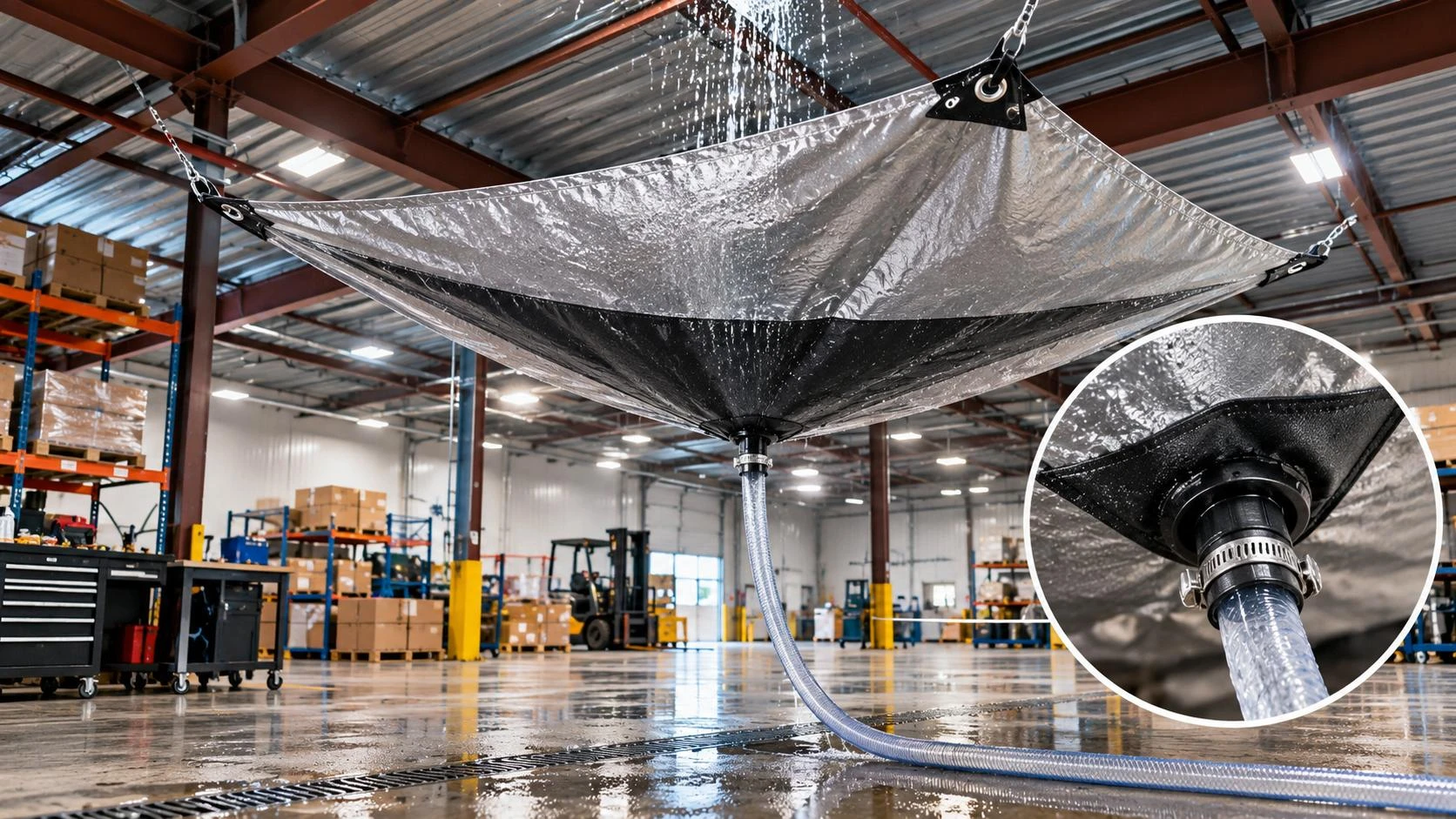
A drain tarp is a specially designed waterproof cover that hangs beneath an overhead leak. Unlike a conventional flat tarp, it collects dripping water and directs it toward a built-in drainage outlet.
A hose attached to the outlet carries the water to a suitable collection container or drainage location.
This simple system can help reduce water exposure beneath leaking roofs, plumbing, overhead equipment, and other problem areas.
Important: A drain tarp is a temporary water-management solution, not a permanent repair for the source of a leak.
How Does a Drain Tarp Work?
A properly installed drain tarp works in four basic steps:
-
Capture: The tarp is suspended beneath the leaking area using its corner attachment points.
-
Collect: Water falls into the tarp, which slopes toward its central drainage outlet.
-
Redirect: A compatible hose connects to the outlet and carries water away.
-
Discharge: Water flows to an appropriate drain or collection container, away from sensitive equipment and walking areas.
The drain tarps available from Canopies & Tarps feature a central drainage spout designed to connect to a standard 3/4-inch garden hose.
The key is creating a consistent downward slope so water moves toward the outlet rather than collecting in low spots.
Where Are Drain Tarps Used?
1. Warehouses and Distribution Centers
Roof leaks above inventory racks, packaging stations, and shipping areas can cause costly interruptions.
A suspended drain tarp can help redirect water away from vulnerable materials while the underlying roof problem is addressed.
2. Commercial Buildings and Offices
Ceiling leaks in commercial properties can affect furnishings, flooring, ceiling tiles, and occupied spaces.
Drain tarps can help facilities teams manage dripping water during maintenance, provided the installation area is safe and appropriately supported.
3. Manufacturing and Industrial Facilities
Water intrusion around machinery and production areas can create significant operational concerns.
A leak diverter can help control where water travels, but electrical hazards and equipment exposure must be assessed before installation.
4. Agricultural Buildings
Barns, storage structures, and agricultural facilities can experience roof leaks and condensation problems.
Drain tarps offer a temporary way to channel unwanted water away from stored supplies and designated work areas.
5. Construction and Renovation Projects
During roof replacement, building repairs, or temporary maintenance, an overhead drain tarp can help manage localized water intrusion until permanent work is completed.
Poly vs. Fire-Retardant Vinyl Drain Tarps
Canopies & Tarps offers two drain tarp material options, each suited to different requirements.
| Feature | Silver/Black Poly Drain Tarp | Translucent Vinyl Drain Tarp |
|---|---|---|
| Material | Reinforced polyethylene | Vinyl |
| Fabric weight | 6 oz. | 13 oz. |
| Appearance | Silver/black | Translucent |
| Fire-retardant version | Not specified | Yes |
| Main advantage | Lighter-weight water diversion | Heavier material with fire-retardant properties |
| Available sizes | 5' × 5' to 20' × 20' | 5' × 5' to 20' × 20' |
Which should you choose?
For general overhead leak diversion, the silver/black poly option may be a practical starting point.
For applications requiring a fire-retardant material, consider the translucent 13 oz. vinyl option. Always verify that the specific product's fire-retardancy documentation meets applicable building, facility, or project requirements.
Explore Drain Tarps and Available Sizes
How to Install a Ceiling Leak Diverter
Correct installation is essential for effective drainage.
Step 1: Identify the leak area. Determine where the water is entering and where it actually drips. Water can travel along structural surfaces before falling.
Step 2: Select an appropriately sized tarp. Choose a tarp that extends beyond the expected drip area and provides adequate coverage.
Step 3: Identify safe attachment points. Use suitable structural supports and compatible hanging hardware. Do not attach to unsupported ceiling tiles, sprinkler piping, electrical conduit, or other unsuitable components.
Step 4: Suspend the corners. Position the tarp so its central outlet is lower than the edges, creating a funnel shape.
Step 5: Connect the drainage hose. Attach a compatible hose securely and route it continuously downhill, avoiding kinks and elevated sections that could restrict flow.
Step 6: Test and monitor. Check that water flows toward the outlet, the hose remains secure, and the tarp is not accumulating excessive standing water.
For large installations or uncertain structural conditions, consult qualified maintenance or facilities personnel.
Five Common Drain Tarp Installation Mistakes
-
Installing the tarp too flat: Without adequate slope, water may pool instead of draining.
-
Choosing a tarp that's too small: Water can drip beyond the covered area, especially when leaks spread.
-
Routing the hose uphill: Gravity drainage requires a suitable downward path.
-
Using unsuitable attachment points: The weight of collected water can place substantial stress on supports.
-
Treating the tarp as a permanent repair: The source of the leak still needs to be diagnosed and corrected.
Even a relatively small amount of collected water can become heavy. One gallon of water weighs approximately 8.34 pounds, so a tarp holding 10 gallons would be supporting more than 83 pounds of water before accounting for the tarp itself.
How to Choose the Right Drain Tarp Size
Available square sizes include:
-
5' × 5' — localized drip areas
-
7' × 7' — small ceiling leak zones
-
10' × 10' — larger maintenance areas
-
12' × 12' — broader overhead coverage
-
15' × 15' — substantial leak zones
-
20' × 20' — large-area water collection
These are general selection examples, not drainage-capacity ratings.
Consider the location of the leak, available attachment points, expected water volume, overhead clearance, and the path to a suitable drainage location before choosing a size.
Frequently Asked Questions
Can a drain tarp stop a roof leak?
A drain tarp does not repair the roof. It captures water after it enters the building and helps redirect it away from the area below.
Do drain tarps need a hose?
A hose is generally needed to move collected water away from the tarp's central outlet and into a suitable drainage or collection location.
Can I use a regular tarp instead?
A standard tarp does not usually include a purpose-built central drain fitting. A dedicated drain tarp makes controlled water diversion more practical.
Are fire-retardant drain tarps available?
Yes. Canopies & Tarps offers a translucent 13 oz. vinyl drain tarp described as fire retardant. Verify the applicable certification for your project before purchase.
Are drain tarps reusable?
They can be reused when they remain in good condition. Inspect attachment points, seams, material surfaces, and the drain connection before each use. Clean and dry the tarp before storage.
Are drain tarps suitable for active electrical leaks?
Water near electrical equipment requires special precautions. Do not attempt installation around energized or compromised electrical systems without appropriate qualified personnel.
Protect Your Workspace Before a Small Leak Becomes a Big Problem
A ceiling leak doesn't always wait for a convenient repair schedule.
Drain tarps provide a practical way to capture unwanted water, direct it toward a controlled discharge point, and help protect workspaces during maintenance or temporary repairs.
Whether you manage a warehouse, agricultural building, commercial facility, or construction site, choosing the right leak diverter can be an important part of your water-damage response plan.
Explore our selection of 6 oz. silver/black poly and 13 oz. translucent fire-retardant vinyl drain tarps, available in multiple sizes.
Shop Drain Tarps & Ceiling Leak Diverters at Canopies & Tarps