

Cut Size vs Finished Size: What Tarp Dimensions Really Mean
Posted by CanopiesAndTarps on Feb 7th 2026
Tarp dimensions are often misunderstood because the listed size does not always match the final measured size. This guide explains the difference between cut size and finished size, why tarps are typically smaller than their stated dimensions, and how to choose the correct size for your application.
For a full breakdown of tarp materials, thickness, and sizing, read our Complete Tarp Buying Guide.
What Is Cut Size?
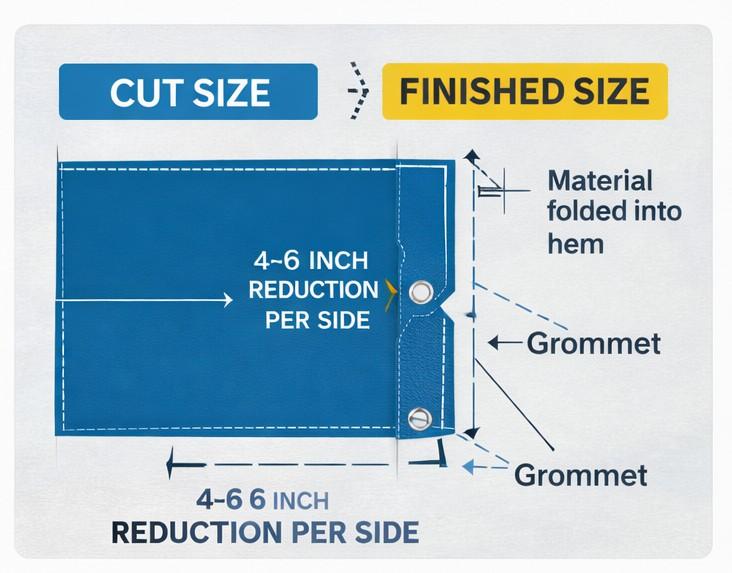
Cut size refers to the dimensions of the tarp material before hems, seams, and grommets are installed. Manufacturers cut the tarp material slightly larger so that the edges can be folded, reinforced, and finished during production.
The cut size represents the original flat dimensions of the material prior to manufacturing finishing processes.
What Is Finished Size?
Finished size refers to the actual dimensions of the tarp after hems, seams, and grommets have been installed. During the finishing process, material is folded over to reinforce the edges, which reduces the overall dimensions.
As a result, the finished size of a tarp is typically smaller than its listed or cut size.
Why Are Tarps Smaller Than the Listed Size?
Most tarps are listed by their cut size rather than their finished size. Once hems and grommets are added, the finished tarp is commonly reduced by approximately 4 to 6 inches in each direction.
This size reduction is standard across the tarp industry and is not considered a defect. It allows manufacturers to reinforce the edges for strength and durability.
What Is an Acceptable Size Tolerance?
In addition to the reduction caused by hems, tarps may also have a size tolerance of up to approximately 3 percent from the stated dimensions. This tolerance accounts for material stretch, coating, and manufacturing variation.
Minor size differences within this tolerance range are considered normal and acceptable in tarp production.
Cut Size vs Finished Size Examples
For example, a tarp listed as 20 ft × 30 ft is measured before finishing. After hems and grommets are installed, the finished size may measure approximately 19 ft 6 in × 29 ft 6 in.
This reduction allows for reinforced edges and improved durability without compromising overall coverage.
How Finished Size Affects Fit
Finished size is especially important when tarps are used on frames, canopies, or structures. A standard or classic fit allows the tarp edge to sit slightly inside the frame rather than extending beyond it.
This prevents excessive stress on grommets and reduces the risk of tearing during wind or movement.
How to Choose the Correct Tarp Size
When selecting a tarp, always consider the finished size rather than relying solely on the listed dimensions. If full edge-to-edge coverage is required, sizing up may be recommended.
For frame applications, measuring the structure and accounting for peak height, slope, and attachment points helps ensure proper fit.
Quick Reference Summary
- Cut size is the tarp measurement before finishing
- Finished size is the actual measured size after hems and grommets
- Tarps are typically 4–6 inches smaller in each direction
- A size tolerance of up to 3 percent is normal
- Finished size affects fit and durability
For additional sizing guidance, explore our selection of tarps, heavy-duty tarps, and canopy covers, or review our frequently asked questions for common sizing concerns. Part of our Tarp & Canopy Buying Guides
FAQs
What is the difference between cut size and finished size on a tarp?
Cut size refers to the dimensions of the tarp material before the edges are folded over and hemmed, while finished size is the actual usable measurement after manufacturing is complete. Because of this, a tarp labeled as 10x12 feet will typically measure slightly smaller — often 6 to 12 inches less in each direction — once it's finished. When shopping for coverage, always plan around the finished size to make sure you're getting the protection area you actually need. You can browse options by actual dimensions on our Tarps by Size page to find the right fit.
Why do tarps seem smaller than the size listed on the label?
This is one of the most common surprises buyers encounter, and it comes down to industry-standard sizing practices — tarps are marketed by their cut size, which is measured before the hem is folded and sewn. The folded hem eats into the overall dimensions, so the finished tarp is always a bit shorter and narrower than advertised. It's not a defect or a mistake; it's simply how tarps are manufactured and labeled across the industry.
How do I choose the right tarp size if the listed dimensions aren't accurate?
A good rule of thumb is to size up by at least one size category to account for the difference between cut and finished dimensions — for example, if you need exactly 10x12 feet of coverage, consider buying a 12x14 foot tarp. Think about any overlap or tie-down allowance you'll need on the sides as well, since that eats into usable coverage too. Our Tarps by Size page makes it easy to compare options, and if you need a shade solution, Mesh Sun Shade Tarps are also available in a range of sizes.
Do canopy covers and replacement tops have the same cut vs. finished size issue?
Yes, the same general principle applies — canopy covers are cut to fit a frame size, and the finished dimensions account for the hemming and binding around the edges. This is especially important when buying a replacement canopy cover, since you need the cover to match your specific frame dimensions exactly rather than just the labeled size. Always check the frame size your shelter is designed for and match it accordingly rather than going strictly by the cover's listed measurements.
Can I use a standard tarp to cover a vehicle or carport frame if the sizes don't match perfectly?
A standard tarp can work in a pinch, but for reliable vehicle protection you'll want a cover or structure that's actually sized for the job. If your tarp comes up short due to cut-versus-finished size differences, you risk leaving gaps that let in rain, UV rays, or debris. For a more purpose-built solution, consider a portable garage or carport designed to fit your vehicle, or explore heavy-duty steel carports for long-term coverage without the sizing guesswork.