

High Peak vs Traditional Canopy Covers (Complete Guide)
Posted by CanopiesAndTarps on May 16th 2026
Choosing the correct replacement canopy cover starts with understanding the difference between high peak and traditional canopy styles. While many canopy frames may appear similar, differences in roof angle, peak height, and cover design can significantly affect fit and compatibility.
This guide explains the key differences between high peak and traditional canopy covers, how frame geometry impacts fitment, and what to consider before ordering a replacement cover.
What Is a High Peak Canopy?
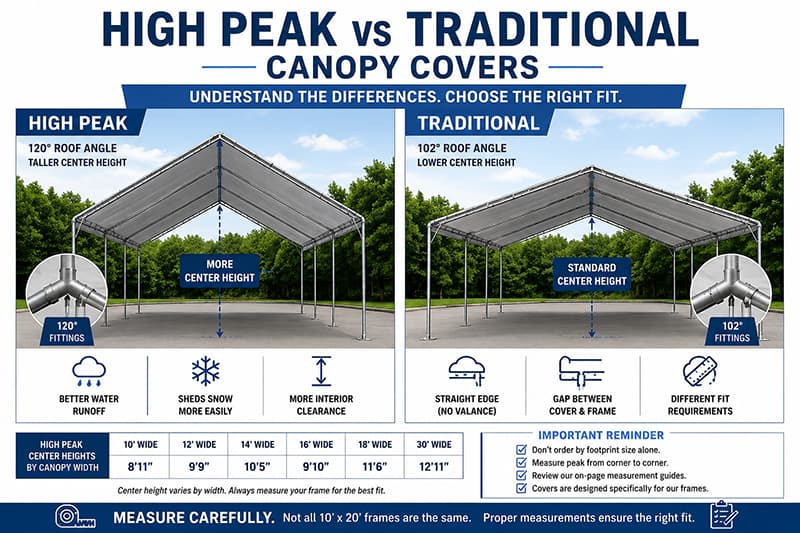
High peak canopies use a steeper roof angle designed to increase center height and improve water runoff. These canopy frames use 120-degree angled fittings, creating a taller peak profile and more interior clearance.
The steeper roof design also helps shed rainwater and light snow more effectively than lower-profile canopy styles.
High peak canopies are commonly used for:
- Vehicle storage
- Commercial shelters
- Outdoor events
- Equipment coverage
- Temporary work areas
What Is a Traditional Canopy Cover?
Traditional canopy covers refer to standard-style canopy tops without a valance edge. These covers attach directly to the canopy frame and typically leave a small visible gap between the edge of the cover and the frame tubing when installed.
Traditional covers can be used on both low peak and high peak canopy frames depending on the frame design and measurements.
Unlike valance-style covers, traditional covers do not include additional overhanging fabric around the perimeter.
Low Peak vs High Peak Frame Angles
One of the most important differences between canopy styles is the roof angle of the frame fittings.
| Frame Style | Roof Angle | Characteristics |
|---|---|---|
| Low Peak Canopy | 102° | Lower center height, reduced roof slope |
| High Peak Canopy | 120° | Steeper peak, better runoff, increased clearance |
These roof angle differences affect the amount of material required to properly fit the frame.
Why Peak Height Matters
Many customers mistakenly order replacement covers based only on the canopy footprint size, such as 10' x 20' or 12' x 20'. However, the peak height and roof geometry are equally important for proper fitment.
Replacement covers require additional material to travel up and over the canopy peak. Different roof angles and center heights change the total fabric dimensions needed.
| Canopy Width | Typical High Peak Center Height |
|---|---|
| 10' Wide | 8'11" |
| 12' Wide | 9'9" |
| 14' Wide | 10'5" |
| 16' Wide | 9'10" |
| 18' Wide | 11'6" |
| 30' Wide | 12'11" |
Valance Cover Compatibility
High peak canopy frames can use:
- Traditional canopy covers
- Valance canopy covers
- Vinyl replacement covers
Low peak canopy frames, however, cannot use valance-style replacement covers because the lower roof pitch changes the fitment geometry.
This is one of the most common compatibility issues customers encounter when ordering replacement covers.
Common Replacement Cover Mistakes
- Ordering based only on canopy footprint dimensions
- Ignoring peak height measurements
- Assuming all 10' x 20' frames are identical
- Not reviewing the on-page measurement guide
- Assuming replacement covers are universal fit
Are Replacement Covers Universal?
No. Canopies and Tarps replacement covers are designed specifically for our frame specifications and roof geometries.
While some third-party frames may appear similar, small differences in width, peak height, frame angle, and tubing dimensions can affect fitment.
Customers are encouraged to carefully review all measurement guides before ordering.
How to Measure for the Correct Replacement Cover
To determine the proper replacement cover size:
- Measure the outside dimensions of the frame
- Measure from one corner fitting up and over the peak to the opposite corner fitting
- Verify the frame style and roof angle
- Review the product measurement guide before ordering
You can also read our full guide:
How to Measure a Canopy Replacement Cover
Shop Replacement Canopy Covers
- High Peak Replacement Covers
- Valance Replacement Covers
- Traditional Replacement Covers
- Vinyl Replacement Covers
Final Thoughts
Understanding the difference between high peak and traditional canopy covers is essential when selecting the correct replacement top. Roof angle, peak height, and frame geometry all play a major role in proper fitment and long-term performance.
Reviewing measurements carefully before ordering can help reduce fitment issues and ensure the best possible replacement cover compatibility.