

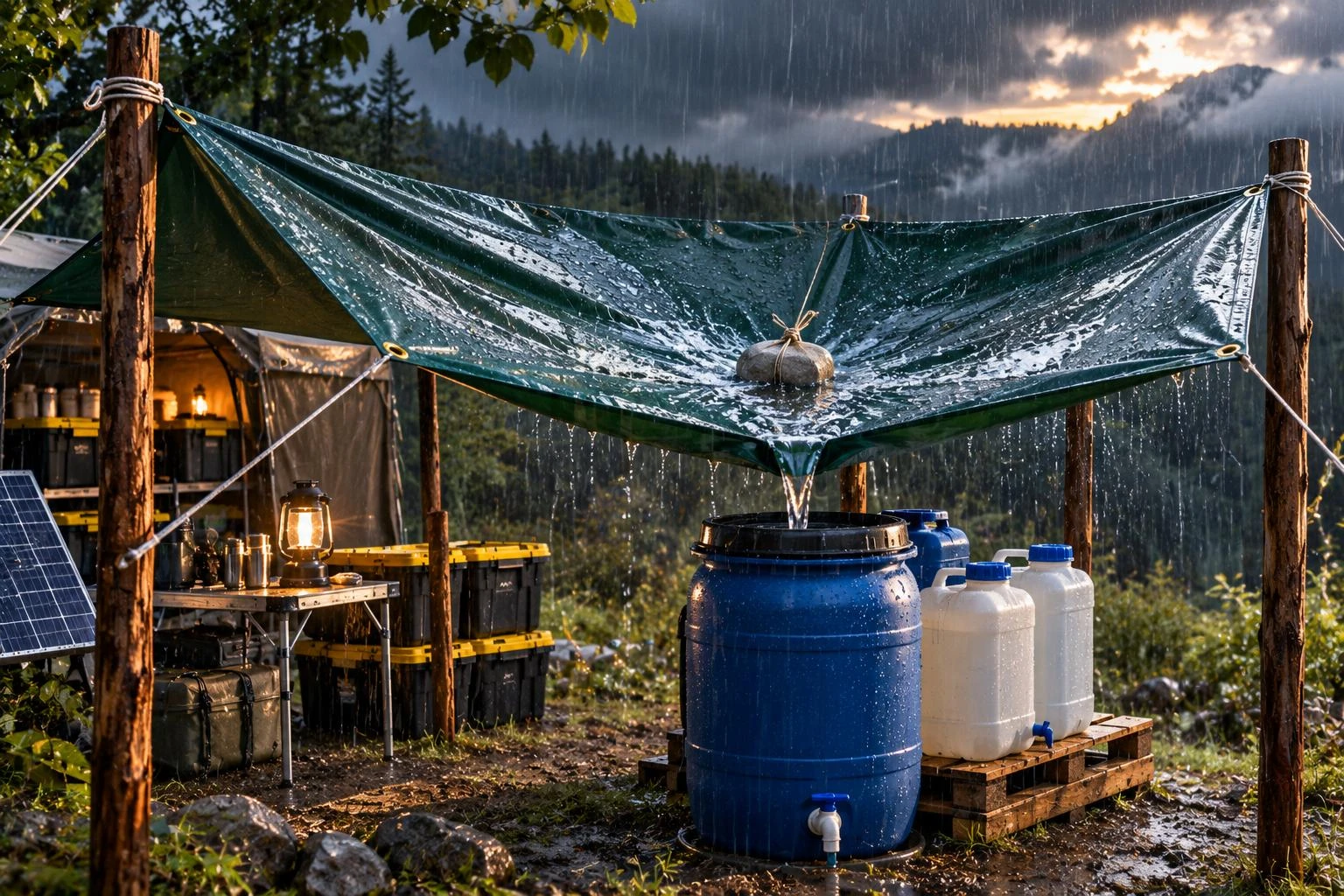
Emergency Preparedness: 8 Ways to Use Tarps During Power Outages
Posted by CanopiesAndTarps on Nov 11th 2026
When most people think of emergency tarps, they picture hurricanes, leaking roofs, or storm damage. But what happens when the electricity goes out for several days—or longer?
Extended power outages, utility disruptions, earthquakes, wildfires, and severe weather can quickly change how households manage everyday necessities. Protecting supplies, creating shaded outdoor areas, and keeping essential equipment dry can become important parts of an emergency preparedness plan.
One of the simplest and most versatile supplies to keep on hand is a heavy-duty tarp.
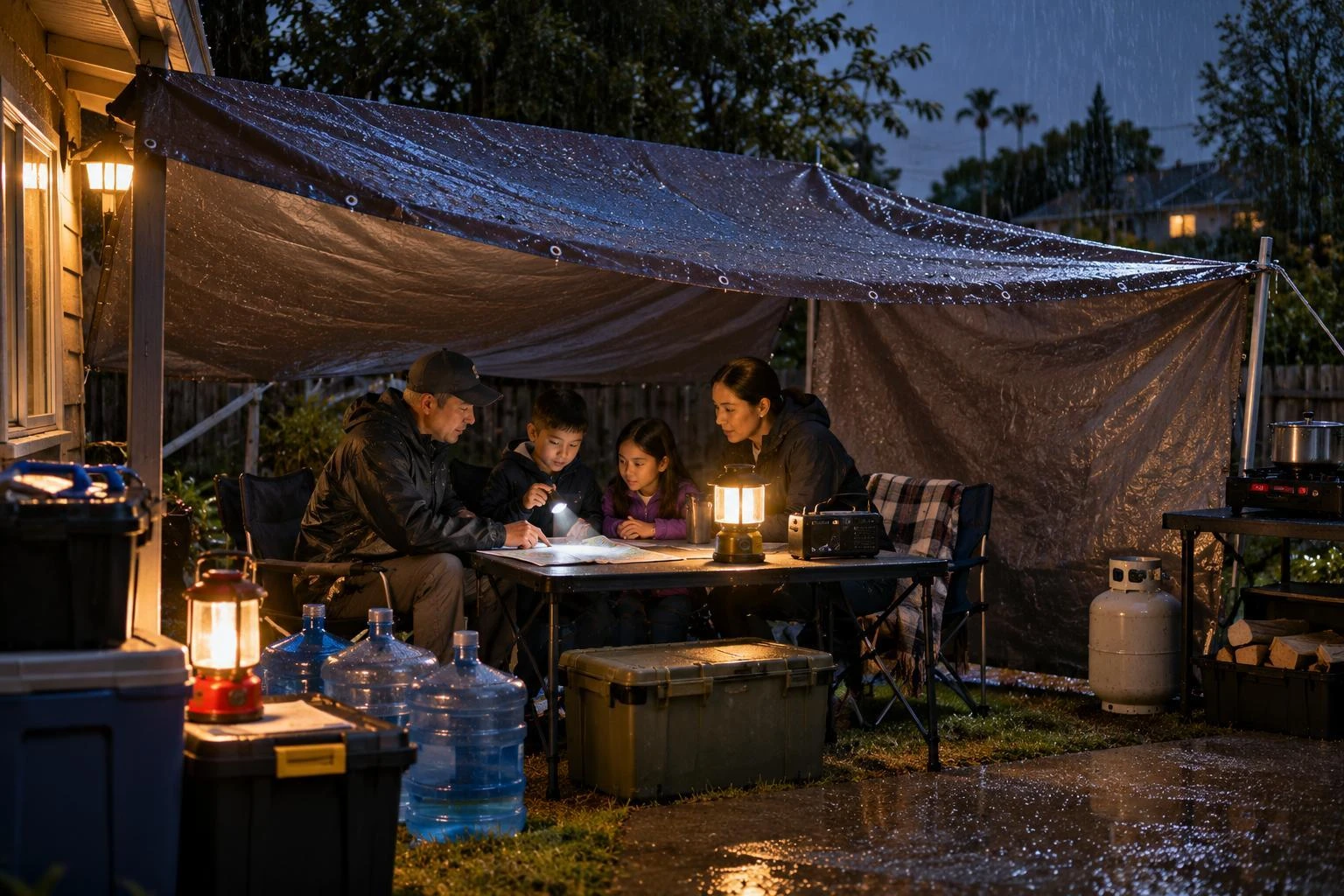
Why Tarps Belong in an Emergency Preparedness Kit
Unlike many specialized emergency products, tarps serve multiple purposes. A single tarp can help protect belongings from weather, provide shade, or separate work areas. Different materials and sizes offer additional flexibility.
Here are eight practical ways tarps can help households prepare for unexpected disruptions.
1. Protect Emergency Food, Water, and Supplies
During an extended outage, garages, patios, and other storage areas may become important places for organizing supplies.
Heavy-duty tarps can provide an additional layer of protection for sealed storage containers holding emergency food, bottled water, batteries, tools, and household necessities.
Keep supplies elevated off the ground when possible. Use waterproof containers for items that must remain dry, and avoid placing tarps directly over ventilation openings or heat-producing equipment.
Recommended: Super Heavy-Duty Black Tarps
2. Create a Temporary Outdoor Workspace
When indoor lighting, ventilation, or cooling is unavailable, an outdoor workspace may be useful for sorting supplies, charging small devices with portable solar equipment, or coordinating household tasks during daylight hours.
A properly anchored tarp canopy can create a shaded area that protects tables and supplies from direct sunlight or light rain.
Keep the structure open and ventilated, secure it against wind, and take it down when weather conditions exceed its design limits.
Explore: Canopy Systems and Canopy Box Kits
3. Protect Equipment During Utility Disruptions
Backup power systems, tools, water containers, and other equipment may need temporary protection from rain, dust, or sunlight.
Tarps can help protect equipment while it is switched off and safely stored. They should not be draped over operating electrical equipment or placed where they obstruct cooling and ventilation.
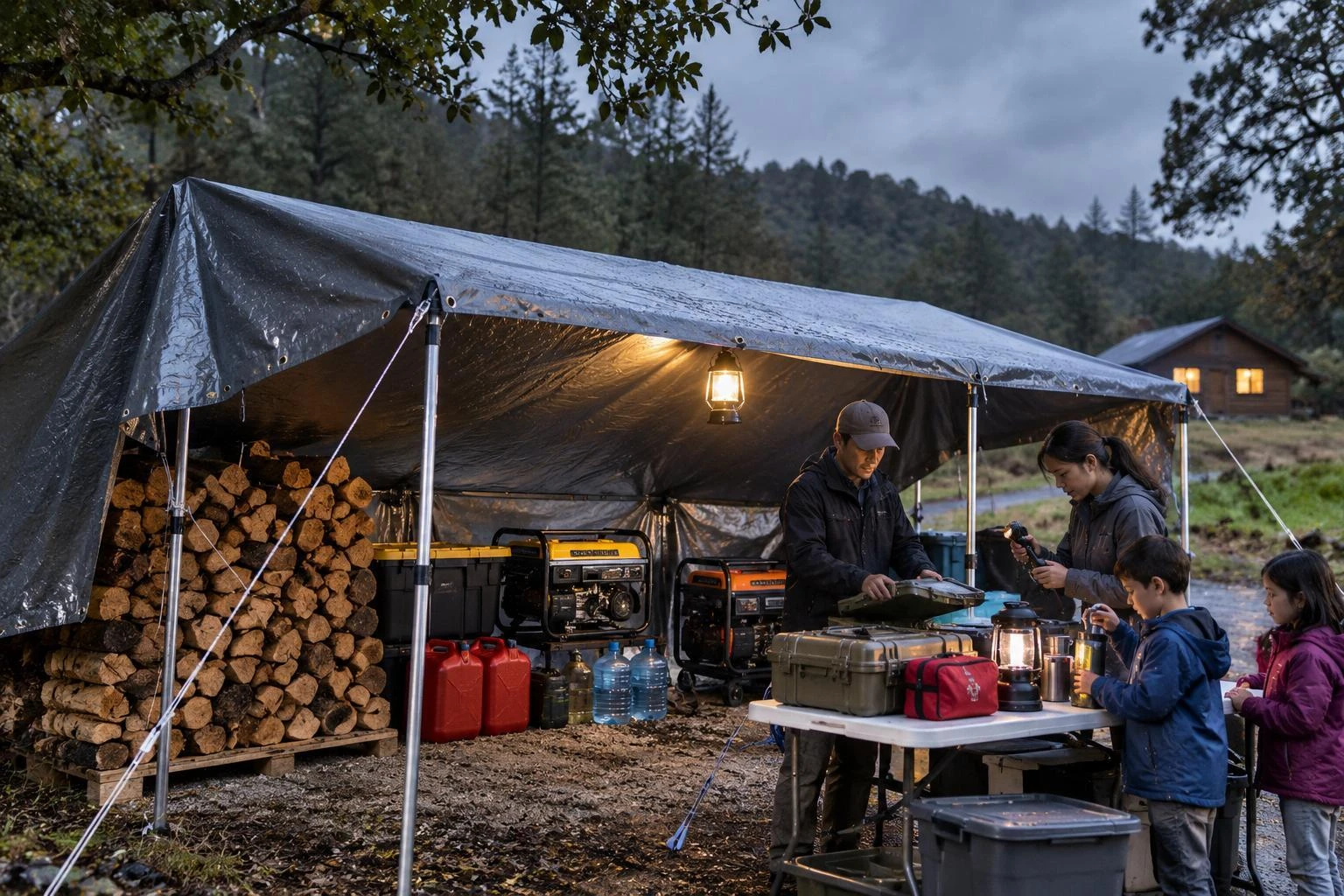
Critical generator safety: Never operate a gasoline, propane, or diesel generator beneath a tarp, inside a canopy enclosure, garage, or other partially enclosed space. Generators must operate outdoors at the manufacturer-required distance from buildings, windows, doors, and vents, with exhaust directed away from occupied areas. Carbon monoxide can be deadly even when openings appear to provide ventilation.
4. Provide Shade During Summer Power Outages
A prolonged power outage during hot weather can make outdoor shade particularly valuable.
Shade tarps can help reduce direct sunlight over outdoor seating areas and protect certain supplies from sun exposure. Mesh materials may allow better airflow than solid waterproof covers.
Remember that shade does not eliminate heat-related illness risk. During extreme heat, follow local cooling-center guidance and prioritize safe indoor temperatures, hydration, and vulnerable household members.
Learn more: Best Tarps for Outdoor Use
5. Provide Temporary Privacy and Separation
Emergencies sometimes require households to reorganize outdoor spaces for changing needs.
Opaque tarps can create temporary privacy screens around outdoor changing areas, storage areas, or designated work zones. They can also help separate supplies from high-traffic spaces.
Always preserve clear exits, visibility where needed, and adequate ventilation. Never use plastic tarps to seal occupied spaces or create airtight sleeping compartments.
6. Protect Property After Earthquakes or Severe Weather
Earthquakes, fallen branches, and severe storms can leave windows, roofing, or stored belongings exposed to the elements.
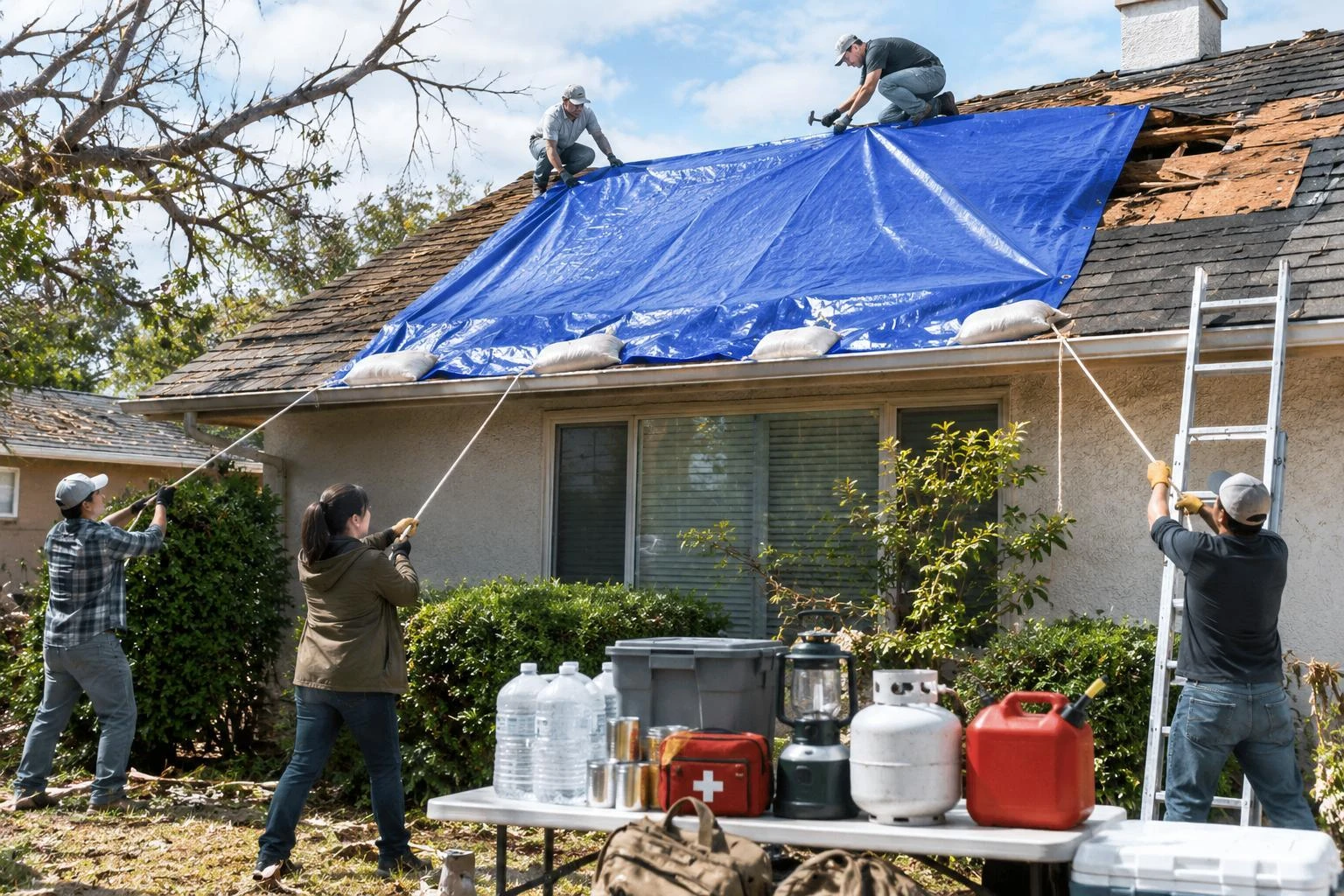
Tarps can provide temporary weather protection until qualified repairs can be completed. However, damaged structures may be unstable, and climbing onto a roof after a disaster can be dangerous.
For damaged roofing, use qualified professionals when appropriate. Never enter an unsafe building or approach downed electrical lines to install a tarp.
Shop: Roof Tarps
7. Organize Emergency Supplies for Quick Access
During a disruption, finding the right supplies quickly can make a meaningful difference.
A tarp can serve as a temporary ground covering for organizing equipment, provided moisture-sensitive supplies remain in sealed containers and off wet ground.
Consider organizing your emergency supplies into groups:
- Water and water-treatment supplies
- Nonperishable food and cooking supplies
- Flashlights, batteries, and portable lighting
- Radios and communication equipment
- First-aid and sanitation supplies
- Tools, rope, bungee cords, and spare tarps
8. Support a Longer-Term Shelter-in-Place Plan
Many emergency plans focus on the first 72 hours. But some utility disruptions and disasters can last considerably longer.
For households planning to shelter in place, tarps can add flexibility by helping protect stored supplies, establish temporary shaded areas, and organize outdoor spaces as conditions change.
They are not substitutes for safe housing, clean drinking water, sanitation, medical care, or reliable emergency communications. Instead, they are one useful component of a broader preparedness strategy.
Which Type of Tarp Is Best for Emergency Preparedness?
| Tarp Type | Potential Emergency Uses |
|---|---|
| Heavy-Duty Poly | General weather protection, supply covers, temporary ground protection |
| Super Heavy-Duty Poly | More demanding outdoor covering and storage applications |
| Vinyl-Coated | Durable reusable coverings for suitable outdoor applications |
| Mesh Shade | Sun protection where airflow is desirable |
| Fire-Retardant Tarps | Applications requiring a specified flame-resistance rating; not a substitute for fire-safe clearances |
What Should You Keep With Your Emergency Tarps?
Having the right accessories makes tarps more useful when time and resources are limited. Consider keeping appropriately rated rope or tie-downs, bungee cords, protective gloves, spare grommet repair supplies, and a few different tarp sizes together in an accessible location.
Inspect your tarps periodically for tears, damaged grommets, and UV deterioration. Practice safe installation before an emergency, rather than learning during hazardous conditions.
Prepare Before You Need It
Emergency preparedness isn't only about hurricanes. Extended power outages, earthquakes, severe weather, and other unexpected disruptions can affect households anywhere in the country.
A few carefully selected tarps, along with reliable supplies and a practical household emergency plan, can provide useful flexibility when everyday systems are unavailable.
At Canopies & Tarps, we offer a wide range of tarp materials, sizes, and canopy solutions to help you prepare for changing conditions.
Build Your Emergency Tarp Kit
Explore durable tarps and canopy solutions for weather protection, temporary storage, and outdoor preparedness.
Safety reminder: Follow manufacturer instructions, local emergency guidance, and applicable building and fire-safety requirements. Tarps and temporary canopies are not engineered emergency shelters unless expressly designed and rated for that purpose.