

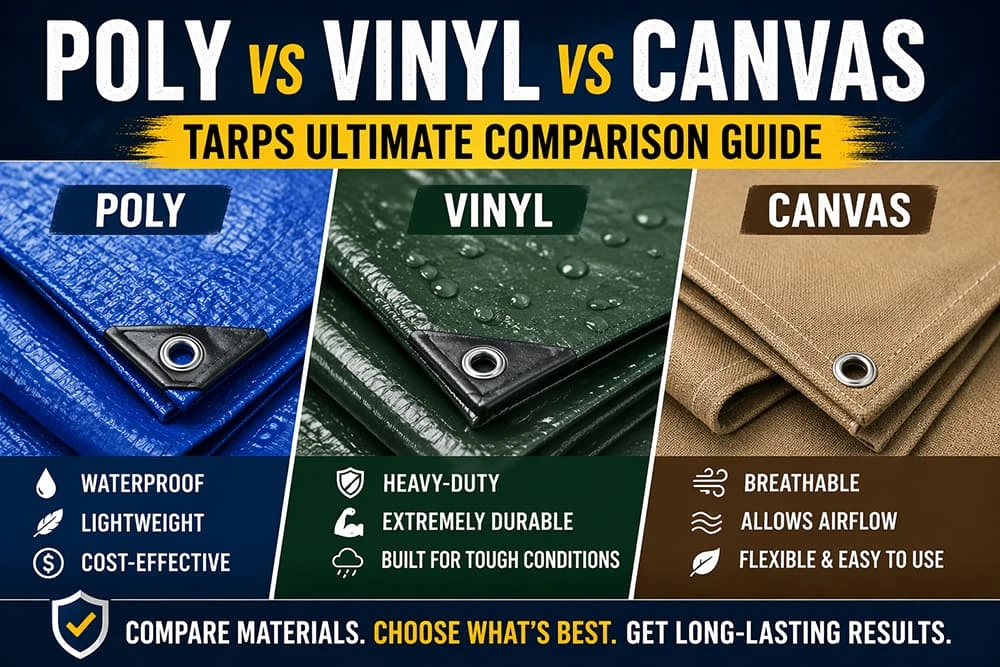
Poly vs Vinyl vs Canvas Tarps (Ultimate Comparison)
Posted by CanopiesAndTarps on Apr 22nd 2026
Choosing the right tarp material depends on your application, durability needs, and environment. Whether you're covering equipment, building a shelter, or protecting materials outdoors, the material you choose makes a big difference in performance and lifespan.
This guide compares poly, vinyl, and canvas tarps so you can quickly determine which option is best for your needs.
Poly vs Vinyl vs Canvas Tarps: Key Differences
| Material | Best For | Key Benefits | Limitations |
|---|---|---|---|
| Polyethylene (Poly) | General outdoor use | Waterproof, lightweight, cost-effective | Less durable than vinyl |
| Vinyl | Heavy-duty applications | Extremely durable, abrasion-resistant, long-lasting | Heavier and more expensive |
| Canvas | Breathable coverage | Allows airflow, reduces condensation | Not fully waterproof |
Poly Tarps (Polyethylene)
Poly tarps are the most common and versatile option. Made from woven polyethylene, they are fully waterproof and widely used for everyday outdoor protection.
- Lightweight and easy to handle
- Waterproof and UV-resistant
- Cost-effective for most applications
- Available in multiple thickness levels (10 mil, 12 mil, etc.)
Poly tarps are ideal for general-purpose use, including covering equipment, temporary shelters, and outdoor storage.
Explore super heavy duty poly tarps for long-term outdoor protection.
Vinyl Tarps
Vinyl tarps are built for demanding environments where durability is critical. They are thicker, heavier, and more resistant to wear and tear than poly tarps.
- Excellent abrasion and tear resistance
- Highly durable for long-term use
- Performs well in extreme weather conditions
- Often used in industrial and commercial settings
Vinyl tarps are best for job sites, transportation covers, and heavy-duty applications where strength is a priority.
Canvas Tarps
Canvas tarps are made from natural fabric and are designed for breathability rather than full waterproofing. They are commonly used where airflow is important.
- Breathable material reduces condensation
- Flexible and easy to work with
- Good for covering items that need ventilation
Canvas tarps are often used for painting, covering firewood, or protecting items that should not trap moisture.
Which Tarp Material Should You Choose?
- Choose poly tarps for general outdoor use, waterproof protection, and affordability
- Choose vinyl tarps for heavy-duty, long-term, or industrial applications
- Choose canvas tarps when breathability and airflow are more important than waterproofing
Common Use Case Examples
- Outdoor storage: Poly or vinyl tarps
- Construction sites: Vinyl tarps
- Firewood or equipment: Canvas tarps
- Temporary shelter: Poly tarps
Helpful Resources
- Best Tarp for Outdoor Use
Complete guide to choosing tarp materials, sizes, and thickness. - 12 Mil vs 10 Mil Tarps
Understand how thickness impacts durability and performance. - Tarp Material Guide
Explore all tarp materials and their best uses.
FAQs: Tarp Materials Explained
What is the most durable tarp material?
Vinyl tarps are generally the most durable and are best suited for heavy-duty and long-term applications.
Are poly tarps waterproof?
Yes. Poly tarps are fully waterproof and commonly used for outdoor protection against rain and moisture.
Are canvas tarps waterproof?
Canvas tarps are water-resistant but not fully waterproof. They are designed to allow airflow and reduce condensation.
Which tarp is best for outdoor use?
Poly tarps are best for general outdoor use, while vinyl tarps are better for heavy-duty or long-term exposure.