

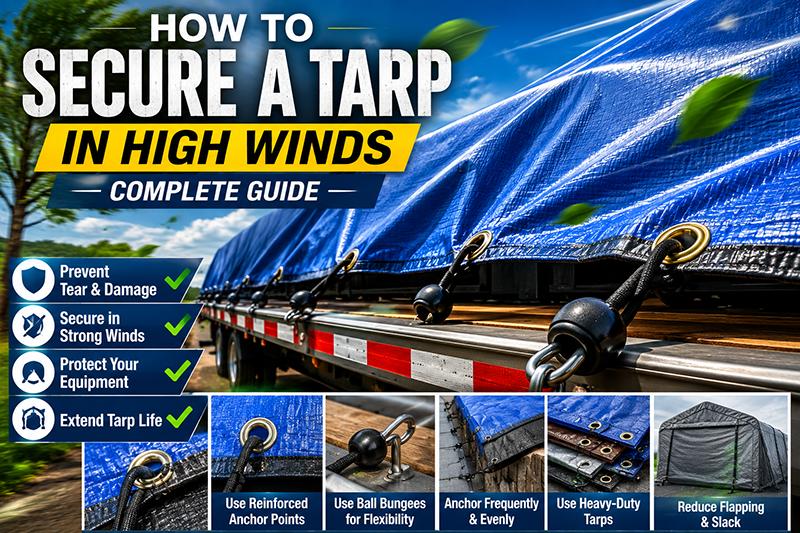
How to Secure a Tarp in High Winds (Complete Guide)
Posted by CanopiesAndTarps on Jun 20th 2026
Strong winds can quickly damage improperly secured tarps. Loose corners, poor anchor points, and excessive flapping can cause tearing, ripped grommets, and structural failure.
This guide explains how to secure a tarp in high winds using proper tie-down methods, anchor spacing, and reinforcement techniques.
Why Wind Damages Tarps
- Flapping creates stress on grommets and seams
- Loose edges act like sails in strong wind
- Improper anchors can pull free
- Uneven tension creates weak points
Use Heavy-Duty Tarps for Wind Exposure
Heavier tarps typically perform better in windy conditions because they resist tearing and stretching more effectively than lightweight materials.
Browse our heavy-duty tarps for stronger outdoor protection.
Best Ways to Secure a Tarp
Use Reinforced Anchor Points
Secure tarps using reinforced grommets, tarp clips, or frame attachment points whenever possible.
Use Ball Bungees Instead of Tight Rope
Ball bungees provide flexibility and help absorb wind movement, reducing stress on grommets and tarp edges.
Reduce Loose Material
Excess tarp material can catch wind and increase flapping. Use properly sized tarps whenever possible.
Anchor Frequently
Tie down the tarp at regular intervals to distribute wind load evenly.
Consider Wind Speed and Exposure
Not all wind conditions are the same. A tarp that performs well in a sheltered backyard may fail quickly in an open field, construction site, or coastal environment.
- Light winds (under 20 mph): Most properly secured tarps perform well.
- Moderate winds (20–40 mph): Use frequent anchor points and reinforced tie-downs.
- High winds (40+ mph): Heavy-duty tarps, ball bungees, and additional reinforcement are recommended.
- Extreme weather: Remove tarps when possible to prevent damage.
Common Tarp Mistakes in Wind
- Using lightweight tarps in exposed areas
- Allowing excessive tarp slack
- Over-tightening corners only
- Ignoring wind direction
- Using weak anchor points
Additional Wind Protection Tips
- Overlap tarps when possible
- Avoid sharp corners and abrasion points
- Inspect grommets regularly
- Use edge reinforcement for long-term setups
Recommended Tarp Tie-Down Accessories
The right accessories can significantly improve tarp performance during windy conditions.
- Ball bungees for flexible attachment
- Tarp clips for additional anchor points
- Ratchet straps for heavy-duty applications
- Rope tie-downs for temporary installations
- Ground stakes and anchors for outdoor setups
Final Thoughts
High winds are one of the most common causes of tarp failure. Choosing a properly sized tarp, using quality tie-down accessories, and securing anchor points evenly can help extend tarp life and improve performance during severe weather conditions.
Frequently Asked Questions
Should a tarp be pulled tight in high winds?
A tarp should be secured firmly but not excessively tight. Over-tightening can place additional stress on grommets and seams.
Are bungee cords better than rope?
Ball bungees often perform better because they allow limited movement and absorb wind shock that would otherwise transfer directly to the tarp.
What type of tarp is best for windy conditions?
Heavy-duty polyethylene tarps, vinyl tarps, and reinforced commercial-grade tarps generally provide the best wind resistance.