
Tarp Weight, Thickness & Material Explained
Posted by CanopiesAndTarps on Feb 7th 2026
Choosing the right tarp depends on understanding key specifications such as weight, thickness, material type, and construction. This guide explains how tarp weight, mil thickness, denier, and mesh count affect durability, performance, and recommended use so you can select the correct tarp for your application.
For a full breakdown of tarp materials, thickness, and sizing, read our Complete Tarp Buying Guide.
What Is Tarp Thickness?
Tarp thickness is measured in mils and refers to the thickness of the tarp material. One mil equals one-thousandth of an inch. In general, higher mil ratings indicate thicker, more durable tarps designed for heavier use.
Thickness alone does not determine overall strength, but it plays an important role in tear resistance, puncture resistance, and lifespan in outdoor environments.
What Does Tarp Weight Mean?
Tarp weight refers to how much the tarp weighs per square yard or per square foot. Heavier tarps typically use thicker materials and denser weaving, resulting in increased strength and longer service life.
Lighter tarps are easier to handle and install, making them suitable for temporary coverage, while heavier tarps are better suited for long-term outdoor protection and demanding job sites.
What Is Denier in Tarps?
Denier measures the thickness of the individual fibers used in woven tarp fabric. A higher denier rating means thicker fibers, which generally increases tensile strength and resistance to tearing.
Denier works together with mesh count and coating thickness to determine overall tarp strength. A tarp with higher denier fibers but low mesh density may still be weaker than a well-balanced construction.
What Is Mesh Count?
Mesh count refers to the number of woven fibers per square inch in the tarp fabric. Higher mesh counts indicate a tighter weave, which improves strength, dimensional stability, and resistance to stretching.
Tarps with higher mesh counts are typically more durable and better suited for heavy-duty or industrial applications.
Common Tarp Types Explained
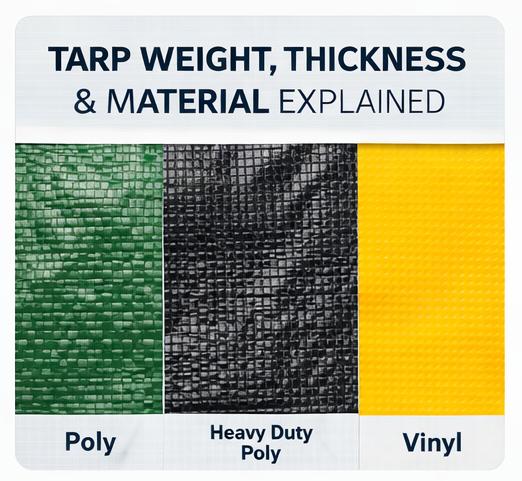
- Poly Tarps: Lightweight, cost-effective, and commonly used for general and temporary coverage.
- Silver Poly Tarps: Reflective and UV resistant, ideal for outdoor equipment and long-term exposure.
- Vinyl Tarps: Heavy-duty, flexible, and designed for industrial and commercial applications.
- Canvas Tarps: Breathable and abrasion-resistant, commonly used for equipment and machinery.
How to Choose the Right Tarp
The best tarp depends on the application, environment, and length of use. Temporary coverage often requires lighter materials, while long-term outdoor protection benefits from heavier construction, tighter mesh, and thicker coatings.
Consider factors such as exposure to sun, wind, moisture, and abrasion when selecting a tarp. Choosing the correct specifications helps prevent premature wear and failure.
Quick Reference Summary
- Mil thickness measures material thickness
- Denier measures fiber thickness
- Mesh count affects weave density and strength
- Tarp weight indicates overall durability
- Material type determines flexibility and lifespan
For product-specific options, explore our selection of tarps, heavy-duty tarps, and vinyl tarps designed for professional and industrial use. Part of our Tarp & Canopy Buying Guides
FAQs
What do tarp weight and thickness ratings actually mean?
Tarp weight is measured in ounces per square yard or grams per square meter, and it gives you a quick sense of how durable and heavy-duty a tarp is — the higher the number, the thicker and more rugged the material. Thickness is often expressed in mils (thousandths of an inch) for poly tarps, while canvas and vinyl tarps use weight as the primary indicator of strength. If you need a tarp for long-term or heavy-duty use, such as covering a vehicle, check out our Portable Garages & Carports for Vehicle Protection which are built with appropriately rated materials for sustained exposure.
Which tarp material is best for outdoor heavy-duty use?
Heavy-Duty Canvas Tarps are a top choice for rugged outdoor applications because they are breathable, naturally water-resistant when treated, and extremely durable under stress. Vinyl tarps are another strong option for situations where complete waterproofing and UV resistance are priorities. For lighter-duty shade applications, Mesh Sun Shade Tarps with Grommets offer airflow while still blocking a significant percentage of UV rays.
How do I know if a tarp is thick enough for long-term weather protection?
For long-term outdoor exposure, look for poly tarps rated at 10 mils or thicker, or canvas and vinyl tarps with a weight of at least 12–18 oz per square yard. Tarps used for seasonal or year-round vehicle protection should be especially robust — a purpose-built solution like a Metal Carport or Heavy-Duty Steel Vehicle Shelter may be a more reliable choice than a standalone tarp for that use case. Always check the manufacturer's UV treatment and waterproofing ratings alongside the weight and thickness specs.
Can I use a lightweight tarp as a canopy replacement cover?
A lightweight poly tarp can work as a temporary fix, but it may not hold up well to wind, rain, or prolonged sun exposure the way a purpose-made cover will. For a proper fit and longer-lasting performance, it's worth looking at Replacement Canopy Covers designed specifically to match standard frame sizes and withstand the elements. If you find your canopy frame itself needs attention as well, Canopy Pipe Fittings & Tent Connectors can help you make structural repairs at the same time.
Why does tarp material type matter as much as thickness?
Material type determines key performance characteristics like breathability, UV resistance, tear strength, and how the tarp handles temperature extremes — two tarps of identical thickness can perform very differently depending on whether they are woven poly, canvas, or vinyl. For example, a canvas tarp breathes and resists mildew better under stored equipment, while a vinyl tarp seals out moisture more completely for open-air storage. Browsing the full range of options at Canvas & Vinyl Canopy Tents, Tarps & Accessories can help you compare material types side by side to find the right fit for your specific application.