

Canopy Fitting Guide
Canopy Fitting Guide: Types, Diagrams & How to Build a Frame
Canopy fittings are the connectors that determine the shape, strength, and function of your canopy frame. Whether you're building a flat roof structure, a peaked shelter, or a custom configuration, choosing the right fittings is essential for stability and performance.
This guide will help you identify the correct fittings, understand frame layouts, and choose the best configuration for your application.
Canopy Fitting Chart
Use this chart to quickly identify the fittings needed for your canopy frame based on size and roof style.
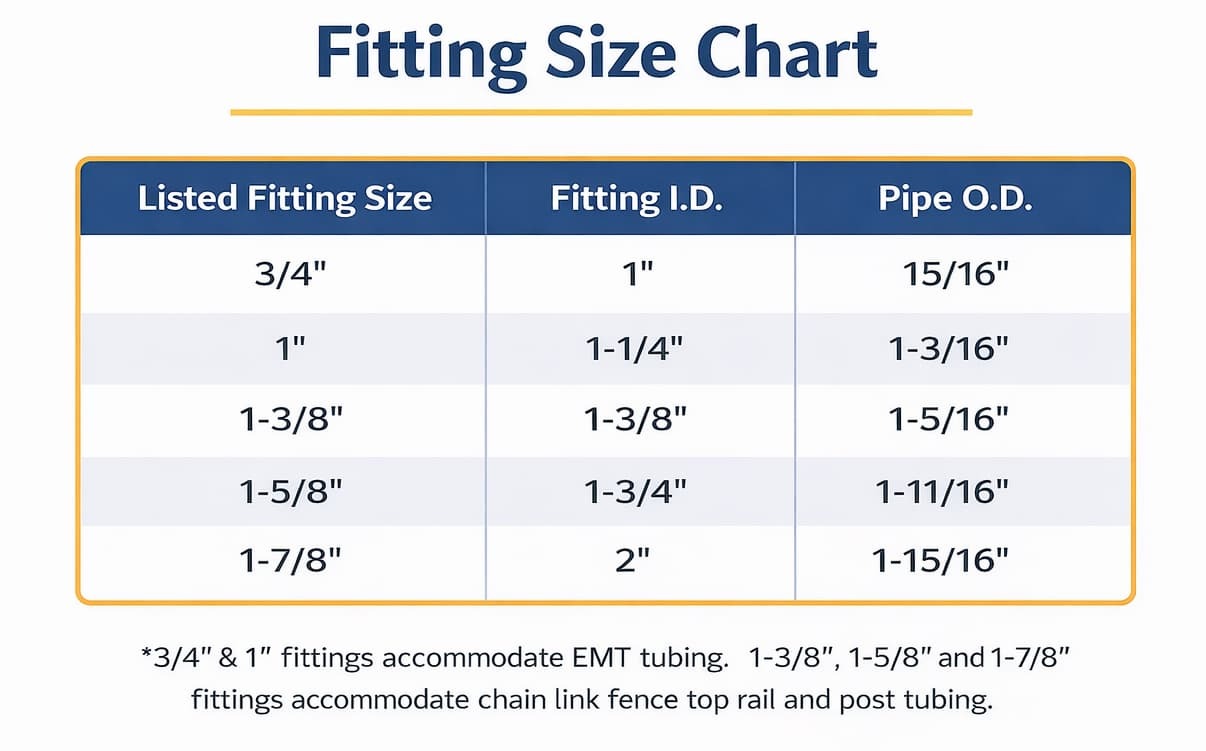
Below are the most common canopy frame configurations and how fittings are used to create each structure.
Common Canopy Frame Styles
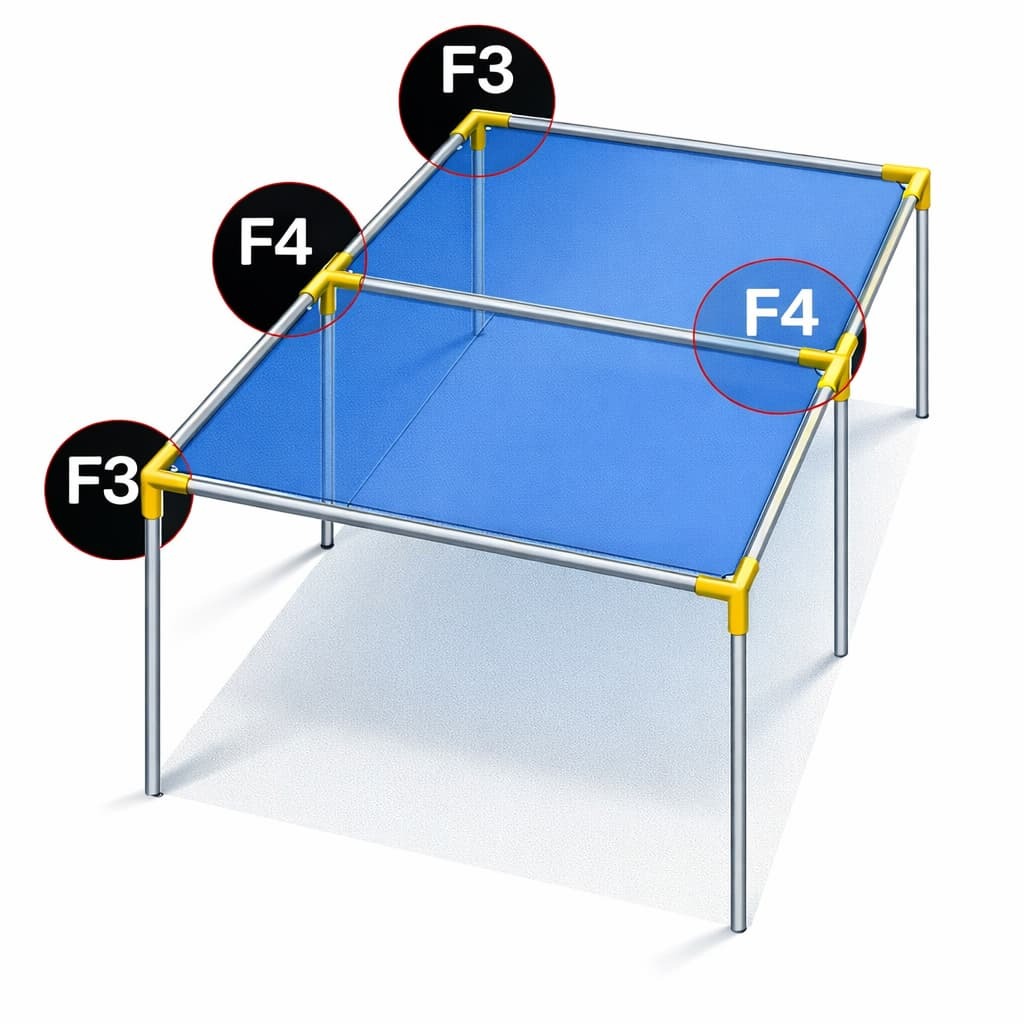
Flat Roof Canopy Frames (90° Fittings)
Flat roof canopy frames use 90° fittings to create a level structure. These are ideal for shade applications, job sites, and temporary shelters where water runoff is not a primary concern.
Low Peak Canopy Frames (102° Fittings)
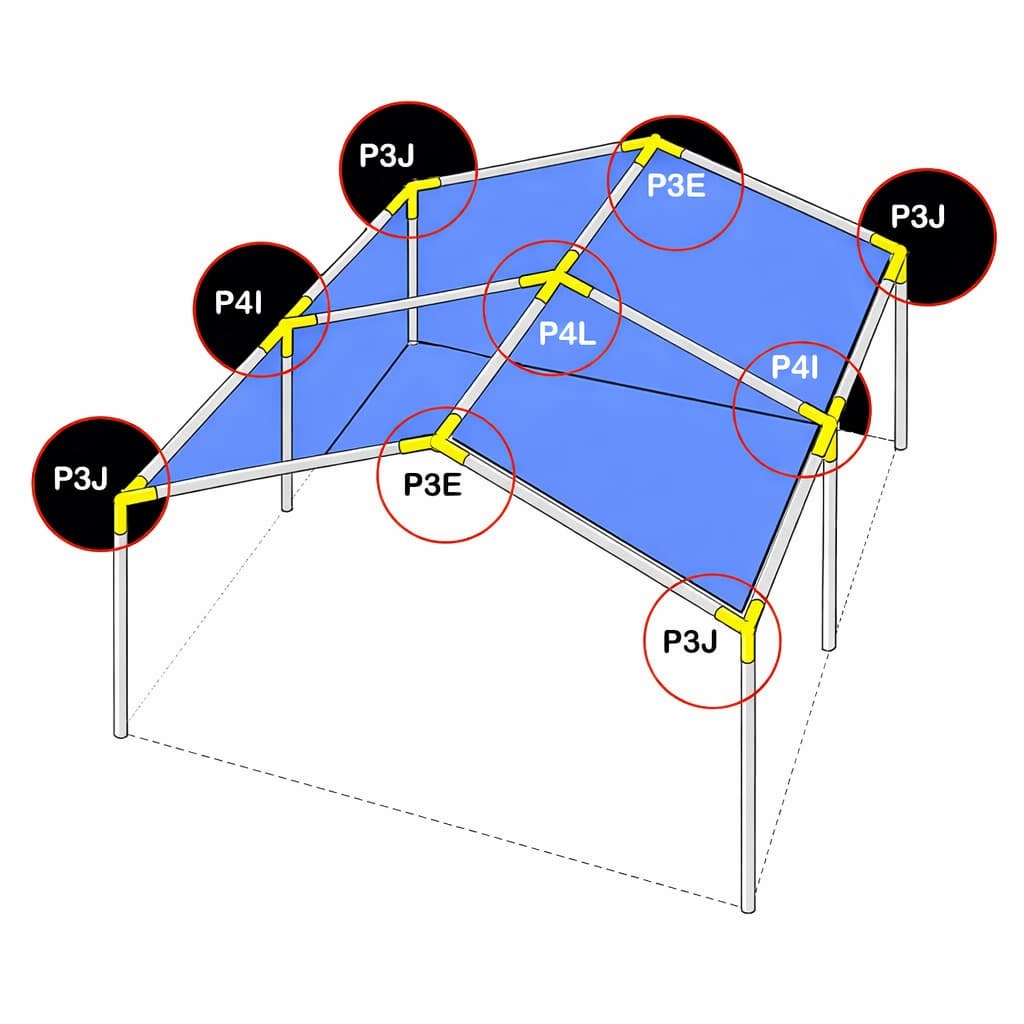
Low peak canopy frames use angled fittings to create a slight pitch, allowing for better water runoff. This style is commonly used for outdoor events, markets, and general-purpose coverage.
High Peak Canopy Frames (120° Fittings)
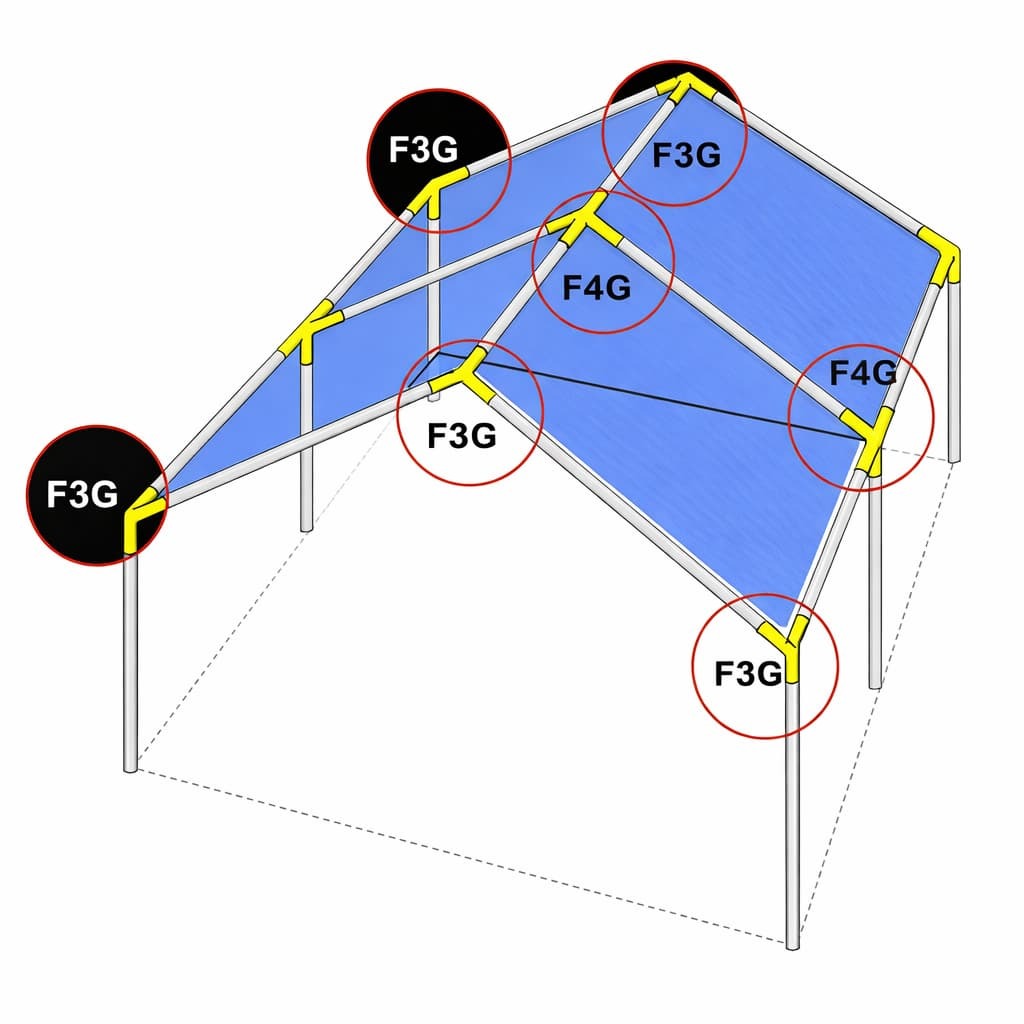
High peak frames provide a steeper roof angle for improved drainage and increased interior clearance. These are ideal for areas with heavy rain, snow, or when additional headroom is needed.
Slope (Lean-To) Canopy Frame Diagram
Slope canopy frames use angled fittings to create a structure where one side is higher than the other. This design is commonly used for lean-to setups, wall-mounted canopies, and applications where controlled water runoff is important.
These frames are ideal for attaching a canopy to an existing building, creating covered walkways, or directing rainwater away from a structure.
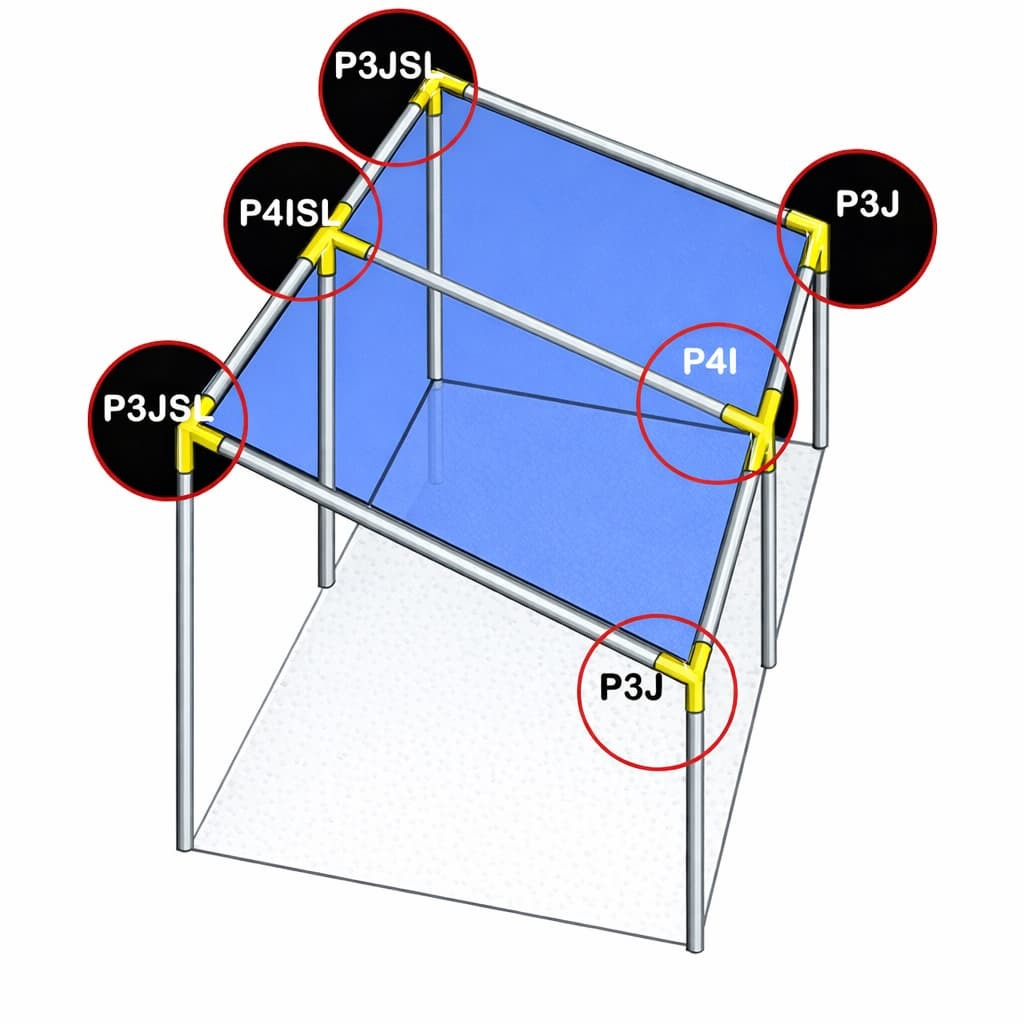
Specialty Canopy Frame Configurations
Specialty canopy frames are built using custom fittings that allow for unique layouts, non-standard angles, and expanded structures. These configurations are often used for custom projects where standard flat or peak designs are not sufficient.
Specialty fittings provide flexibility for creating extended coverage areas, multi-bay structures, or custom canopy designs tailored to specific job site or event needs.
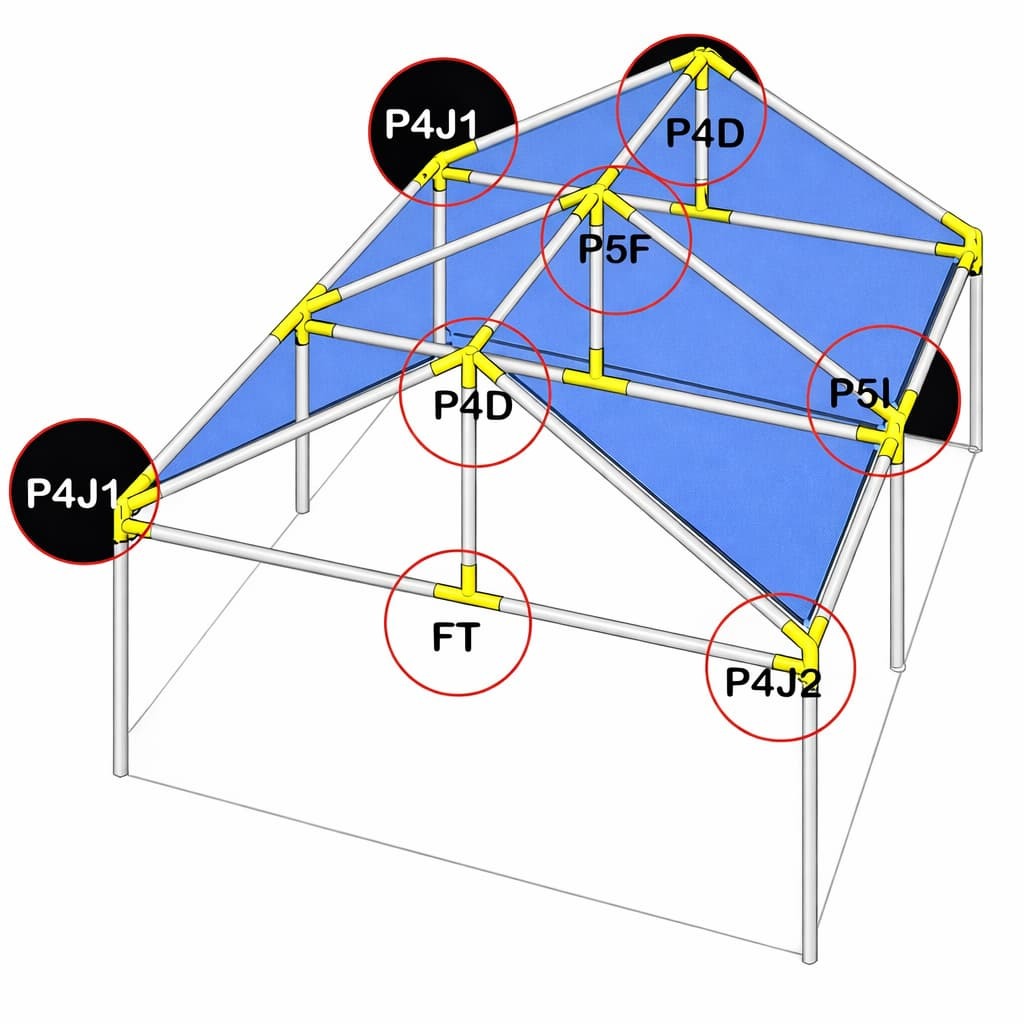
Main Types of Canopy Fittings
Canopy fittings are available in several styles depending on the roof shape, frame layout, and type of shelter you want to build. Use the options below to compare flat roof, low peak, high peak, slope, and specialty fittings.

Flat Roof Fittings
Flat roof fittings are designed for simple, level canopy structures used for shade setups, equipment storage, temporary workspaces, and basic frame builds.
Shop Flat Roof Fittings →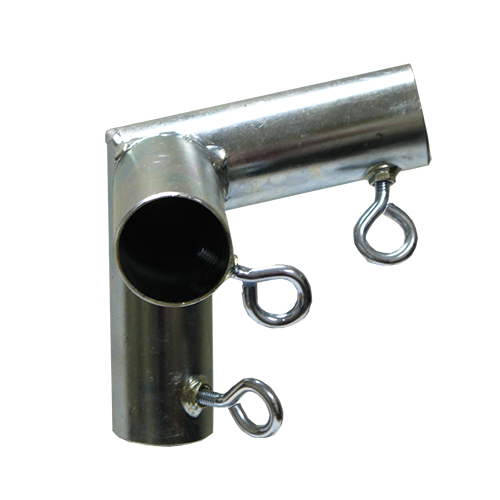
Low Peak Fittings
Low peak fittings create a moderate roof angle that helps improve water runoff while maintaining a lower, streamlined shelter profile.
Shop Low Peak Fittings →
High Peak Fittings
High peak fittings create a steeper roof angle for better rain and light snow runoff while adding more interior height, clearance, and airflow.
Shop High Peak Fittings →
Slope Fittings
Slope fittings are used for lean-to structures, wall-mounted canopies, angled shelters, and frame designs that require controlled water runoff.
Shop Slope Fittings →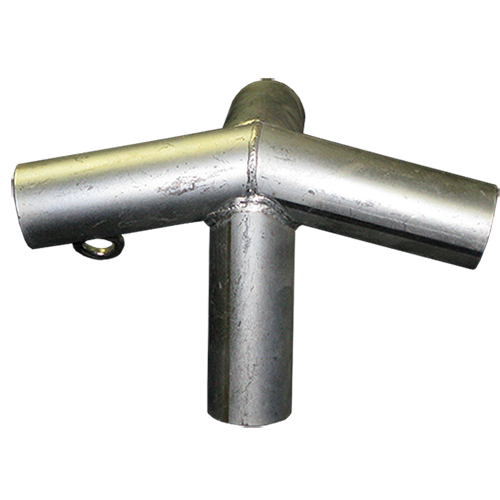
Specialty Fittings
Specialty fittings support custom canopy configurations, unique angles, non-standard layouts, and more flexible DIY frame construction.
Shop Specialty Fittings →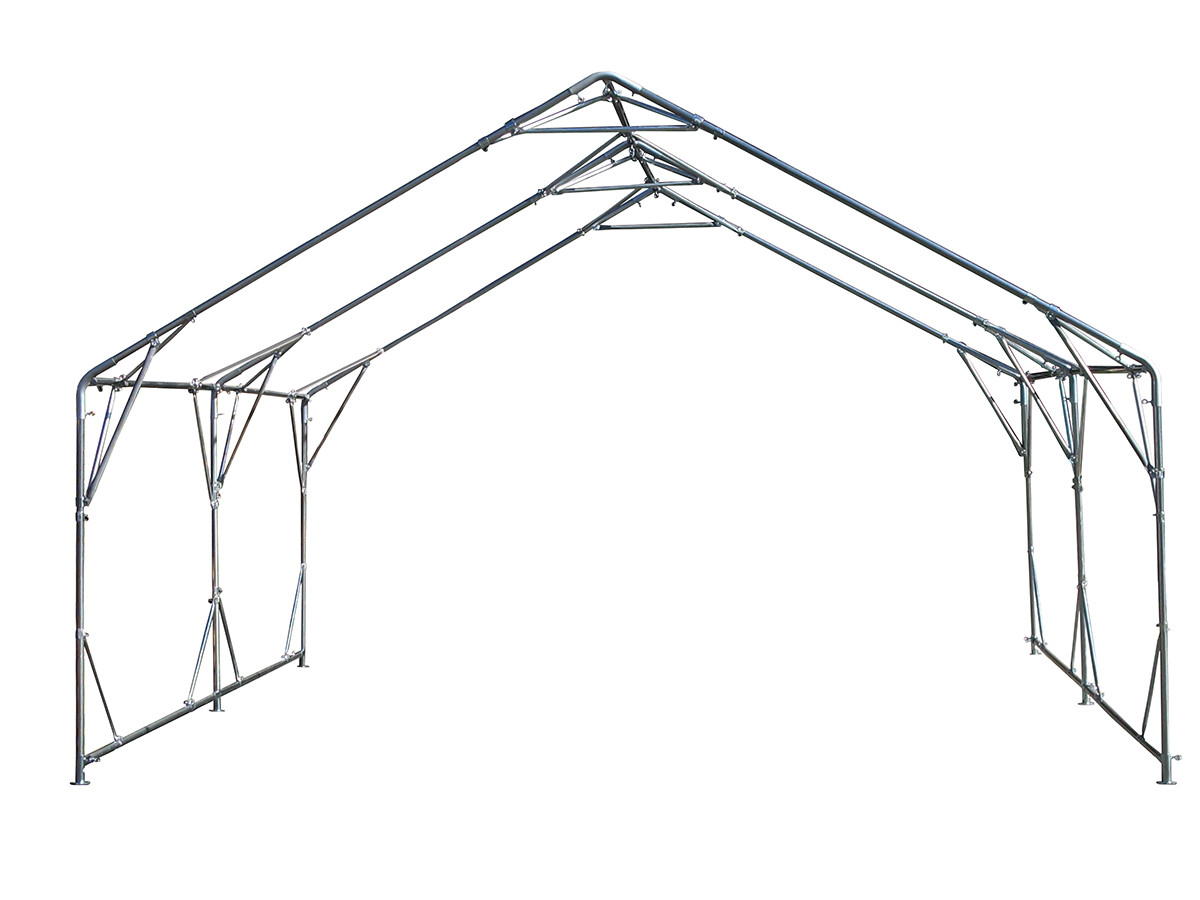
Build Your Own Custom Canopy
Use canopy fittings, pipe, and tarp covers to create shade structures, storage shelters, work areas, equipment covers, and custom outdoor frames.
Explore Canopy Fittings →Building a canopy frame is straightforward once you understand how fittings connect each section of the structure.
How to Build a Canopy Frame
- Step 1: Determine the size and layout of your canopy
- Step 2: Select the correct fitting type based on your desired roof style
- Step 3: Connect pipes using corner, side, and center fittings
- Step 4: Secure the frame and attach your tarp or canopy cover
Common Uses for Canopy Frames
- Storage shelters for equipment and materials
- Outdoor shade structures for patios and job sites
- Carports and vehicle protection
- Event tents and temporary structures
- Agricultural and farm use
Related Canopy Products
Want a simpler option? Canopy box kits include the essential fittings needed to build your frame.
FAQs
What size canopy fittings do I need for my frame?
The right fitting size depends on the outer diameter of your canopy pipes, which typically range from 3/4 inch to 1-3/8 inch for standard residential frames. Before ordering, measure your existing pipes with a caliper or tape measure to get the exact outer diameter. Browse our full selection of canopy pipe fittings and tent connectors to find options matched to common pipe sizes.
How do I know which canopy fittings are compatible with my canopy frame?
Compatibility depends on three factors: pipe diameter, fitting angle, and the number of connection ports needed at each joint. Most canopy frames use either round or square tubing, and fittings are not interchangeable between the two. Check your frame's original documentation or measure your tubing, then use our canopy fittings page to filter by size and connector type to find the right match.
Can I build a custom canopy frame using pipe fittings and connectors?
Yes, building a custom frame is very achievable with the right components. Start by sketching your desired dimensions and identifying the connector types needed at each joint — corners, T-connectors, and cross fittings are the most common. Our canopy box kits for DIY frames include pre-selected fitting assortments to simplify the process, and once your frame is complete you can pair it with a canopy replacement cover sized to fit your build.
Do you carry replacement covers that fit standard canopy frame sizes?
We carry a wide range of covers designed to fit the most common frame footprints, including 10x10, 10x20, and 12x20 sizes. It's important to match the cover not just to the frame's footprint but also to its peak height and leg style to ensure a snug, weather-resistant fit. You can shop our standard replacement canopy covers for popular sizes, or visit our broader canopy replacement covers collection if you need a less common size.
Which type of canopy is best for outdoor events versus everyday storage use?
The right canopy depends heavily on how and where you plan to use it — a vendor market setup has very different needs than a backyard storage shelter. Pop-up style frames prioritize portability and fast setup, while heavier-gauge bolt-together frames offer better long-term durability for storage. Our guide on the best canopy for events vs storage vs vendors walks through the key differences, and you can also browse our full lineup of canopy tents to compare options side by side.