

How to Choose the Right Tarp Weight & Thickness
Posted by CanopiesAndTarps on Feb 11th 2026
Choosing the right tarp weight and thickness is one of the most important decisions when selecting a tarp for outdoor protection. While size determines coverage, weight and thickness determine how long a tarp lasts, how well it performs in harsh conditions, and whether it’s suitable for temporary or long-term use.
This guide explains tarp weight, thickness, and related measurements in simple terms so you can choose the right tarp for your application with confidence.
For a full breakdown of tarp materials, thickness, and sizing, read our Complete Tarp Buying Guide.
Why Tarp Weight and Thickness Matter
Tarp weight and thickness directly affect:
-
Durability and tear resistance
-
Resistance to wind, rain, and UV exposure
-
Flexibility in cold or hot temperatures
-
Overall lifespan of the tarp
Using a tarp that is too light for the job can lead to premature tearing, grommet failure, and frequent replacement. Choosing a tarp that is heavier than necessary may add cost without real benefit.
Understanding Tarp Weight
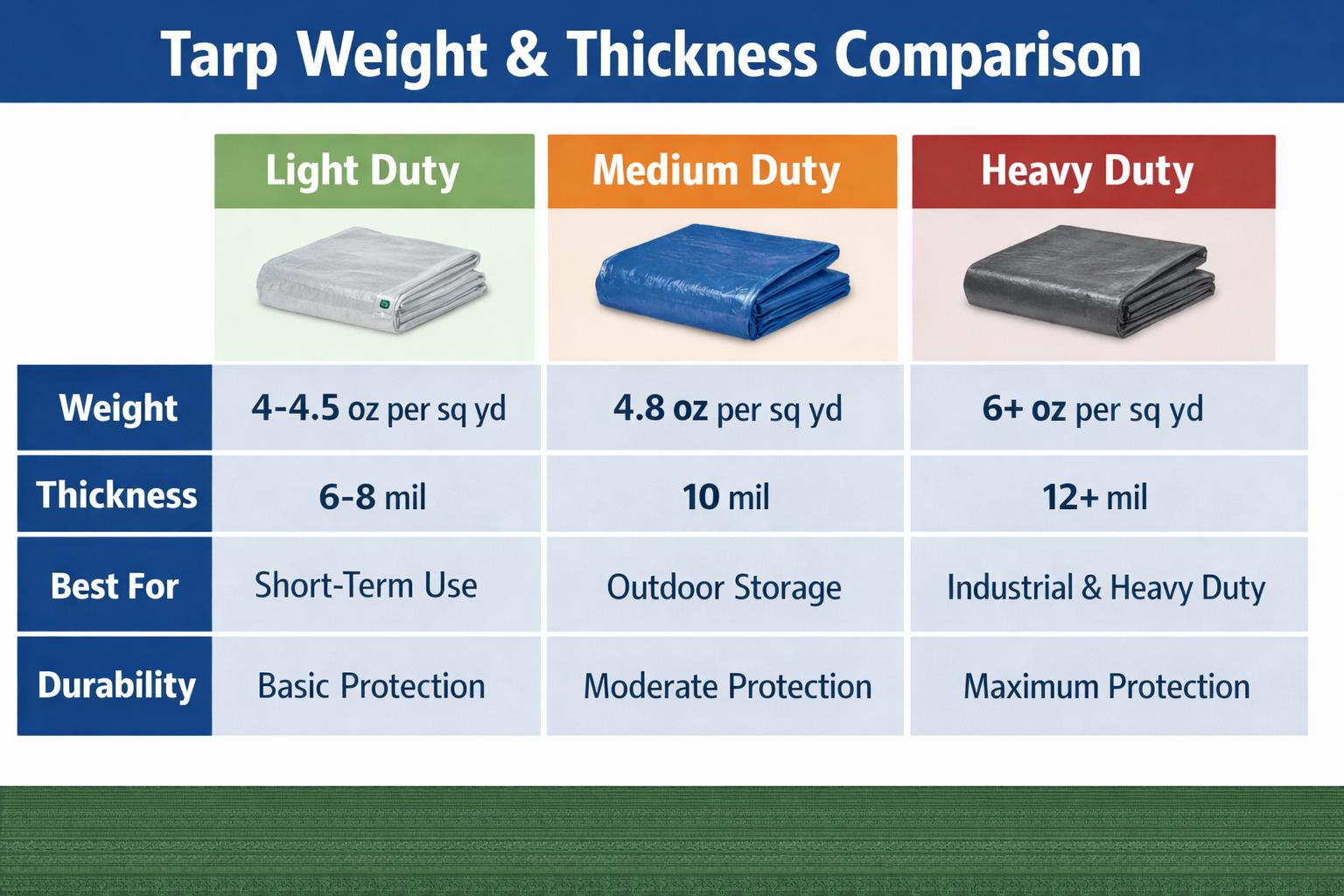
Tarp weight is commonly measured in ounces per square yard (oz/yd²). This measurement reflects how heavy and dense the tarp material is.
General Weight Categories
-
Lightweight tarps: Typically used for temporary or short-term coverage
-
Medium-weight tarps: Suitable for repeated outdoor use
-
Heavy-duty tarps: Designed for demanding environments and long-term protection
Heavier tarps usually offer:
-
Greater strength
-
Higher tear resistance
-
Better performance in wind and harsh weather
Understanding Tarp Thickness (Mil Rating)
Tarp thickness is measured in mils, where one mil equals one-thousandth of an inch.
Thickness impacts:
-
Puncture resistance
-
Flexibility
-
Weather resistance
In general:
-
Thicker tarps resist wear better
-
Thinner tarps are lighter and easier to handle
Thickness should be evaluated alongside weight, not by itself.
What Is Denier and Mesh Count?
Some tarps also list denier and mesh count, especially poly and mesh tarps.
-
Denier refers to the thickness of the individual fibers used in the weave. Higher denier means stronger fibers.
-
Mesh count indicates how tightly the fibers are woven together.
A higher denier combined with a tighter mesh typically results in a stronger, more durable tarp.
Choosing the Right Weight for Your Application
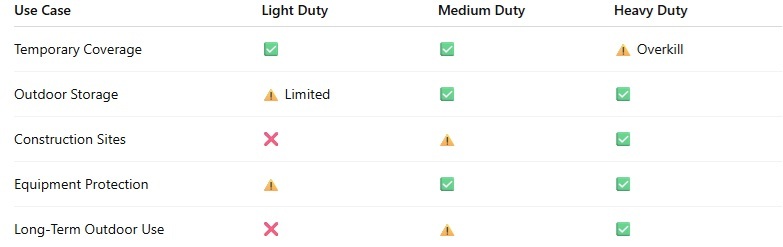
Temporary Coverage
For short-term protection such as covering materials briefly or shielding items during transport, lighter or regular-duty tarps are often sufficient.
Outdoor Storage & Repeated Use
Medium-weight tarps are ideal for applications where the tarp will be used repeatedly or left outdoors for extended periods.
Industrial, Agricultural & Commercial Use
Heavy-duty tarps are best for environments that involve:
-
Constant exposure to weather
-
Wind and UV stress
-
Heavy loads or abrasion
Mesh vs Solid Tarps: Weight Considerations
Mesh tarps differ from solid tarps in function.
-
Mesh tarps allow airflow and reduce wind resistance while still providing shade and UV protection.
-
Solid tarps offer full waterproof coverage and maximum protection from rain and moisture.
When airflow and heat reduction are important, mesh tarps may perform better even at lower weights.
Common Mistakes to Avoid
-
Choosing the lightest tarp to save money, only to replace it frequently
-
Focusing on thickness alone without considering weight or weave
-
Ignoring environmental factors such as wind, sun exposure, and abrasion
-
Using rigid tie-downs that stress grommets instead of elastic fasteners
How to Match Tarp Weight to Longevity
As a general rule:
-
The heavier and thicker the tarp, the longer it will last
-
Proper installation and securement significantly extend tarp life
-
Choosing the right tarp for the environment prevents early failure
Final Thoughts
Tarp weight and thickness are not about buying the “heaviest tarp available,” but about selecting the right balance of strength, flexibility, and performance for your needs.
By understanding how weight, thickness, denier, and material type work together, you can confidently choose a tarp that provides reliable protection and long-term value.
Helpful Resources
- Tarps by Size
- Universal Tarp Weight & Material Comparison Guide
- Cut Size vs Finished Size
- How to Secure Tarps & Canopies Properly
- Tarp Materials Explained