

How To Choose The Right Tarp Thickness
Apr 22nd 2025
Whether you're patching a leaky roof, covering firewood for the winter or protecting a prized muscle car from the elements, tarp thickness is essential for adequate protection. If you've ever dealt with a tarp tearing at the wrong moment or not holding up through a rough storm, chances are you picked the wrong thickness. Let's dig into why that matters and how to get it right.
The Importance of Tarp Thickness
Thickness determines a tarp's durability, longevity, weight and how much abuse it can take before giving out. Thicker tarps (typically 10 mils and up) can handle rougher treatment, such as high winds, heavy rain, UV rays and abrasion. They're less likely to rip, stretch or degrade. If you're using a tarp to protect expensive tools, heavy equipment or anything that sees long-term exposure to the elements, thickness is your first line of defense.
On the flip side, going too thick for a simple job can be overkill. You don't need a 20-mil industrial-grade tarp to cover a pile of grass clippings. Understanding the balance helps you save money and hassle.
Common Uses Where Thickness Can Make or Break the Job
Roof Repairs and Emergency Coverings
When a storm hits and your roof springs a leak, you want a tarp that's thick enough to hold back the rain and wind, but light enough to secure quickly. A 10 to 16 mil tarp is usually ideal. Too thin, and it'll flap into pieces. A tarp that is too heavy can be tough to position safely on a roof.
Camping and Outdoor Shelters
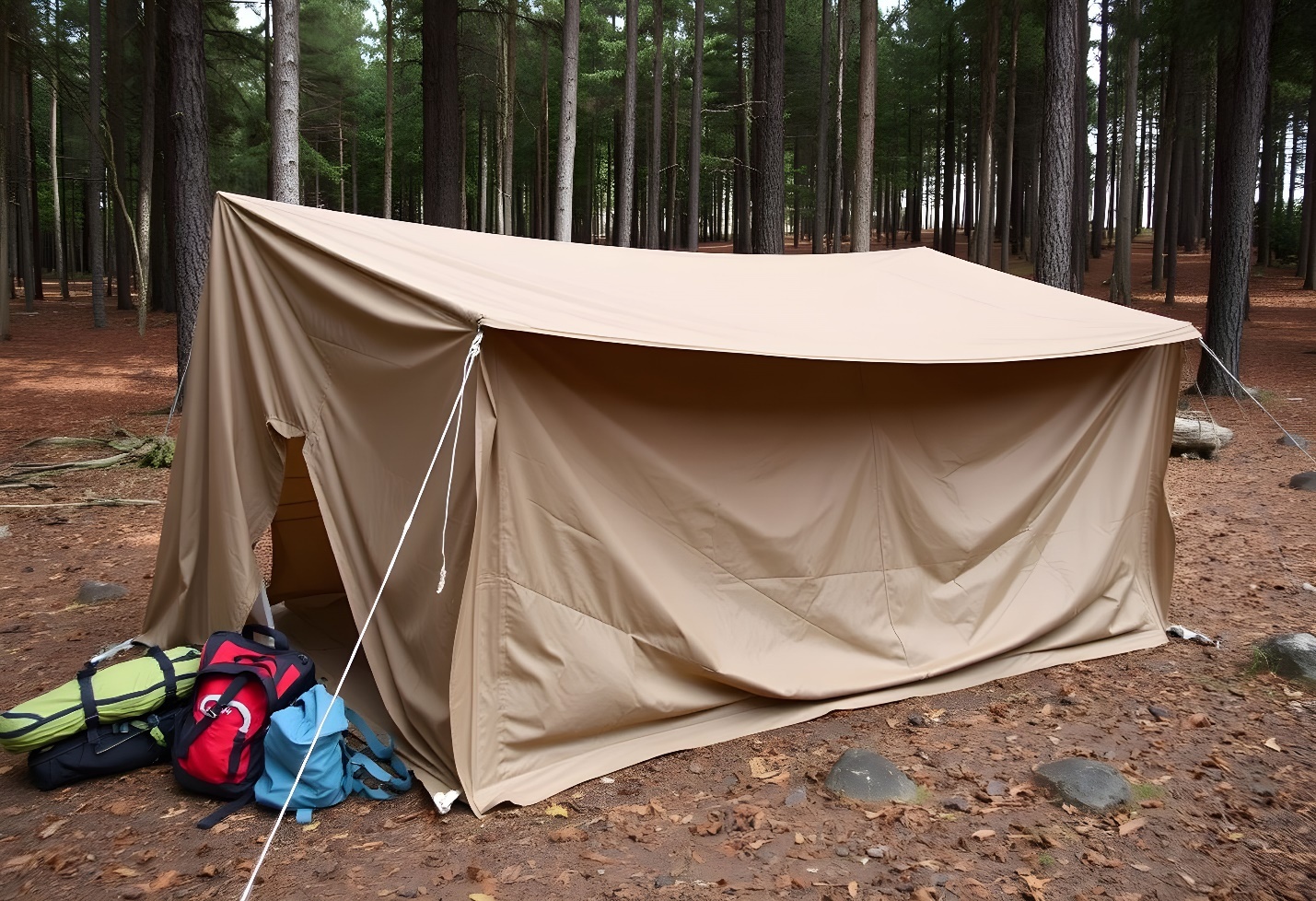
For camping, a lightweight 5 to 8 mil tarp might be fine for temporary use like for a rainfly or groundsheet. But if you're building a semi-permanent shelter or lean-to, you'll want something tougher. Shelter tarps should be at least 10 mils to stand up to tree branches, animal traffic and UV exposure.
Vehicle and Equipment Covers
Covering a car, boat, tractor or ATV? Go for something 12 to 20 mils. The thicker, the better, is the rule for resisting sun damage, moisture and wind. A flapping tarp can scratch paint or let moisture seep in.
Construction and Job Site Use
Here's where heavy-duty really pays off. Tarps used on worksites see all kinds of wear. Commonly dragging over rough ground, covering debris or shielding unfinished structures. You'll want at least a 14-mil tarp, with reinforced edges and rust-resistant grommets. Some pros go up to 20+ mils for year-round, high-abuse jobs.
Firewood and Seasonal Storage
If you're stacking firewood for winter or covering up your backyard gear, 10 to 12 mils should get the job done. Thinner tarps degrade faster in the sun and they can tear from shifting logs, but ultra-heavy options can be hard to work with day-to-day.
A Quick Overview of Thickness Measurements (Mils and Material Type)
People usually measure tarp thickness in mils, which are thousandths of an inch. For reference:
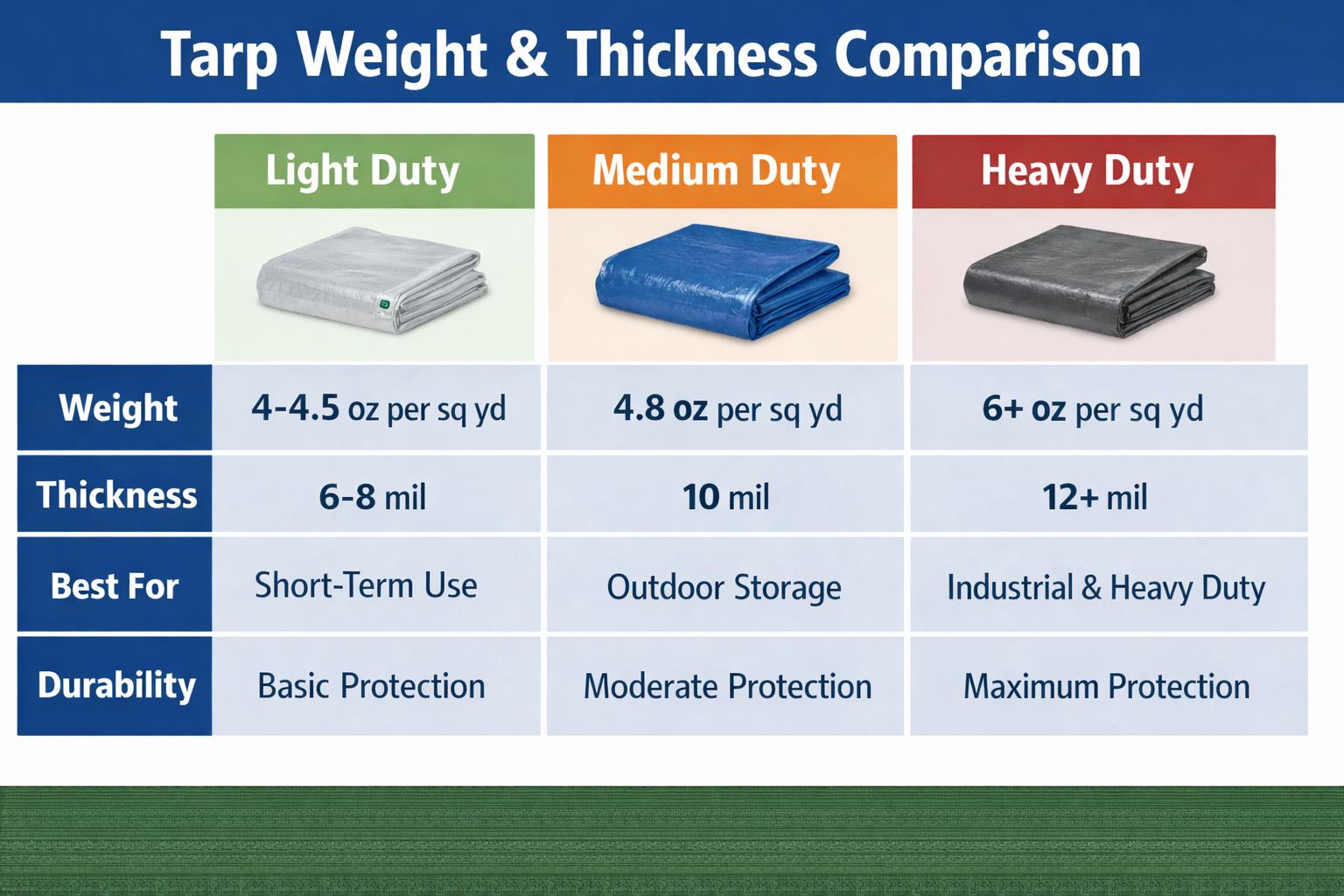
- 5 mils: light-duty (think disposable or short-term use)
- 8 to 10 mils: medium-duty (good for most general applications)
- 12 to 16 mils: heavy-duty (great for outdoor storage or job site use)
- 20+ mils: industrial grade (extreme weather, long-term protection)
But thickness is only half the story because tarp material matters too. Manufacturers make most commonly used tarps from polyethylene, a lightweight, water-resistant and budget-friendly material. The quality of polyethylene varies. Some tarps receive UV coatings through lamination, and manufacturers weave others for extra strength.
Canvas tarps breathe better and are great for covering items that need ventilation (like lumber or furniture). Ounces per square yard, instead of mils measures weight. Thicker canvas means more protection, but it's heavier and not fully waterproof.
Vinyl tarps are top-of-the-line, with a reputation for being super tough, waterproof, chemical-resistant. Plus, vinyl material can withstand brutal sun and cold. Vinyl tarps are often found in 18 to 22 mils or higher, but you pay for the performance.
Light-Duty Tarps (5-8 mil)
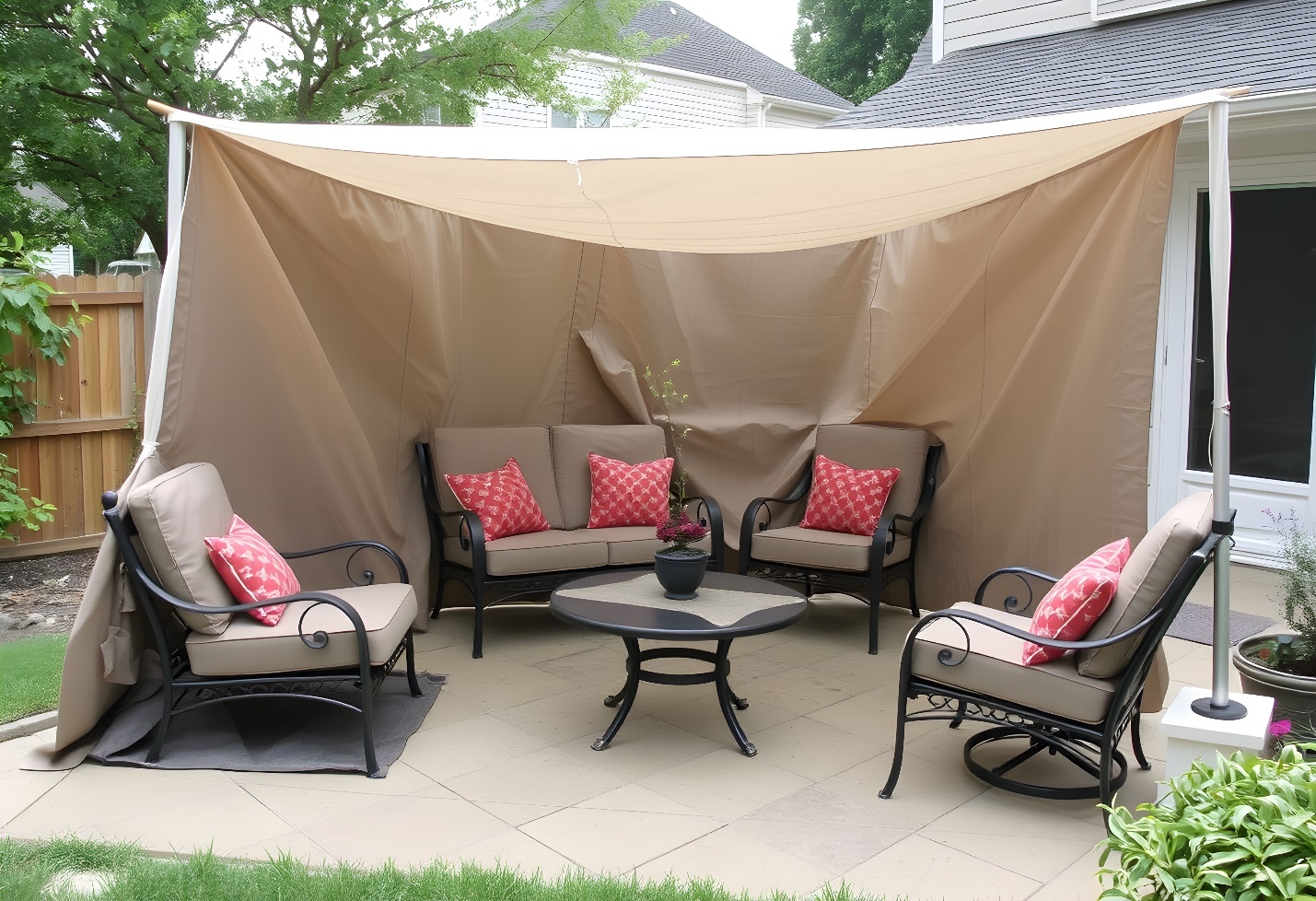
Light-duty tarps in the 5 to 8 mil range are your go-to for quick, temporary coverage. Think of them as the "duct tape" of tarps; handy, affordable and perfect for short-term jobs like covering outdoor furniture, shielding a grill from a quick downpour or laying down as a paint or dust sheet. They're lightweight and easy to handle, which makes them a favorite for around-the-house tasks. Select lightweight tarps to get you through a quick fix.
Best for: temporary coverage, light yard work, covering tools or furniture
Pros: lightweight, easy to handle, inexpensive
Cons: not durable under stress or weather exposure
Medium-Duty Tarps (9-12 mil)
Medium-duty tarps strike that sweet spot between flexibility and toughness. They're tough enough to handle wind and moderate weather, but still light enough to fold and manage without a wrestling match. This is the category most homeowners and weekend warriors rely on.
Best for: camping, basic roof protection, seasonal equipment covers
Pros: balanced strength and flexibility
Cons: limited longevity under harsh conditions
Heavy-Duty Tarps (13-16+ mil)
These are the workhorse tarps you want on a job site, during a storm or over something you truly care about keeping dry and safe. They can handle snow loads, high winds and long-term exposure without tearing or deteriorating.
Best for: construction, long-term roof coverage, vehicles, outdoor storage
Pros: tear-resistant, UV-resistant, built to handle abuse
Cons: heavier and more expensive, but worth it for critical jobs
Super Heavy-Duty Tarps (20+ mil, vinyl or canvas)
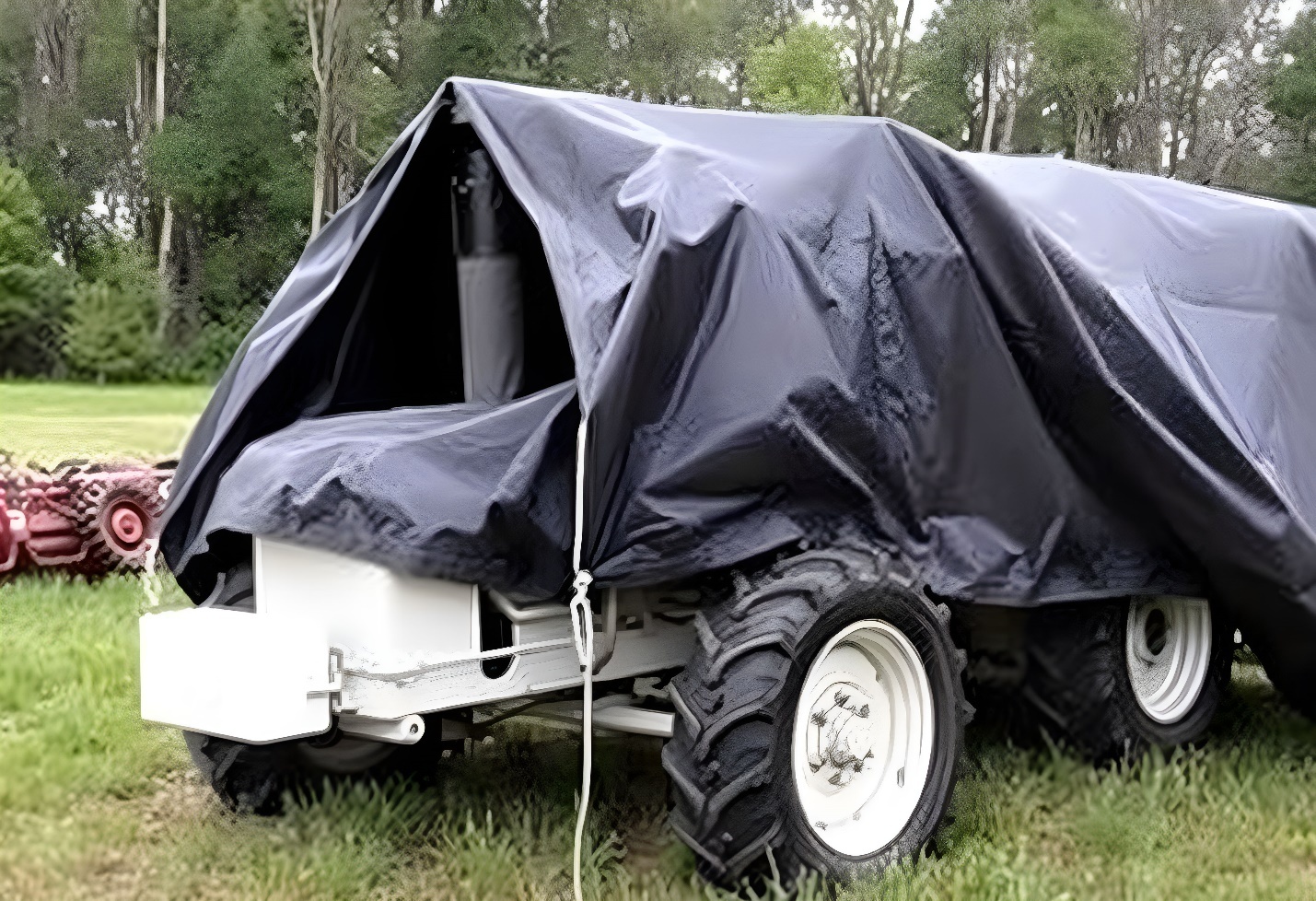
Typically made from rugged vinyl or heavyweight canvas, super heavy-duty tarps are ideal for extreme weather, long-term outdoor exposure and industrial-level jobs. Choose vinyl tarps for flatbed trailers, commercial roofing, farm equipment or marine use. Choose canvas tarps, for things like covering lumber, machinery or restoring classic vehicles.
If you want peace of mind in the harshest conditions, super heavy-duty is the way to go.
Best for: commercial, industrial, or long-term outdoor use
Pros: extreme durability, waterproof, long lifespan
Cons: extra weight may be cumbersome
FAQs
What does tarp weight mean and why does it matter?
Tarp weight refers to how many ounces or grams per square yard the material weighs, which directly reflects its durability, thickness, and strength. Heavier tarps are better suited for demanding jobs like covering equipment or outdoor storage, while lighter ones work well for temporary or lighter-duty tasks. For a deeper breakdown of how weight, thickness, and material all connect, check out this guide on Tarp Weight, Thickness & Material Explained.
How do I know which tarp weight is right for my specific use?
The right tarp weight depends on factors like how long you need it to last, whether it will be exposed to wind and rain, and what you're protecting. Light-duty tarps (around 2–3 oz) work for short-term coverage, while medium to heavy-duty options (5–8 oz or more) are better for extended outdoor use, construction sites, or vehicle protection. Our guide on How to Choose the Right Tarp walks you through matching weight and material to your specific application.
Can I use a lightweight tarp to cover my car or truck long-term?
A lightweight tarp can work in a pinch, but for long-term vehicle coverage it's better to use a heavier, weather-resistant option that can stand up to UV exposure, rain, and wind without tearing or degrading quickly. For more robust and purpose-built vehicle protection, you might also want to explore Portable Garages & Carports for Vehicle Protection, which offer a more secure and durable sheltering solution.
What's the difference between a poly tarp and a mesh tarp, and which is heavier?
Poly tarps are solid woven polyethylene that block water and wind, making them heavier and better for weatherproofing, while mesh tarps are lighter because they're designed to allow airflow and filter sunlight rather than block it entirely. The right choice depends on your goal — solid tarps for waterproofing and mesh for shade or ventilation. If shade is your priority, take a look at our Mesh Sun Shade Tarps with Grommets as a lightweight, breathable alternative.
Do heavier tarps always last longer than lighter ones?
Generally yes — higher weight tarps are made with more material and tighter weaves, giving them greater tear resistance and a longer lifespan under tough conditions. However, the material type also plays a major role, since a well-made mid-weight poly tarp can outlast a cheap heavy one if the construction quality is higher. For a full picture of how weight, material, and construction work together, the Tarp Weight, Thickness & Material Explained guide is a great resource, and you can also browse our full selection at Canvas & Vinyl Canopy Tents, Tarps & Accessories to compare options side by side.