
Vinyl vs Polyethylene Tarps: Which Lasts Longer?
Posted by CanopiesAndTarps on Jan 16th 2026
When it comes to choosing the right tarp for your needs, the options can be overwhelming, especially between vinyl and polyethylene tarps. Do you really know which material will stand the test of time? If you’re planning on investing in a tarp for outdoor events, construction, or utility purposes, understanding their longevity, durability, and suitability can impact your decision.
This post will give you a thorough comparison between vinyl and polyethylene tarps to help you decide which will be the best investment for your specific requirements. You’ll walk away with a clearer understanding of the longevity of each material, so you can make a smart purchase.
Table of Contents
- 1. Overview of Vinyl and Polyethylene Tarps
- 2. Factors Affecting Tarp Longevity
- 3. Durability Comparison: Vinyl vs Polyethylene
- 4. Water Resistance and Protection
- 5. Weight and Portability
- 6. Cost Analysis
- 7. User Experiences and Reviews
- 8. Summary and Recommendations
1. Overview of Vinyl and Polyethylene Tarps
Understanding the basics of each material is crucial before diving into a detailed comparison.
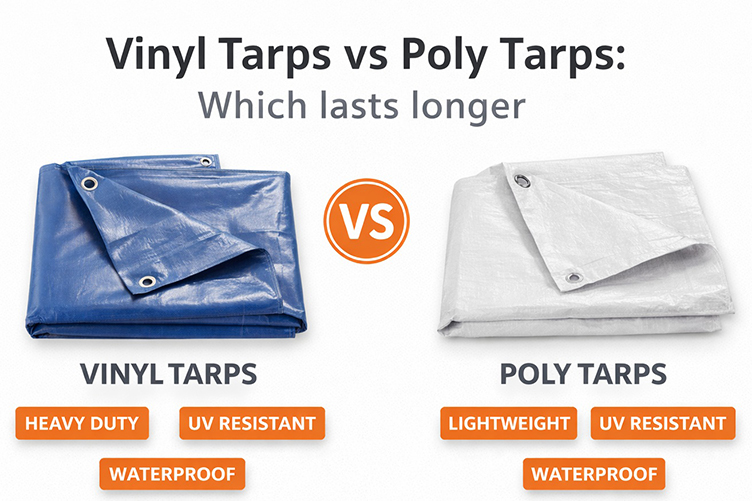
Vinyl tarps, also known as PVC tarps, are made from synthetic resin and are often coated for extra durability. They are known for their excellent strength and weather resistance. Vinyl tarps are typically used for heavy-duty applications where durability is essential.
On the other hand, polyethylene tarps, often referred to as “poly tarps,” are produced from a blend of polyethylene woven strands and are usually lighter and more flexible than vinyl. They are quite popular for general-use situations due to their versatility and affordability.
2. Factors Affecting Tarp Longevity
Several factors contribute to the lifespan of tarps, including:
- Material Composition: The quality of the materials used plays a crucial role.
- Usage Conditions: How and where the tarp is used significantly affects its longevity.
- Exposure to Elements: UV light, rain, and extreme temperatures can deteriorate tarp materials.
- Maintenance Practices: Proper care can extend the life of any tarp.
3. Durability Comparison: Vinyl vs Polyethylene
When it comes to durability, vinyl tarps generally outperform polyethylene options. Vinyl tarps can handle heavy loads without tearing or ripping, whereas polyethylene tarps might fray or tear under similar conditions. Additionally, vinyl tarps can withstand extreme weather conditions, lasting for several years under heavy use. On the other hand, polyethylene tarps may need replacement every year or two when exposed to harsh environments.
4. Water Resistance and Protection
Both vinyl and polyethylene tarps offer water resistance, but vinyl has superior water-proofing capabilities. Vinyl tarps are impermeable, even in heavy rainfall. Conversely, polyethylene tarps have a water-resistant coating, which means prolonged exposure to water can compromise their effectiveness over long periods of time, requiring users to be mindful of conditions during use.
5. Weight and Portability
If portability is a concern, polyethylene tarps are typically lighter and easier to handle than vinyl. They are an ideal choice for everyday applications like covering furniture or protecting garden equipment. Vinyl tarps, being heavier, are better suited for industrial applications where they remain in place over extended periods.
6. Cost Analysis
Cost is an essential factor for many buyers. Polyethylene tarps are usually less expensive than vinyl tarps. For one-time uses or events, many customers opt for poly tarps due to the lower initial cost. However, considering the replacement frequency of poly tarps compared to the longer-lasting vinyl options, vinyl tarps may present better long-term value despite the higher upfront expense.
7. User Experiences and Reviews
To further drive home the differences, let’s take a look at what real users say about both types of tarps:
- Vinyl Tarp Users: "I’ve had my vinyl tarp for over three years, and it’s still going strong. I use it for outdoor events and it has protected my gear perfectly, even in downpours!"
- Poly Tarp Users: "I enjoyed using the polyethylene tarp for the summer, but it started fraying after a few storms. Great for light use, but I wouldn’t rely on it for heavy-duty jobs."
Gathering user reviews from sources like Reddit or Amazon can give deeper insights into buyer experience with specific products.
8. Summary and Recommendations
In conclusion, both vinyl and polyethylene tarps have their pros and cons. If you need a tarp that is durable, waterproof, and can withstand heavy use, vinyl tarps are your best bet. However, if you're looking for something lightweight and economical for less demanding tasks, polyethylene tarps are suitable.
For consumers making a decision, we recommend considering how often you'll use the tarp and under what conditions. Long-term investment in a high-quality vinyl tarp may be the best choice for demanding applications, while occasional users could benefit from the affordability of polyethylene tarps.
Ready to choose the right tarp for your needs? Visit our e-commerce store for a varied selection of vinyl and polyethylene tarps today!