
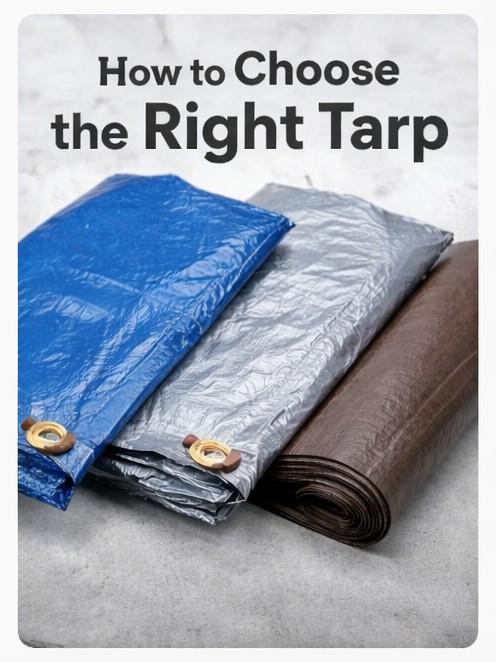
How to Choose the Right Tarp for Your Application
Posted by CanopiesAndTarps on Feb 7th 2026
Choosing the right tarp depends on how and where it will be used. Factors such as exposure to weather, duration of use, required strength, and installation method all affect which tarp is best suited for a specific application. This guide explains how to select the correct tarp based on real-world use conditions.
For a full breakdown of tarp materials, thickness, and sizing, read our Complete Tarp Buying Guide.
Identify the Purpose of the Tarp
The first step in choosing a tarp is determining its primary purpose. Temporary coverage requires different specifications than long-term outdoor protection or industrial use.
- Temporary coverage: Short-term protection from rain or debris
- Long-term coverage: Continuous outdoor exposure
- Industrial use: Heavy equipment, job sites, or commercial applications
Consider Weather Exposure
Weather conditions play a major role in tarp selection. Sun exposure, wind, rain, and snow all increase stress on tarp materials over time.
For outdoor use, tarps with UV resistance, reinforced hems, and heavier construction are recommended to withstand environmental exposure.
Choose the Appropriate Tarp Material
- Poly Tarps: Lightweight and cost-effective for temporary or general use
- Silver Poly Tarps: Reflective and UV resistant for outdoor equipment and storage
- Vinyl Tarps: Heavy-duty and flexible for industrial and commercial applications
- Canvas Tarps: Breathable and abrasion-resistant for machinery and tools
Select the Proper Weight and Thickness
Tarp weight and thickness directly affect durability. Lightweight tarps are easier to handle but offer less resistance to tearing, while heavier tarps provide increased strength for demanding applications.
When in doubt, choosing a heavier tarp helps extend lifespan and reduce the risk of failure in outdoor or high-stress environments.
Choose the Correct Size and Fit
Tarp size should account for finished dimensions rather than listed cut size. Finished size is typically smaller due to hems and grommets, which is important when full coverage is required.
For frames and structures, measuring the footprint, peak height, and attachment points helps ensure proper fit without overstressing grommets.
Attachment and Securing Considerations
Proper attachment is critical to tarp performance. Elastic ties, evenly spaced grommets, and surface-appropriate anchors help distribute tension and prevent damage.
The securing method should match both the tarp size and the surface it is installed on.
Common Tarp Selection Mistakes
- Choosing a tarp that is too lightweight for the application
- Ignoring finished size when ordering
- Selecting material based on price rather than use
- Underestimating wind and weather exposure
- Using improper securing methods
Quick Reference Summary
- Match tarp material to the application
- Consider weather and exposure duration
- Select appropriate weight and thickness
- Account for finished size and fit
- Use proper securing methods
Explore our full selection of tarps, heavy-duty tarps, vinyl tarps, and canopies. Additional sizing and installation guidance is available in our Tarp & Canopy Buying Guides.
Helpful Tarp Resources
FAQs
What is the best tarp material for outdoor use?
The best tarp material depends on your specific application — polyethylene tarps are lightweight, waterproof, and affordable, making them great for general outdoor use, while vinyl tarps offer superior durability and UV resistance for long-term or heavy-duty applications. If you need airflow rather than full waterproofing, a mesh sun shade tarp is ideal for pergolas, fencing, or agricultural shade. Consider how long the tarp will be exposed to the elements and how much weight or wind load it needs to handle before choosing a material.
How do I choose the right tarp size for covering my boat?
To choose the right size, measure your boat's length and beam (width) and add at least 2–3 feet on each side to ensure proper overhang and coverage. Our guide on how to cover and protect your boat with a tarp walks you through sizing, anchoring, and securing techniques to prevent water pooling and wind damage. Opting for a slightly oversized tarp is almost always better than one that's too small.
Which type of tarp should I use to protect my car or truck?
For vehicle protection, you have two main options: a heavy-duty waterproof tarp for temporary coverage, or a portable garage or carport for a more structured, long-term solution. Portable garages provide better airflow, UV protection, and security than a flat tarp draped over a vehicle, and they eliminate the risk of tarp contact scratching your paint. If you park outdoors regularly, a portable carport is generally the more practical and protective investment.
Can I use a tarp to cover my pool over winter?
Yes, a tarp can be an affordable and effective way to protect your pool during the off-season, as long as it's properly secured to prevent debris intrusion and water pooling on top. Our step-by-step article on how to cover your pool with a tarp covers the right tarp weight, anchoring methods, and tips for keeping the cover tight throughout winter. Look for a tarp with reinforced grommets and a high denier rating for the best results in harsh weather.
Do I need a canopy tent or a tarp for a backyard event?
It depends on the level of coverage and portability you need — a tarp can work well when rigged overhead with rope and poles, but a pop-up canopy tent offers faster setup, a cleaner look, and built-in frame stability that's much better suited for events like markets, parties, or graduations. If aesthetics matter and you expect guests, a canopy tent is typically the more practical and professional choice. For larger events or permanent-style shade structures, explore the full range of canopy tents, tarps, and accessories available to find the right fit for your setup.