

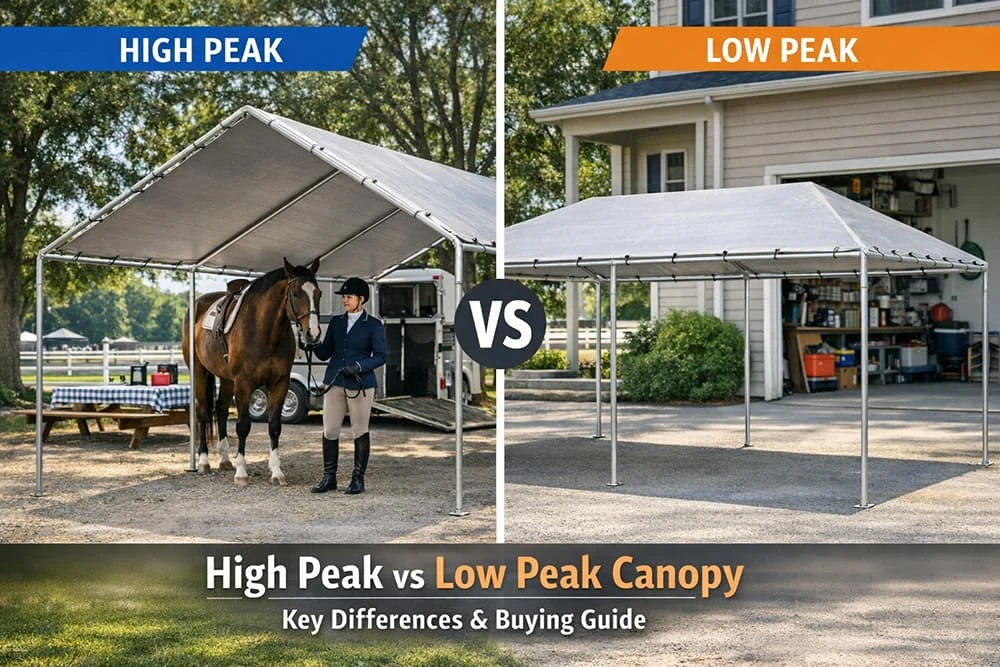
High Peak vs Low Peak Canopy (Full Guide)
Posted by CanopiesAndTarps on Apr 17th 2026
Choosing between a high peak and low peak canopy can make a big difference in performance, durability, and how well your canopy fits your needs.
While both designs provide overhead coverage, the differences in structure affect water runoff, wind resistance, and overall usability. This guide breaks down the key differences so you can choose the right canopy for your application.
High Peak vs Low Peak Canopy: Key Differences
| Feature | High Peak Canopy | Low Peak Canopy |
|---|---|---|
| Roof Design | Steeper, angled peak | Lower, flatter profile |
| Water Runoff | Excellent – sheds water quickly | Good – less efficient than high peak |
| Wind Resistance | Better wind deflection | More compact, slightly less wind deflection |
| Interior Space | More headroom in the center | Lower overall clearance |
| Portability | Slightly taller and more open | Compact and easier to fit in tight spaces |
What Is a High Peak Canopy?
A high peak canopy features a steeper roof angle, typically around 120 degrees, designed to improve water runoff and wind resistance.
- Better performance in rain and outdoor conditions
- More headroom for people and equipment
- Improved airflow and ventilation
High peak canopies are commonly used for events, outdoor gatherings, and general-purpose shelter.
What Is a Low Peak Canopy?
A low peak canopy has a lower roof profile, making it more compact and easier to use in tight spaces or structured setups.
- Lower overall height for vendor environments
- More controlled and compact structure
- Easy to transport and set up
Low peak canopies are often preferred for vendor booths, markets, and areas where space is limited.
When to Choose a High Peak Canopy
- Outdoor events and gatherings
- Areas with frequent rain or weather exposure
- When you need more interior space and headroom
- General-purpose outdoor use
Explore high peak canopy options for versatile outdoor coverage.
When to Choose a Low Peak Canopy
- Vendor booths and market setups
- Compact or restricted spaces
- Situations where a lower profile is preferred
Low peak canopies are a practical choice for controlled environments and structured layouts.
Which Canopy Is Better?
There is no one-size-fits-all answer. The best canopy depends on how you plan to use it.
- Choose a high peak canopy for better weather performance, airflow, and versatility
- Choose a low peak canopy for compact setups, vendor use, and tighter spaces
Helpful Resources
- Best Tarp for Outdoor Use
Learn how tarp material and thickness impact outdoor performance. - Best Canopy for Events vs Storage vs Vendors
Compare canopy types based on real-world use cases. - Canopy Product Selector
Find the right canopy based on your specific needs.
FAQs: High Peak vs Low Peak Canopies
Is a high peak canopy better for rain?
Yes. The steeper roof angle allows water to run off more easily, reducing the risk of pooling.
Which canopy is better for vendors?
Low peak canopies are often preferred for vendor setups because they offer a more compact and controlled structure.
Are high peak canopies more stable?
High peak canopies can perform better in wind due to their angled design, but stability also depends on frame strength and anchoring.
Do high peak canopies provide more space?
Yes. The higher center peak creates more usable headroom compared to low peak designs.