

Universal Tarp Weight & Material Comparison Guide
Choosing the right tarp material is important for durability, weather protection, and long-term performance. Different tarp fabrics vary significantly in weight, thickness, UV resistance, waterproofing, and chemical resistance. This guide provides a universal comparison of common tarp materials including poly tarps, vinyl tarps, canvas tarps, mesh tarps, and clear poly tarps.
Use this reference chart to compare material properties, weight ranges, and performance characteristics to determine which tarp type is best suited for construction, agriculture, transportation, equipment protection, and outdoor storage.
Common Tarp Materials Explained
Tarps are manufactured from several different base materials, each designed for specific applications. The most common tarp fabrics include polyethylene (poly), vinyl (PVC), canvas, mesh, and clear reinforced poly. Understanding the differences between these materials helps ensure the correct tarp is selected for the job environment and exposure conditions.
Poly Tarps
Polyethylene tarps are lightweight, waterproof, and cost-effective. They are commonly used for construction covers, temporary weather protection, and equipment storage. Poly tarps are typically manufactured with reinforced mesh grids and are available in multiple thickness levels.
Vinyl Tarps
Vinyl tarps are heavy-duty PVC coated fabrics designed for industrial applications where strength and abrasion resistance are critical. These tarps are often used for trucking, flatbed covers, industrial containment, and long-term outdoor exposure.
Canvas Tarps
Canvas tarps are breathable cotton fabrics often treated with wax or oil coatings for water resistance. Unlike poly or vinyl tarps, canvas allows moisture to escape, making it ideal for covering equipment, machinery, or wood that needs ventilation.
Mesh Tarps
Mesh tarps are designed for airflow while still providing shade and debris containment. They are commonly used on dump trucks, trailers, construction sites, and landscaping applications.
Clear Poly Tarps
Clear poly tarps are reinforced polyethylene tarps that allow light transmission while maintaining weather protection. They are often used for greenhouses, temporary enclosures, and work areas where visibility is important.
Quick Comparison of Common Tarp Materials
The chart below compares the most common tarp materials including poly, vinyl, canvas, mesh, and clear reinforced tarps based on weight, water resistance, UV durability, and typical applications.
Typical Tarp Material Weight Comparison
| Material | Typical Weight Range | Common Thickness | Durability Level |
|---|---|---|---|
| Poly Tarps | 4 oz – 12 oz per square yard | 5 mil – 16 mil | Light to Heavy Duty |
| Vinyl Tarps | 10 oz – 22 oz per square yard | 18 mil – 28 mil | Heavy Industrial |
| Canvas Tarps | 10 oz – 18 oz per square yard | N/A (woven fabric) | Medium to Heavy Duty |
| Mesh Tarps | 6 oz – 10 oz per square yard | N/A | Medium Duty |
| Clear Poly Tarps | 5 oz – 7 oz per square yard | 12 mil – 16 mil | Medium Duty |
UV Resistance Comparison
Ultraviolet (UV) exposure is one of the primary causes of tarp degradation. Materials with higher UV resistance last longer in direct sunlight.
| Material | UV Resistance | Outdoor Longevity |
|---|---|---|
| Poly Tarps | Moderate | 1–3 years |
| Vinyl Tarps | Excellent | 3–10 years |
| Canvas Tarps | Moderate | 1–3 years |
| Mesh Tarps | Good | 2–5 years |
| Clear Poly Tarps | Moderate | 1–3 years |
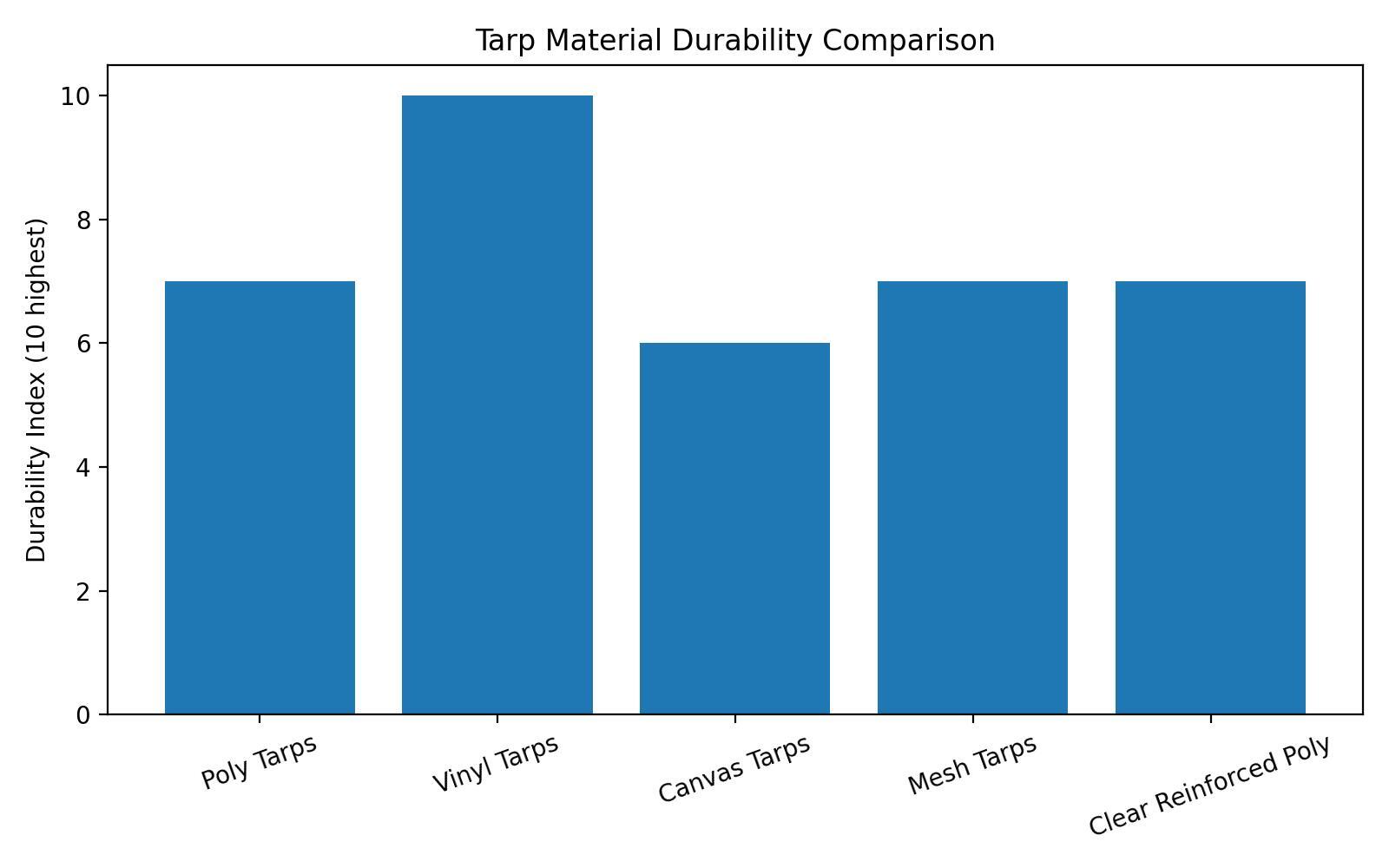
How to Choose the Right Tarp Material
Selecting the right tarp material depends on how the tarp will be used, how long it will remain outdoors, and whether airflow or waterproof protection is more important. Use the quick guide below to choose the best tarp for your application.
- Choose poly tarps for general outdoor coverage, construction protection, equipment storage, and cost-effective waterproof protection.
- Choose vinyl tarps for heavy-duty applications such as trucking, industrial containment, or long-term outdoor exposure where maximum durability is required.
- Choose canvas tarps when breathability matters. Canvas helps prevent condensation buildup when covering machinery, lumber, or equipment.
- Choose mesh tarps for shade, airflow, debris containment, and dump truck covers where wind resistance and ventilation are important.
- Choose clear reinforced poly tarps when you need weather protection while still allowing light and visibility, such as temporary enclosures or greenhouse-style structures.
Many temporary shelters also use canopy frames combined with side panels and door panels to create fully enclosed workspaces. Learn how these components work together in our Complete Guide to Canopy Enclosures.
Chemical & Environmental Resistance
Different tarp materials react differently when exposed to chemicals, oils, fuels, fertilizers, and other industrial substances.
- Polyethylene: resistant to most acids and alkalis
- Vinyl (PVC): strong resistance to oils, grease, and many chemicals
- Canvas: limited chemical resistance
- Mesh tarps: similar resistance to polyethylene
Best Applications by Tarp Type
- Poly Tarps: construction covers, emergency roof protection, equipment storage
- Vinyl Tarps: trucking, industrial containment, heavy equipment covers
- Canvas Tarps: breathable equipment covers, woodworking, machinery protection
- Mesh Tarps: dump trucks, debris containment, shade structures
- Clear Poly Tarps: greenhouses, temporary walls, weather barriers
The chart below compares the most common tarp materials including poly, vinyl, canvas, mesh, and clear reinforced tarps based on weight, water resistance, UV durability, and typical applications.
Universal Tarp Weight & Material Comparison Guide
Compare common tarp materials including poly, vinyl, canvas, mesh, and clear reinforced poly.
| Material | Weight | Thickness | Water | UV | Breathable | Best Uses |
|---|---|---|---|---|---|---|
| Poly Tarps | 4-10 oz/yd² | 5-16 mil | Waterproof | Moderate to Good | No | General outdoor coverage |
| Vinyl Tarps | 10-22 oz/yd² | 18-28 mil | Waterproof | Very Good to Excellent | No | Industrial covers |
| Canvas Tarps | 10-18 oz/yd² | woven | Water resistant | Moderate | Yes | Machinery, lumber |
| Mesh Tarps | 6-10 oz/yd² | mesh | Not waterproof | Good to Excellent | Yes | Shade, debris containment |
| Clear Reinforced Poly | 5-7 oz/yd² | 12-16 mil | Waterproof | Moderate | No | Enclosures, visibility |
Tarp Material Comparison FAQs
What tarp material lasts the longest?
Vinyl tarps generally provide the longest lifespan due to their heavy PVC coating and superior UV resistance.
Which tarp is best for outdoor use?
For long-term outdoor exposure, vinyl tarps and heavy-duty poly tarps are the most durable options.
Are canvas tarps waterproof?
Canvas tarps are water resistant but breathable, which helps prevent condensation under the cover.
Which tarp material is strongest?
Vinyl tarps typically offer the highest tear resistance and overall durability.
Helpful Tarp Resources
Tarp Buying Guide
Learn how to select the right tarp based on use, weather exposure, material type, and securing methods.
All Tarp & Canopy Guides
Browse our full collection of tarp and canopy guides covering materials, sizing, durability, and installation.
Tarp Resource Center
Explore helpful articles, comparison charts, and buying resources for tarps and canopy systems.
12 Mil Poly Tarp Weight Chart
View a full size-by-size weight chart for heavy-duty 12 mil poly tarps used for construction and outdoor protection.
Shop Tarps by Use
Find tarps designed for specific uses including construction, agriculture, equipment protection, and storm coverage.
Last updated: March 2026