

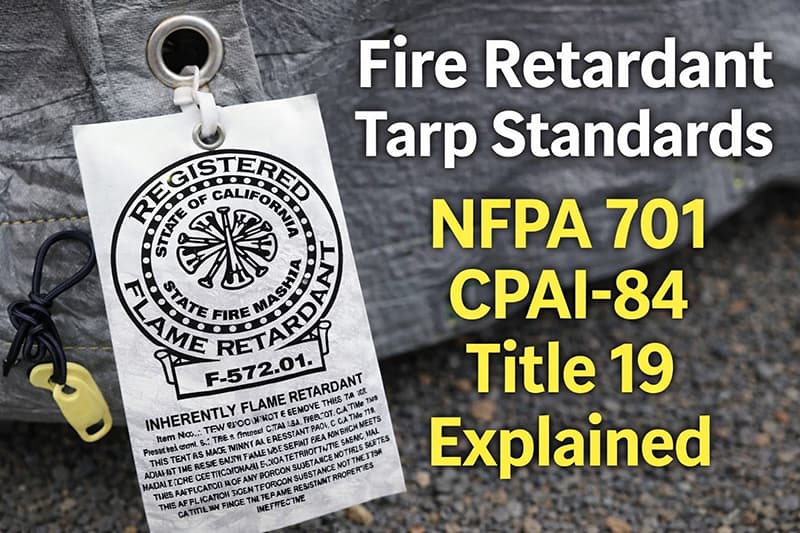
What Do Fire Retardant Tarp Standards Mean? (NFPA 701, CPAI-84 & Title 19 Explained)
Posted by CanopiesAndTarps on Mar 30th 2026
If you're shopping for a fire retardant tarp, you've likely come across terms like NFPA 701, CPAI-84, or California Title 19. These certifications are important—but they can also be confusing if you’re not familiar with what they actually mean.
In this guide, we break down the most common fire retardant tarp standards, what they test for, and how to choose the right certification for your application.
Quick Answer: Fire retardant tarp standards like NFPA 701, CPAI-84, and Title 19 ensure that materials resist ignition and slow flame spread—but they do not make a tarp fireproof.
What Does “Fire Retardant” Actually Mean?
Fire retardant tarps are specially treated to resist ignition and slow the spread of flames. This added protection is critical in environments where fire risk is a concern.
However, it's important to understand:
- Fire retardant does NOT mean fireproof
- Materials will still burn under sustained exposure
- The goal is to reduce fire spread and improve safety
These tarps are commonly used in construction, events, industrial settings, and any situation where fire codes apply.
NFPA 701 Explained
NFPA 701 is one of the most widely recognized fire safety standards for fabrics and tarps used in public spaces.
- Measures flame propagation and burn resistance
- Tests how quickly flames spread across material
- Required for many indoor and outdoor public applications
NFPA 701 compliant tarps are commonly used for:
- Event tents and canopies
- Construction site enclosures
- Public gathering spaces
CPAI-84 Explained
CPAI-84 is a standard specifically designed for tent and canopy fabrics.
- Tests flame resistance of lightweight materials
- Focuses on vertical flame spread and burn rate
- Often used for portable shelters and canopy systems
This standard is commonly required for:
- Pop-up canopies
- Temporary shelters
- Outdoor events and vendor setups
California Title 19 Explained
California Title 19 is a fire safety regulation required for materials used in public settings within California.
- Applies to tarps, drapes, and decorative materials
- Required for compliance at many venues and events
- Often overlaps with NFPA 701 requirements
If you are working in California or at regulated venues, Title 19 compliance is often mandatory.
Comparison of Fire Retardant Tarp Standards
| Standard | Best For | Key Focus |
|---|---|---|
| NFPA 701 | Public spaces & events | Flame spread and burn resistance |
| CPAI-84 | Tents and canopies | Lightweight fabric flame testing |
| Title 19 | California compliance | Regulatory fire safety requirements |
Which Fire Retardant Standard Do You Need?
The right certification depends on how and where you plan to use your tarp:
- Events or public spaces: NFPA 701 (and often Title 19)
- Canopies and tents: CPAI-84
- California projects: Title 19 compliance
- General safety use: NFPA 701 is a strong baseline
When in doubt, always check local regulations or job site requirements before purchasing.
Common Mistakes to Avoid
- Assuming fire retardant means fireproof
- Choosing a tarp without verifying certification
- Ignoring local or venue-specific requirements
- Using non-compliant materials in regulated environments
Explore Fire Retardant Tarp Options
Browse our selection of fire retardant tarps designed to meet industry standards and provide reliable protection for your application.
For a deeper breakdown of certifications and how they apply, visit our Flame Retardant Tarp Standards Guide.
Final Thoughts
Understanding fire retardant tarp standards helps you choose the right product for safety, compliance, and performance. Whether you're working on a job site, setting up an event, or meeting regulatory requirements, selecting the correct certification ensures you're protected and prepared.