

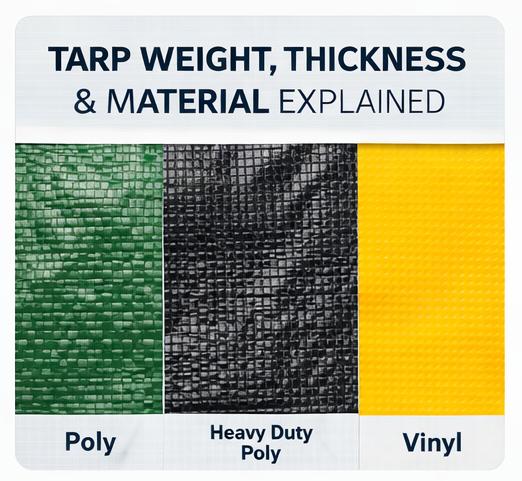
Tarp Weight, Thickness & Material Explained
Posted by CanopiesAndTarps on Feb 7th 2026
Choosing the right tarp depends on understanding key specifications such as weight, thickness, material type, and construction. This guide explains how tarp weight, mil thickness, denier, and mesh count affect durability, performance, and recommended use so you can select the correct tarp for your application.
For a full breakdown of tarp materials, thickness, and sizing, read our Complete Tarp Buying Guide.
What Is Tarp Thickness?
Tarp thickness is measured in mils and refers to the thickness of the tarp material. One mil equals one-thousandth of an inch. In general, higher mil ratings indicate thicker, more durable tarps designed for heavier use.
Thickness alone does not determine overall strength, but it plays an important role in tear resistance, puncture resistance, and lifespan in outdoor environments.
What Does Tarp Weight Mean?
Tarp weight refers to how much the tarp weighs per square yard or per square foot. Heavier tarps typically use thicker materials and denser weaving, resulting in increased strength and longer service life.
Lighter tarps are easier to handle and install, making them suitable for temporary coverage, while heavier tarps are better suited for long-term outdoor protection and demanding job sites.
What Is Denier in Tarps?
Denier measures the thickness of the individual fibers used in woven tarp fabric. A higher denier rating means thicker fibers, which generally increases tensile strength and resistance to tearing.
Denier works together with mesh count and coating thickness to determine overall tarp strength. A tarp with higher denier fibers but low mesh density may still be weaker than a well-balanced construction.
What Is Mesh Count?
Mesh count refers to the number of woven fibers per square inch in the tarp fabric. Higher mesh counts indicate a tighter weave, which improves strength, dimensional stability, and resistance to stretching.
Tarps with higher mesh counts are typically more durable and better suited for heavy-duty or industrial applications.
Common Tarp Types Explained
- Poly Tarps: Lightweight, cost-effective, and commonly used for general and temporary coverage.
- Silver Poly Tarps: Reflective and UV resistant, ideal for outdoor equipment and long-term exposure.
- Vinyl Tarps: Heavy-duty, flexible, and designed for industrial and commercial applications.
- Canvas Tarps: Breathable and abrasion-resistant, commonly used for equipment and machinery.
How to Choose the Right Tarp
The best tarp depends on the application, environment, and length of use. Temporary coverage often requires lighter materials, while long-term outdoor protection benefits from heavier construction, tighter mesh, and thicker coatings.
Consider factors such as exposure to sun, wind, moisture, and abrasion when selecting a tarp. Choosing the correct specifications helps prevent premature wear and failure.
Quick Reference Summary
- Mil thickness measures material thickness
- Denier measures fiber thickness
- Mesh count affects weave density and strength
- Tarp weight indicates overall durability
- Material type determines flexibility and lifespan
For product-specific options, explore our selection of tarps, heavy-duty tarps, and vinyl tarps designed for professional and industrial use. Part of our Tarp & Canopy Buying Guides