

How to Store Tarps, Canopies, and Equipment Outdoors Without Damage
Posted by CanopiesAndTarps on Feb 14th 2026
Outdoor tarps, canopies, and equipment are built to handle harsh conditions — but improper storage can dramatically shorten their lifespan. Exposure to moisture, UV rays, dirt, and temperature swings can weaken materials, cause mildew, and lead to unnecessary replacements.
Whether you’re a contractor, rental company, or homeowner, using the right outdoor storage methods helps protect your gear, keeps your workspace organized, and saves money over time. This guide breaks down practical storage solutions and best practices for keeping outdoor equipment in top condition.
Why Outdoor Storage Protection Matters
Even heavy-duty tarps and canopy components can degrade when left exposed between uses. Common storage-related issues include:
-
UV damage that weakens tarp fibers
-
Moisture buildup leading to mold or mildew
-
Rust and corrosion on metal components
-
Damage caused by ground moisture and pests
Storing equipment properly helps preserve performance, reliability, and appearance — especially for gear used repeatedly in commercial environments.
Best Outdoor Storage Solutions for Tarps & Equipment
Heavy-Duty Storage Bins
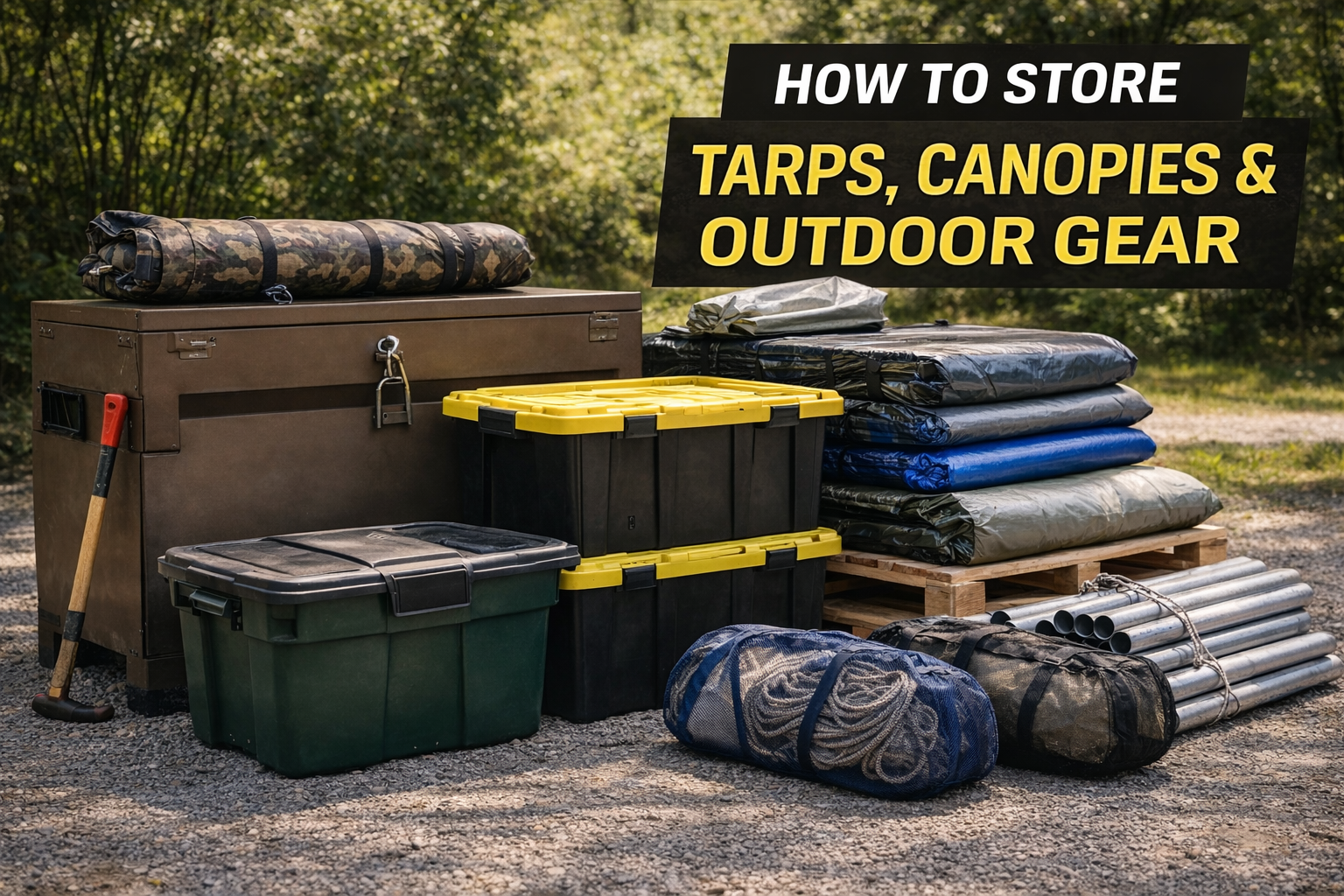
Plastic storage bins with secure lids are ideal for folded tarps, straps, stakes, and smaller accessories. Look for UV-resistant materials and water-resistant seals to protect contents year-round.
Lockable Jobsite Boxes
For contractors and rental operations, lockable steel boxes provide added security and weather protection. These boxes are ideal for storing tools, canopy frames, and valuable accessories while keeping them safe from theft and the elements.
Mesh Gear Bags for Ventilation
Mesh bags are a smart solution for damp or recently used tarps. Their breathable design allows airflow, helping tarps dry fully and preventing mildew during storage.
Outdoor Sheds and Shelving
For larger storage needs, outdoor sheds or cabinets provide organized, covered storage space. Adding shelving or pallets keeps gear off the ground and improves air circulation.
Outdoor Storage Best Practices
No matter which storage option you choose, following a few simple habits can make a big difference:
-
Clean and dry tarps before storage
-
Avoid placing equipment directly on the ground
-
Use pallets or shelving to improve airflow
-
Label bins and group similar items together
-
Cover stored equipment for added weather protection
These steps help prevent damage and make equipment easier to access when needed.
Choosing the Right Storage Setup
The best outdoor storage solution depends on how often gear is used, available space, and environmental conditions. High-use equipment should be easily accessible, while long-term storage benefits from added protection and organization.
For a deeper breakdown of storage options and organization tips, explore our Outdoor Storage Guide, which highlights equipment-specific solutions for protecting tarps, canopies, and accessories year-round.
Conclusion
Proper outdoor storage is just as important as choosing quality equipment. With the right storage solutions and habits, you can extend the life of your tarps and canopies, reduce replacement costs, and keep your gear ready for every job.
Related Outdoor Storage Resources
-
Explore our complete Outdoor Storage Equipment for organizing tarps, frames, and accessories
-
Learn more about protecting your gear with Heavy-Duty Tarps built for outdoor environments
-
Find essential Canopy Accessories to secure, store, and maintain your setup
-
Read our full Outdoor Storage Guide for step-by-step organization and protection tips