

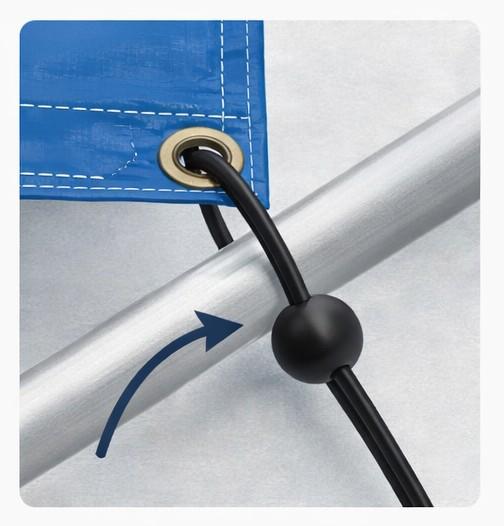
How to Secure Tarps & Canopies Properly
Posted by CanopiesAndTarps on Feb 7th 2026
Video Summary
This video shows step-by-step how to secure tarps and canopies properly using elastic ties such as ball bungees, evenly spaced grommets, and the correct anchors for dirt, concrete, and other surfaces to reduce stress and prolong tarp life.
Properly securing tarps and canopy covers is essential for safety, durability, and long-term performance. This guide explains best practices for securing tarps and canopies using elastic ties, anchors, weights, and surface-appropriate methods to prevent tearing, movement, and structural damage.
For a full breakdown of tarp materials, thickness, and sizing, read our Complete Tarp Buying Guide.
Why Proper Securing Matters
Improperly secured tarps and canopies can tear, pull out grommets, or place excessive stress on frames. Wind, weather, and movement amplify these forces, especially on large or elevated covers.
Using the correct securing method helps distribute tension evenly, reduces wear on materials, and extends the lifespan of both the tarp and the supporting structure.
Use Elastic Ties Instead of Rigid Fasteners
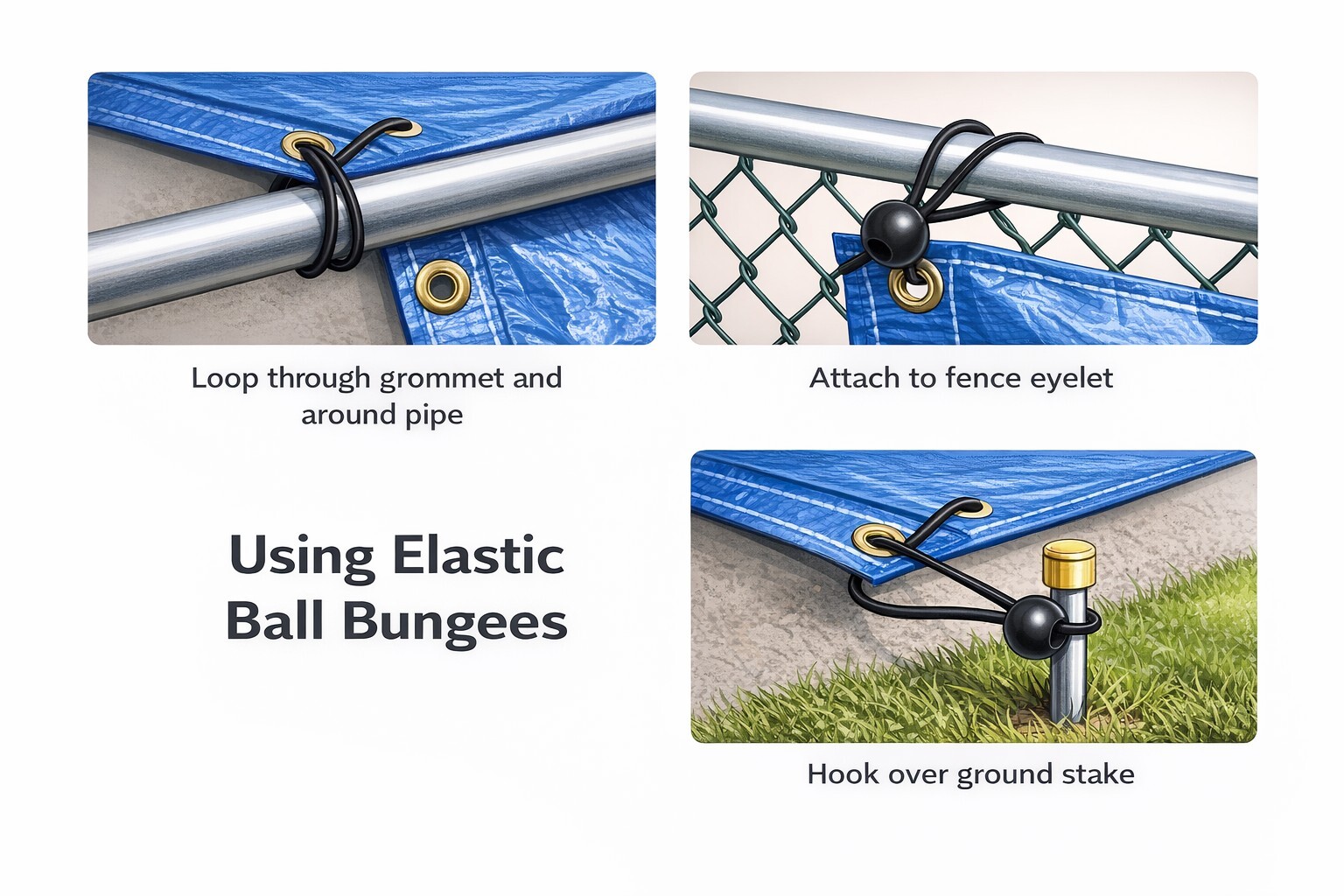
Elastic ball bungees and stretch cords are the preferred method for securing tarps and canopy covers. Elastic ties allow controlled movement during wind gusts, reducing stress on grommets and fabric.
Rigid fasteners such as rope, wire, zip ties, or chain are strongly discouraged because they do not allow for movement and can cause grommets or fabric to tear under tension.
Proper Grommet Usage
Tarps should be secured using every available grommet whenever possible. Skipping grommets concentrates force in fewer attachment points and increases the likelihood of failure.
Even spacing and uniform tension help distribute load evenly across the tarp and reduce wear over time.
Securing on Dirt or Grass
Ground stakes or auger-style anchors are effective when securing tarps or canopy legs on dirt or grass surfaces. Stakes should be driven at an angle away from the structure for maximum holding strength.
Securing on Concrete or Asphalt
On hard surfaces, canopy anchor weights or weighted base plates are recommended. Weights should be placed directly over leg base plates and may be stacked for additional stability.
Securing to Frames or Structures
When attaching tarps to frames, use elastic ties through grommets and around frame tubing. Avoid overtightening, as excessive tension increases wear and stress points.
Securing Large or Heavy-Duty Tarps
Larger tarps require additional securing points due to increased surface area and wind exposure. Using all grommets, reinforcing edges, and adding intermediate attachment points helps prevent billowing and movement.
For long-term installations, periodic inspection and retightening ensures continued stability as materials settle or stretch.
Common Securing Mistakes to Avoid
- Using rope, wire, or zip ties instead of elastic fasteners
- Overtightening attachment points
- Skipping grommets or uneven spacing
- Failing to account for wind exposure
- Using insufficient anchors or weights
Securing Canopies in Windy Conditions
In windy conditions, additional anchoring is required. Increasing anchor weight, using longer stakes, and ensuring all attachment points are engaged helps improve stability.
If severe weather is expected, removing canopy covers entirely is recommended to prevent structural damage.
Quick Reference Summary
- Use elastic ties instead of rigid fasteners
- Secure all grommets evenly
- Match anchors to surface type
- Add extra support for large tarps
- Inspect and adjust regularly
For recommended accessories and compatible products, explore our selection of tarp accessories, canopy fittings, and canopies. Additional sizing and material guidance is available in our Tarp & Canopy Buying Guides.