

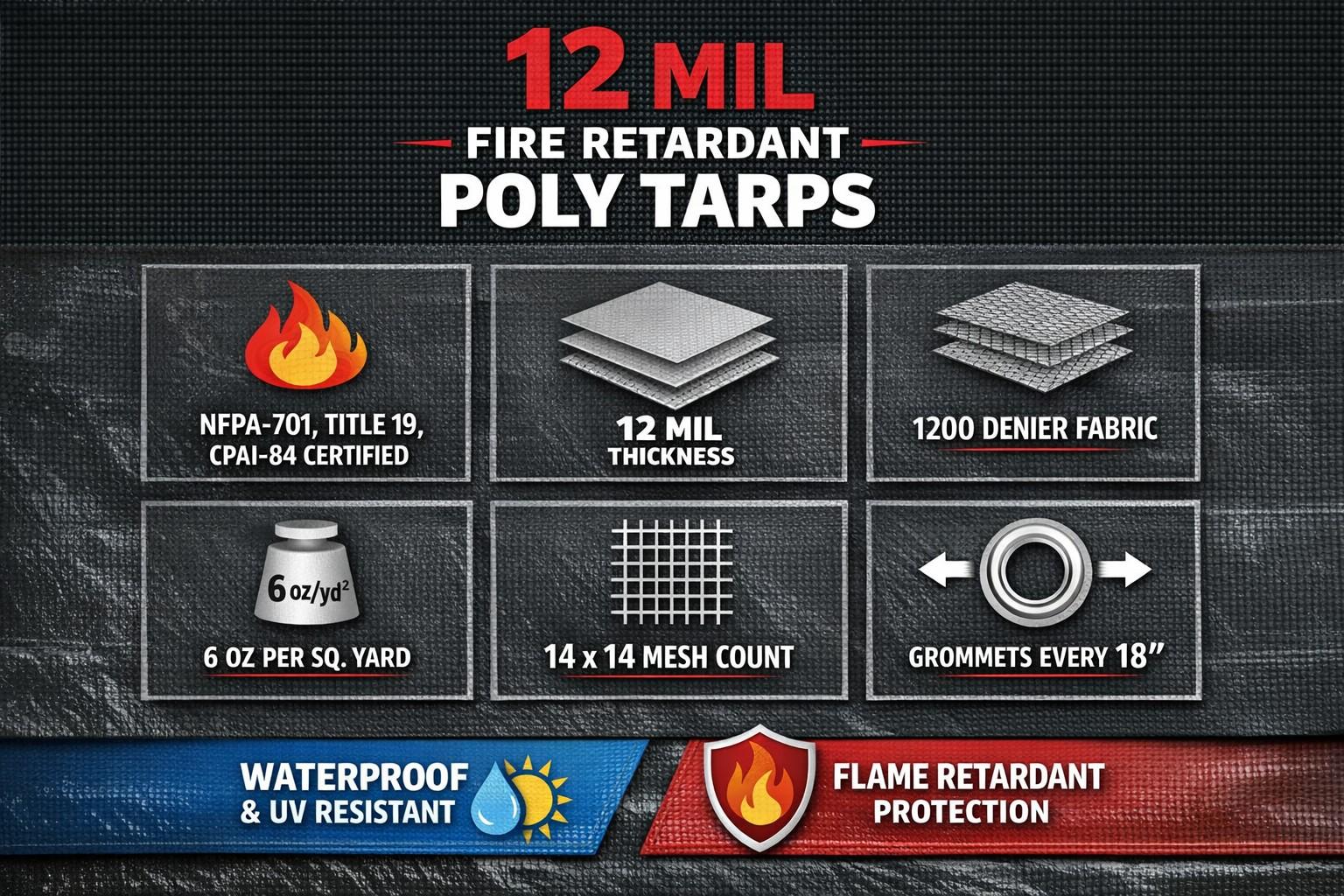
Fire Retardant Poly Tarps: Safety, Standards & Smart Use (NFPA-701, Title 19 & CPAI-84)
Posted by CanopiesAndTarps on Feb 27th 2026
Fire safety is not just a precaution — it is a responsibility. Whether you are covering equipment on a construction site, protecting materials at an event, or complying with public safety requirements, fire retardant tarps can make a measurable difference in risk mitigation.
Fire retardant poly tarps are specifically engineered to resist ignition and slow flame spread, while also providing robust protection from weather, UV exposure, and debris. They serve as a reliable dual-purpose solution for fire safety and environmental protection.
Watch: Fire Retardant Tarp Standards Explained (NFPA-701, Title 19 & CPAI-84)
Video Summary:
-
What NFPA-701 tests
-
Why Title 19 matters
-
When CPAI-84 is required
-
Flame resistant vs fireproof clarification
What Are Fire Retardant Poly Tarps?
Fire retardant poly tarps are heavy-duty protective covers made from fire-treated or inherently flame-resistant polyethylene materials. They are designed to meet recognized fire safety standards, including:
-
NFPA-701 – Standard Methods of Fire Tests for Flame Propagation of Textiles and Films
-
California Title 19 – California State Fire Marshal fire tests
-
CPAI-84 – Flame resistance standard for recreational and camping fabrics
These certifications confirm that the tarp has been tested to resist ignition and slow flame spread during exposure to fire hazards, providing critical time and safety benefits in regulated environments.
Standards & Safety: Why They Matter
Understanding fire certification helps you choose the right tarp with confidence:
NFPA-701
This standard evaluates how a material reacts when exposed to flame. It’s widely referenced for textiles and films used in public places where fire resistance is a requirement.
CPAI-84
Originally developed for camping tents, CPAI-84 is now used for a range of flame-resistant outdoor fabrics where compliance ensures safety in public or high-risk settings.
California Title 19
This state fire marshal standard is required for materials used in commercial and public assembly applications within California — including trade shows, job sites, and more.
Fire retardant tarps aren’t fireproof, but they are engineered to slow or inhibit flame spread, improving overall site safety and reducing hazard escalation.
Core Benefits of Fire Retardant Poly Tarps
Fire retardant poly tarps combine flame resistance with all-weather durability, making them versatile and practical:
-
Reduced flame spread — Meets NFPA-701, Title 19 & CPAI-84
-
Waterproof and UV resistant — Protects from weather elements
-
Tear and abrasion resistance — Durable for heavy use
-
Mildew and rot resistant — Ideal for outdoor applications
-
Lightweight and easy to deploy — Simple installation and handling
These features help safeguard people, equipment, and materials — whether at a jobsite, event, or storage area.
Common Use Cases
Fire retardant poly tarps are frequently used in:
Construction Sites
Used as containment barriers or to protect materials, minimizing fire hazards around welding, sparks, or flammable residues.
Events & Public Gatherings
Compliant tarps help event planners and venue operators meet local fire safety regulations while providing shelter from sun and rain.
Industrial Operations
Protect sensitive equipment, partition work areas, or cover materials where fire risk and environmental exposure overlap.
Emergency Preparedness
Lightweight fire retardant tarps can be part of disaster response kits, providing quick-deploy protection in high-heat or high-risk situations.
Choosing the Right Fire Retardant Poly Tarp
When selecting a fire retardant tarp, consider:
Certification
Ensure the tarp clearly states compliance with applicable fire safety standards like NFPA-701, Title 19, and CPAI-84.
Size & Fit
Verify coverage area and finished size (typically 3% smaller than cut size due to hemming).
Construction Quality
Look for strong denier fiber construction (such as 1200 denier) and close mesh counts for material strength.
Weather Protection
Fire retardant poly tarps should also provide waterproofing, UV resistance, and durability against environmental wear.
Maintenance & Care Tips
To extend the life and effectiveness of your fire retardant tarp:
-
Clean with mild soap and water (avoid harsh chemicals)
-
Ensure the tarp is dry before storage
-
Regularly check seams and reinforced edges
-
Avoid direct flame contact when possible
-
Follow manufacturer care instructions regularly
Proper maintenance ensures long-term performance and preserves fire-retardant properties.
Looking for compliant protective solutions? Explore our 12 Mil Fire Retardant Poly Tarps, browse our full Fire Retardant Tarps category, or visit our Canopy & Tarp Guides for expert recommendations and safety advice.
Fire retardant poly tarps combine safety and protection in a way that ordinary tarps simply can’t match. Whether you’re meeting code requirements, protecting people and property, or simply investing in smarter safety solutions, understanding what fire retardant tarps are and how they work gives you the confidence to choose the right cover for the job.