

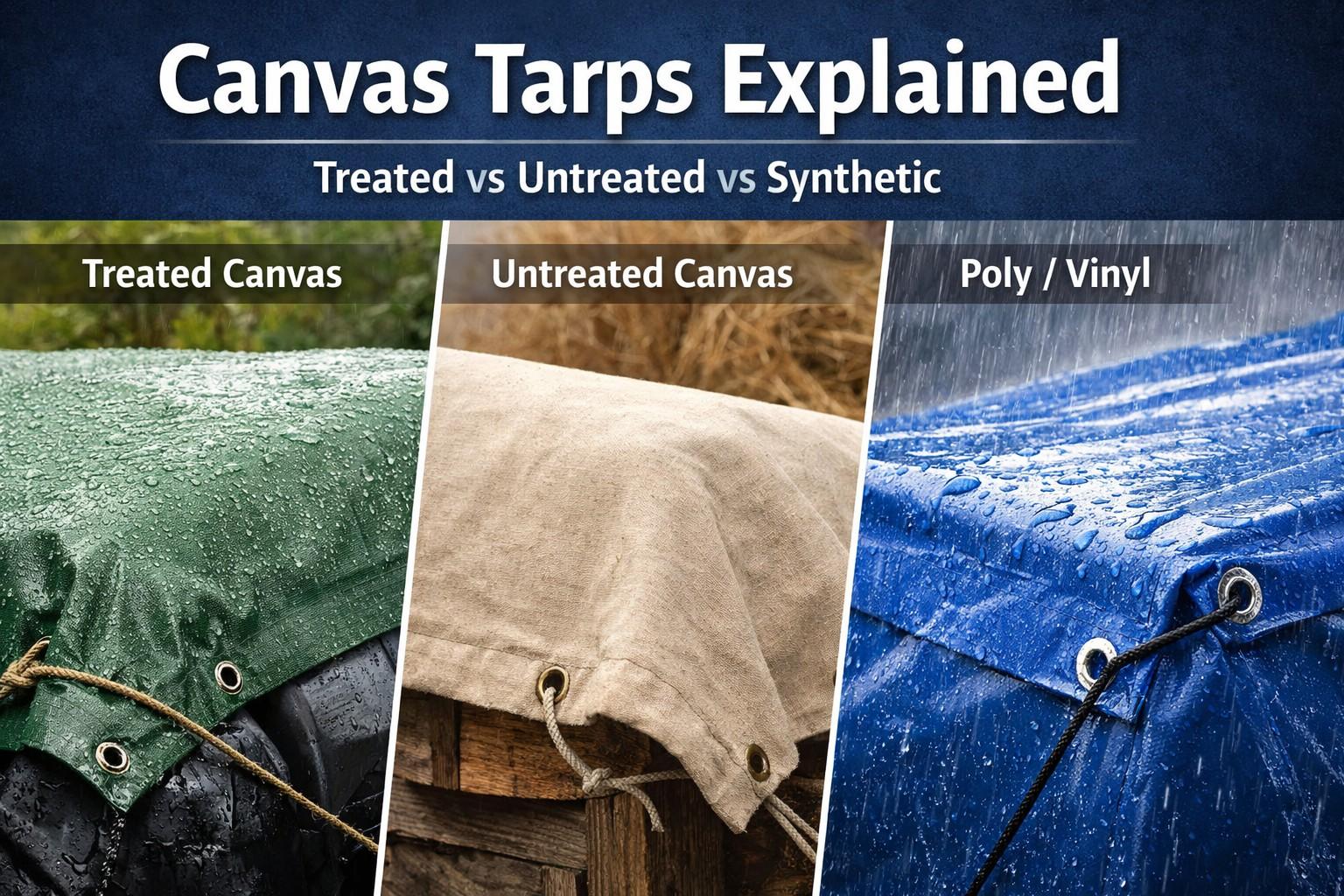
Canvas Tarps Explained: Treated vs Untreated vs Synthetic Alternatives
Posted by CanopiesAndTarps on Feb 26th 2026
Canvas tarps are known for their strength, breathability, and versatility — but not all canvas tarps are the same. Choosing between treated canvas, untreated (natural) canvas, or synthetic tarps depends on how you plan to use them.
This guide explains the key differences so you can select the right tarp for your application without guesswork.
What Is a Canvas Tarp?
A canvas tarp is made from woven cotton fabric, offering a durable and breathable covering solution. Unlike plastic tarps, canvas allows air to circulate, which helps reduce condensation and moisture buildup underneath the cover.
Canvas tarps are commonly used for equipment protection, construction sites, agriculture, and long-term outdoor or indoor storage.
Treated Canvas Tarps (Water-Resistant Canvas)
What Makes Them Different?
Treated canvas tarps are made from cotton canvas that has been treated with paraffin or similar water-resistant agents. This treatment allows the tarp to shed light rain while still remaining breathable.
Key Benefits
-
Water resistant (not fully waterproof)
-
Breathable fabric reduces condensation
-
Durable and long-lasting
-
Quieter in wind than plastic tarps
Best Uses
-
Outdoor equipment covers
-
Construction and jobsite protection
-
Agricultural and farm applications
-
Long-term storage where airflow matters
? Best balance of weather protection and breathability.
Untreated (Natural) Canvas Tarps
What Makes Them Different?
Untreated canvas tarps contain no waterproofing agents or chemical treatments. They are made from natural woven cotton and remain fully breathable.
Key Benefits
-
Chemical-free and untreated
-
Maximum airflow
-
Reduces condensation
-
Strong natural fibers
-
Quiet and flexible
Best Uses
-
Indoor or covered outdoor storage
-
Sensitive materials and equipment
-
Applications where chemicals are not desired
-
Wind and dust barriers
? Best for airflow and chemical-free coverage.
Synthetic Tarps (Poly & Vinyl)
How They Compare
Synthetic tarps such as poly or vinyl are made from plastic-based materials and are fully waterproof. While they block moisture completely, they do not allow airflow.
Key Benefits
-
100% waterproof
-
Lightweight (poly) or extremely durable (vinyl)
-
Resistant to rot and mildew
-
Often lower cost (poly)
Trade-Offs
-
Traps condensation underneath
-
Louder in wind
-
Less breathable than canvas
Best Uses
-
Short-term outdoor coverage
-
Rain protection
-
Construction and industrial environments
? Best when waterproofing is the top priority.
Canvas vs Synthetic: Quick Comparison
| Feature | Treated Canvas | Untreated Canvas | Poly/Vinyl Tarps |
|---|---|---|---|
| Breathable | Yes | Yes | No |
| Water Resistant | Yes | No | Yes |
| Waterproof | No | No | Yes |
| Chemical-Free | No | Yes | No |
| Condensation Control | Excellent | Excellent | Poor |
| Noise in Wind | Low | Low | High |
Which Canvas Tarp Should You Choose?
Choose treated canvas if you want:
-
Outdoor use
-
Light rain protection
-
Breathability
Choose untreated canvas if you need:
-
Chemical-free materials
-
Maximum airflow
-
Indoor or covered use
Choose synthetic tarps if you need:
-
Full waterproof protection
-
Short-term or industrial use
-
Lower upfront cost
Final Thoughts
Canvas tarps offer unique advantages that synthetic tarps cannot match — especially when breathability and condensation control are important. Understanding the differences between treated and untreated canvas helps ensure you choose the right tarp for your application.
? Explore our Canvas Tarps, Treated Canvas Tarps, and Natural Canvas Tarps to find the best option for your needs.
Still deciding which option fits your specific application? Visit our Guides for expert insights and browse our Shop by Use section to explore tarp solutions tailored to your project, environment, and industry.
Helpful Resources