

Outdoor Storage
Proper outdoor storage is essential for extending the life of your canopies, tarps, and outdoor equipment. Whether you’re storing gear between seasons, on a jobsite, or at your home base, choosing the right storage solution protects your investment and keeps your tools ready for action. In this guide, we’ll walk through the best outdoor storage options to help you organize, protect, and prolong the life of your gear.
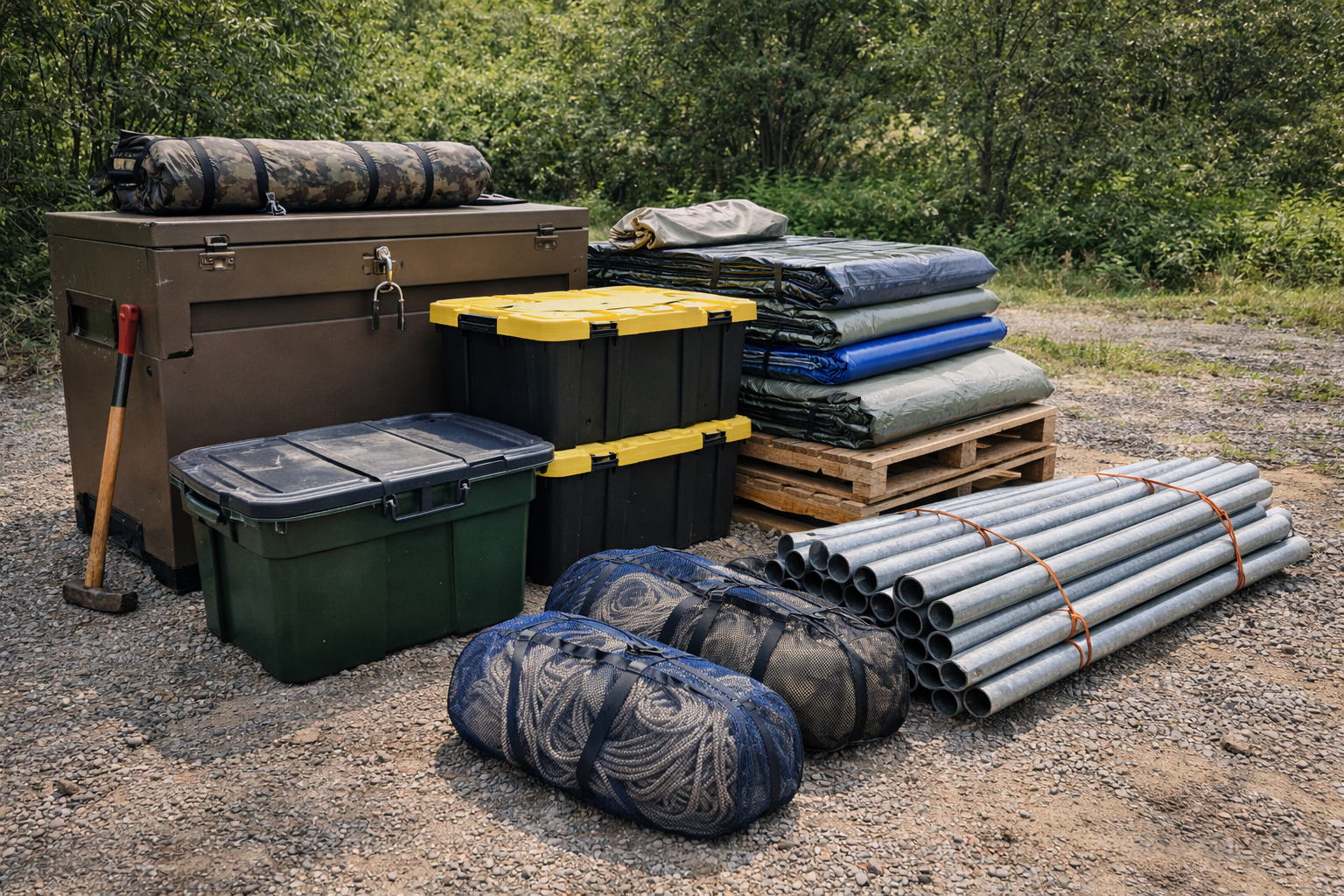
1. Why Outdoor Storage Matters
Outdoor gear like tarps and canopies are built tough, but exposure to sun, rain, wind, and dust accelerates wear and tear over time. Without proper storage:
-
UV exposure breaks down fabric strength
-
Moisture leads to mold, mildew, and rust
-
Wind and abrasion cause fraying and structural damage
Investing in outdoor storage solutions keeps your gear clean, dry, and ready for the next use — saving you money and downtime in the long run.
2. Types of Outdoor Storage Solutions
Outdoor storage options vary by space, budget, and gear size. Here are the most effective solutions:
A. Heavy-Duty Storage Bins
Heavy-duty storage bins are great for smaller tarps, stakes, ropes, and accessories. Look for:
-
UV-resistant plastic or reinforced resin
-
Water-resistant lids
-
Stackable design
These bins keep contents dry and shielded from sunlight and pests.
B. Lockable Site Boxes
Ideal for job sites and commercial environments. Lockable boxes offer:
-
Steel or reinforced build quality
-
Security for valuable gear
-
Weatherproof seals
Use them for tools, frames, and accessories that need extra protection and theft deterrence.
C. Mesh Gear Bags
For items that need airflow and quick drying, like wet tarps:
-
Breathable mesh prevents mildew
-
Easy to carry and label
-
Great for frequently used gear
Keep mesh bags raised or off the ground to avoid water pooling.
D. Outdoor Sheds & Cabinets
For larger inventory and seasonal storage:
-
Outdoor sheds provide full coverage
-
Cabinets with shelving keep gear organized
-
Choose weatherproof models with sloped roofs
Place sheds in well-drained areas and elevate bases on pallets for better moisture control.
3. Best Practices for Outdoor Storage
Maximize the life of your gear with these simple storage tips:
Clean Before You Store
Remove dirt, debris, and moisture before storing tarps or canopies to prevent decay and odors.
Avoid Direct Ground Contact
Use pallets, shelving, or elevated racks to avoid moisture wicking from the ground into your stored items.
Label Everything
Clear labels make retrieval easier and improve organization. Alphabetical or use-based groupings work well.
Use Waterproof Covers
Even inside outdoor storage bins or sheds, waterproof covers provide an extra layer of protection — especially in rainy or humid climates.
4. Organizing Your Outdoor Storage Space
A well-organized outdoor storage area saves time and reduces wear from frequent handling.
-
Group similar gear together (stakes, tarps, frames)
-
Use bins and dividers for small parts
-
Prioritize frequent-use items for easy access
-
Consider weatherproof shelving to keep items off the ground
5. Choosing the Right Outdoor Storage for You
Ask yourself a few questions:
✔ What gear do I store most often?
✔ How much space do I have available?
✔ Is security a concern?
✔ Do items need quick access?
The answers help you balance capacity, protection, and convenience when selecting storage tools.
Conclusion
Outdoor storage doesn’t have to be complicated — but it should be intentional. From heavy-duty storage bins to lockable site boxes and sheds, choosing the right solution helps protect your tarps, canopies, and accessories from environmental wear and tear. With good storage habits and quality solutions, your gear will stay in top shape and be ready whenever you need it.
For complete protection and organization, pair proper storage practices with our heavy-duty tarps, canopy accessories, and outdoor storage equipment to keep your gear secure, dry, and ready for use year-round.