

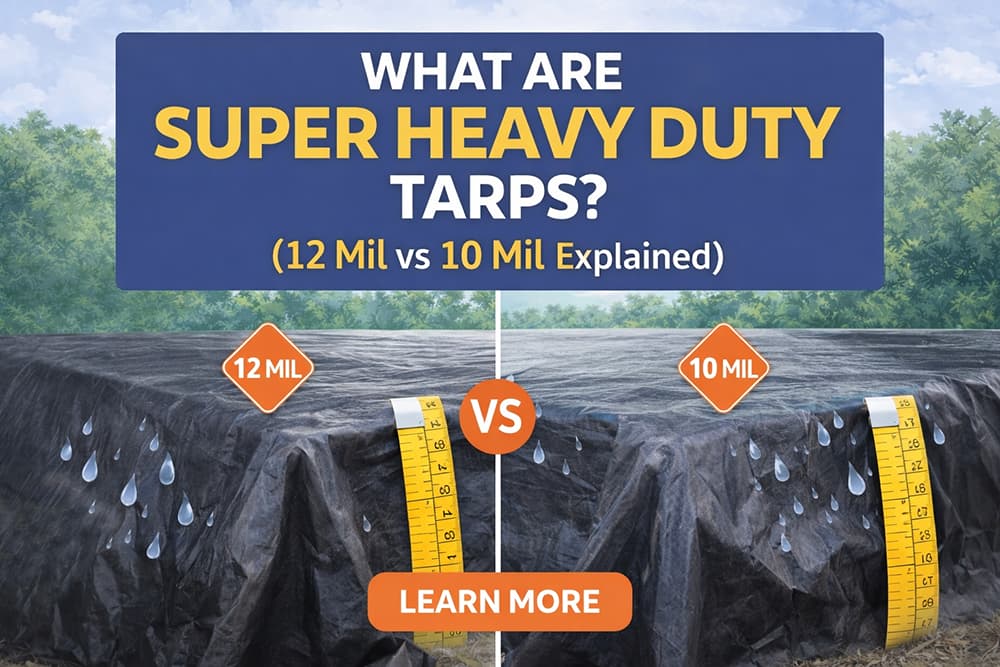
What Are Super Heavy Duty Tarps? (12 Mil vs 10 Mil Explained)
Posted by CanopiesAndTarps on Apr 12th 2026
Not all tarps are created equal. If you’re comparing options, you’ve likely come across terms like “10 mil” and “12 mil.” But what do they actually mean—and which one should you choose?
What Does “Mil” Mean?
A “mil” is a unit of thickness equal to one-thousandth of an inch. The higher the mil number, the thicker and more durable the tarp.
- 10 mil = 0.010 inches thick
- 12 mil = 0.012 inches thick
12 Mil vs 10 Mil Tarps: Key Differences
| Feature | 10 Mil Tarps | 12 Mil Tarps |
|---|---|---|
| Thickness | Standard heavy duty | Super heavy duty |
| Durability | Good | High |
| Best Use | Short-term coverage | Long-term outdoor protection |
| Weather Resistance | Moderate | Superior |
10 Mil vs 12 Mil: Which Should You Choose?
Choosing between a 10 mil and 12 mil tarp depends on how you plan to use it. While both offer protection, the difference in thickness can significantly impact durability and performance.
- Choose 10 mil for short-term use, light coverage, and occasional outdoor protection
- Choose 12 mil for long-term outdoor use, heavy-duty applications, and harsh weather conditions
If your tarp will be exposed to wind, rain, or extended outdoor use, upgrading to a 12 mil tarp is typically the better long-term investment.
What Makes a Tarp “Super Heavy Duty”?
Super heavy duty tarps are designed for demanding environments. They typically feature:
- 12 mil or thicker polyethylene
- High mesh count (14 x 14 or greater)
- Reinforced edges
- Rust-resistant grommets
- Waterproof and UV-resistant coatings
When Should You Choose a 12 Mil Tarp?
12 mil tarps are ideal for:
- Construction sites
- Equipment protection
- Long-term outdoor storage
- Extreme weather conditions
Shop 12 mil black super heavy duty tarps for maximum durability.
Common Uses for 10 Mil vs 12 Mil Tarps
- 10 Mil Tarps: Temporary coverage, light-duty projects, short-term outdoor use
- 12 Mil Tarps: Construction sites, equipment protection, long-term storage, heavy-duty outdoor use
Why Tarp Thickness Matters
Tarp thickness directly affects how well it performs over time. Thicker tarps are more resistant to tearing, punctures, and weather exposure, making them better suited for demanding applications.
- Improves durability in harsh conditions
- Reduces risk of tearing or failure
- Extends lifespan of the tarp
- Provides better long-term value
Final Thoughts
If you need a tarp for occasional or light use, 10 mil may be sufficient. But for long-term durability, weather resistance, and heavy-duty applications, upgrading to 12 mil is the better investment.
Browse super heavy duty tarps to find the right size and strength for your needs.
FAQs: Tarp Thickness & Durability
Is a 12 mil tarp heavy duty?
Yes. A 12 mil tarp is generally considered super heavy duty and is designed for long-term outdoor use, demanding conditions, and better resistance to tearing and weather exposure.
Is a 10 mil tarp strong enough?
A 10 mil tarp is often strong enough for light to moderate use, short-term projects, and temporary coverage. For harsher weather or long-term outdoor protection, a 12 mil tarp is usually the better choice.
What is the best tarp thickness for outdoor use?
For long-term outdoor use, a 12 mil or thicker tarp is typically the better option because it offers improved durability, weather resistance, and longer service life.
Does a thicker tarp mean better quality?
Thickness is an important factor, but it is not the only one. Overall tarp quality also depends on the material, mesh count, reinforced edges, grommet spacing, and UV or waterproof coatings.
Need help choosing the right tarp? Explore our full selection of heavy duty tarps for different sizes, materials, and applications.